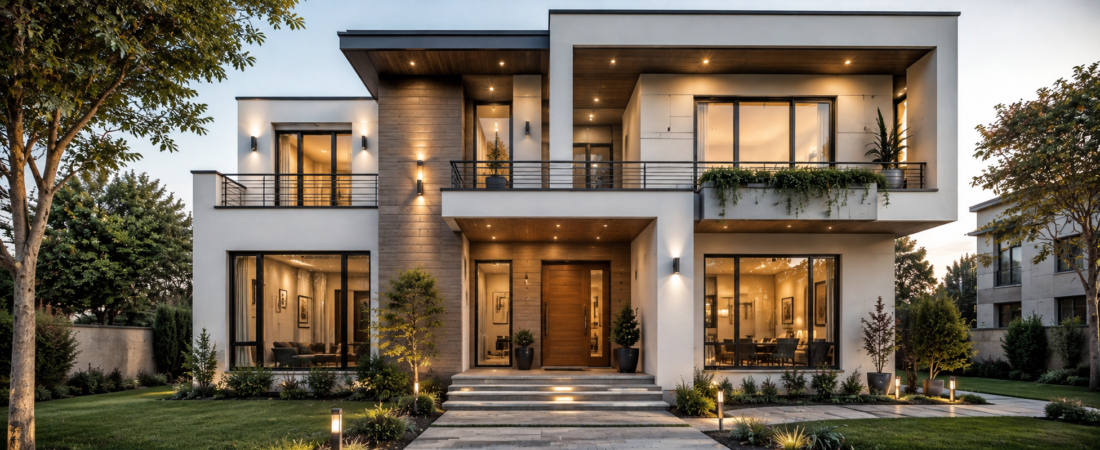
Modern house exterior design ideas for small buildings, featuring stylish colors, materials, windows, landscaping, lighting, and practical facade tips. Modern exterior design usually relies on simplicity rather than complicated decoration. Clean architectural lines, simple geometric shapes, large or well-positioned windows, neutral colors, and a limited selection of materials can instantly give a small building a contemporary appearance. The key is balance. Too many materials or strong colors can make a compact facade look busy, while a carefully controlled combination of two or three finishes can make it appear larger and more refined.
1. Keep the Exterior Simple and Clean
One of the easiest ways to create a modern look is to keep the facade visually simple. Instead of covering every wall with decorative elements, choose one main exterior finish and add one or two contrasting details around the entrance or windows. Smooth plaster, painted concrete, brick, stone, or wood-look panels can all work well. A simple facade also tends to age better because it does not depend heavily on temporary design trends.
2. Use White and Warm Neutral Colors
White, cream, beige, light gray, and other warm neutral shades are especially useful for small houses. Lighter exterior colors can make walls appear more open and help the building feel less visually heavy. For extra character, combine a light main color with darker window frames, a natural wood accent, or a charcoal-colored front door. This creates contrast without making the house look smaller.
3. Add a Wood Accent to the Entrance
A small amount of wood can completely change the appearance of a modern facade. Consider using wood-look panels around the front door, beneath an overhang, or on a narrow feature wall. Natural wood tones add warmth to materials such as concrete, white plaster, and glass. If real exterior wood requires too much maintenance for your climate, durable wood-look cladding can provide a similar visual effect while being easier to maintain.
4. Choose a Strong Front Door
The front door is one of the first details people notice, so it deserves more attention than it often receives. A simple modern door in black, dark brown, natural wood, or another contrasting shade can become the focal point of a small facade. A wide door, vertical glass panel, modern handle, or subtle surrounding lighting can add character without requiring major structural changes. The goal is to make the entrance look intentional rather than simply functional.
5. Use Large Windows Carefully
Windows can make a small building feel brighter and more open. Large horizontal windows or tall narrow windows can work particularly well with modern architecture because they add clean lines to the facade. However, the size and placement should suit the proportions of the building. Instead of adding windows randomly, think about how they align with doors, rooflines, and interior spaces. Black or dark-framed windows can also create a strong contemporary contrast against light-colored walls.
6. Try a Flat or Low-Pitched Roof
A flat roof is a popular choice for contemporary small homes because its horizontal shape works naturally with modern architecture. It can give a compact building a clean, streamlined silhouette. A low-pitched roof can provide a similar appearance while offering practical benefits in areas where rain or weather conditions make a completely flat roof less suitable. The roof should always be designed around local climate, drainage, construction requirements, and maintenance needs.
7. Create a Small Covered Entrance
A covered entrance is both practical and attractive. A simple canopy, extended roof section, or slim horizontal shelter can protect the doorway from rain and harsh sunlight while giving the facade a stronger architectural feature. For a small building, the entrance cover does not need to be large. Even a modest overhang can create a clear transition between the street and the home.
8. Combine Concrete With Natural Materials
Concrete is strongly associated with modern architecture, but using it alone can sometimes make a small house feel cold. Combining smooth concrete with natural stone, brick, timber, or warm-colored cladding can soften the appearance. For example, a light concrete facade with a small stone feature near the entrance can create texture without overwhelming the building. The important thing is to use the natural material selectively rather than covering every surface.
9. Use Black Frames for a Contemporary Contrast
Black window frames, railings, exterior lights, and doors can add definition to a simple facade. They work particularly well with white, cream, gray, beige, and natural wood finishes. On a small house, black accents should be used strategically. A few repeated black elements can visually connect different parts of the exterior and create a cohesive design.
10. Make Landscaping Part of the Design
The house itself is only part of the exterior. Landscaping can make a surprisingly big difference to the final appearance of a small building. A narrow planting bed, neat lawn, low shrubs, ornamental grasses, or a few carefully selected plants can frame the facade without taking up too much space. A simple pathway leading toward the front door can also guide the eye and make the entrance feel more welcoming.
11. Add Vertical Elements to Make the House Feel Taller
Small buildings can sometimes look wider and lower than intended, especially when the facade has a strong horizontal design. Vertical elements can help balance this effect. Tall plants, narrow windows, vertical wood slats, or a slim feature wall can draw the eye upward. This is a useful trick when working with a compact single-story home that needs more visual height.
12. Use Exterior Lighting as a Design Feature
Good outdoor lighting can completely change how a house looks after sunset. Wall-mounted lights beside the entrance, subtle pathway lighting, and carefully positioned lights beneath an overhang can highlight architectural features. Warm, comfortable lighting generally works well for residential exteriors because it creates a welcoming atmosphere. Avoid placing too many fixtures on a small facade, as excessive lighting can make the design feel cluttered.
13. Choose a Minimalist Balcony for a Two-Story Home
If the small building has two floors, a compact balcony can become a major design feature. A simple metal or glass railing paired with a clean rectangular balcony can reinforce the modern style. The balcony does not need to be large to be useful. Even a small outdoor area can provide space for a chair, a few plants, or a small seating arrangement while adding depth to the front elevation.
14. Try a Modern Brick Exterior
Brick does not have to look traditional. When combined with simple geometry, dark frames, modern lighting, and minimal landscaping, brick can create a contemporary exterior with plenty of character. Red, brown, gray, and muted brick tones can all work depending on the overall color scheme. For a small building, using brick on one section of the facade rather than every wall can create a stronger visual balance.
15. Use Stone as a Feature Instead of Covering the Whole House
Stone can make a house exterior feel substantial and sophisticated, but too much stone may overwhelm a small structure. A better approach is to use it as an accent around the entrance, lower wall, porch, or one vertical section. Natural variations in stone provide texture and help break up large areas of plain exterior wall. Pairing stone with light plaster and simple landscaping can create a warm modern appearance.
16. Create a Modern Exterior With a Small Budget
A modern facade does not always require an expensive renovation. Sometimes the biggest improvement comes from changing the front door, repainting the walls, updating exterior lighting, improving the pathway, or adding a simple feature panel. Replacing old railings and cleaning up overgrown landscaping can also make a noticeable difference. When the budget is limited, focus on the entrance and the most visible parts of the facade instead of trying to redesign everything at once.
17. Keep Materials Consistent
A common mistake in small exterior design is using too many different materials. A compact house can quickly look visually crowded when several types of stone, brick, wood, paint, metal, and decorative tile compete for attention. A better approach is to choose a main wall finish and complement it with one or two secondary materials. Repeating the same materials in different areas helps the whole building feel connected.
18. Design Around the Local Climate
A beautiful exterior also needs to work in real conditions. Hot climates may require shading, suitable roofing materials, ventilation, and finishes that can handle strong sunlight. Areas with heavy rainfall need proper drainage and weather-resistant construction. Coastal locations may require materials that tolerate moisture and salty air. Modern design should not simply look good in a photograph; it should remain practical after years of everyday weather exposure.
19. Add Greenery Without Losing the Modern Look
Plants can soften the sharp lines of modern architecture. The trick is to keep the planting scheme controlled. A few structured shrubs, grasses, small trees, or potted plants can add natural color without turning the front of the house into an overgrown garden. For a very small building, vertical planting or narrow planters can provide greenery while preserving walking space.
20. Use a Simple Fence and Gate
The boundary around a house contributes to its overall exterior style. A modern fence can use horizontal metal panels, simple concrete walls, wood-look slats, or a combination of materials. The gate should match the architecture rather than looking like a separate element. For a small property, a simple fence with clean lines usually works better than a highly decorative design because it keeps the entire frontage visually calm.
21. Think About Proportion Before Decoration
Proportion is one of the most important parts of a successful small-house exterior. A very large porch, oversized columns, huge decorative windows, or heavy roof can make a compact building look even smaller. Instead, choose elements that match the scale of the structure. A modest canopy, appropriately sized windows, a narrow pathway, and simple landscaping can make the house feel balanced and comfortable.
22. Create a Modern House Exterior With Depth
Flat walls can sometimes make a small house look plain. Adding shallow projections, recessed entrances, covered areas, or changes in wall material can create depth without requiring a complicated design. Even a small shadow gap around a doorway or a slightly recessed window can produce interesting light and shadow. These details give the exterior more character while maintaining the clean look associated with modern architecture.
23. Consider a Two-Tone Exterior
A two-tone color scheme can add visual structure to a small house. For example, warm white walls can be paired with charcoal gray around selected sections, while a natural wood accent adds warmth. Another option is light gray combined with darker gray and black frames. Keeping the palette limited makes the building look organized and prevents the facade from becoming visually overwhelming.
24. Make the Entrance the Main Focal Point
When space is limited, you do not need to make every part of the exterior dramatic. Instead, create one strong focal point. The entrance is usually the best place to do this. A contrasting door, wood-look wall, modern light fixtures, a small canopy, and a clean pathway can turn an ordinary front elevation into a memorable one. The rest of the facade can remain relatively simple so the entrance gets the attention.
25. Modern Does Not Mean Cold
There is a common misconception that modern houses must be covered in gray concrete and dark metal. In reality, modern design can feel warm, comfortable, and inviting. Natural wood tones, warm lighting, plants, textured stone, cream-colored walls, and comfortable outdoor seating can soften a contemporary facade. For a family home, this combination often creates a better balance between modern architecture and everyday comfort.
How to Make a Small House Look Bigger From the Outside
The easiest way to make a small house appear larger is to keep the exterior visually organized. Light wall colors, generous windows, simple landscaping, continuous flooring or pathways, and carefully placed horizontal or vertical lines can influence how the building is perceived. Avoid filling the front elevation with unnecessary decoration. When the eye can move easily across the facade, the house often feels more spacious and open.
Common Mistakes to Avoid in Small House Exterior Design
One of the biggest mistakes is trying to include every design trend in one facade. Too many colors, materials, decorative panels, lights, and architectural shapes can make a small house look confused. Another problem is ignoring practical details such as drainage, weather exposure, maintenance, privacy, and ventilation. A modern exterior should be attractive, but it should also be comfortable to live with. Before choosing finishes, consider how they will look after several years of sunlight, rain, dust, and everyday use.
Conclusion
A small building can have plenty of architectural personality when the design is planned carefully. The strongest modern house exterior design ideas for small building projects usually come down to a few simple principles: clean lines, balanced proportions, practical materials, a welcoming entrance, thoughtful lighting, and restrained landscaping. You do not need an oversized facade or an expensive collection of finishes to create an impressive home exterior. Sometimes a fresh neutral color, a beautiful front door, modern windows, a small wood accent, and well-kept greenery are enough to completely change the way a house looks and feels.
FAQs About Modern House Exterior Design Ideas for Small Buildings
What is the best exterior style for a small modern house?
A simple contemporary style with clean lines, neutral colors, large well-placed windows, and limited decorative details works well for many small homes. Combining materials such as plaster, wood-look cladding, brick, or stone can add character without overwhelming the facade.
Which colors make a small house look bigger?
Light and warm shades such as white, cream, beige, light gray, and soft neutral tones can make a small exterior feel more open. Dark colors are often most effective when used as accents around windows, doors, roof sections, or architectural features.
How can I make a small house exterior look expensive?
Focus on proportion, clean finishes, a well-designed entrance, attractive lighting, and neat landscaping. A limited material palette often looks more refined than using many different finishes. Good maintenance also has a major impact on how polished a house appears.
Are flat roofs good for small modern houses?
Flat roofs can create a clean contemporary appearance and work particularly well with simple geometric architecture. However, the roof design should suit the local climate, drainage requirements, construction methods, and maintenance needs.
What materials work well for a modern small house exterior?
Common choices include painted plaster, concrete, brick, natural or manufactured stone, wood, wood-look cladding, glass, and metal. The best combination depends on the climate, budget, maintenance requirements, and architectural style of the home.
Read also: Modern Farmhouse Interior Design Guide for Every Room