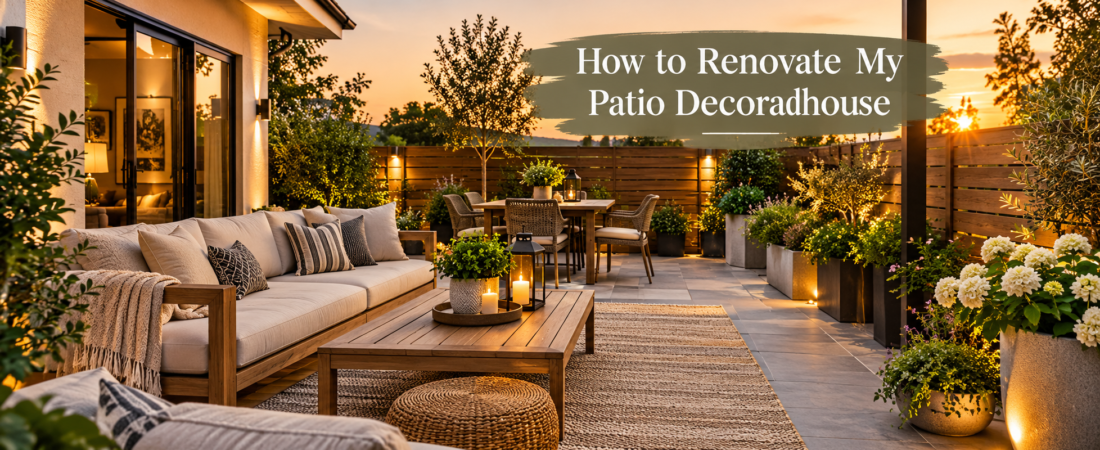
How to renovate my patio decoradhouse is really about giving your outdoor space a fresh, comfortable, and practical feel. You don’t need to replace everything. Keep what still works and focus on the areas that look worn or outdated. A few smart changes, such as better seating, lighting, plants, and décor, can turn a tired patio into a space you’ll actually enjoy using.
Start by Looking at Your Patio Honestly
Before buying anything, spend a little time looking at your patio as it is now. Notice what works and what does not. Is there enough seating? Does water collect after rain? Is the flooring cracked or stained? Does the patio receive too much direct sun? Is there enough lighting at night? Are plants blocking pathways? These questions may seem basic, but they prevent one of the most common renovation mistakes: buying attractive items without solving the underlying problems. Take a few photos during the morning, afternoon, and evening so you can see how the space changes throughout the day.
Decide How You Want to Use the Space
The best patio design starts with purpose rather than decoration. If you mainly want somewhere to drink coffee, you may need only two comfortable chairs and a small table. If you regularly entertain family and friends, you will need more seating, a larger table, and possibly a cooking or serving area. If relaxation is your priority, concentrate on deep seating, shade, soft lighting, and greenery. Current outdoor design trends increasingly emphasize purposeful zones rather than one large area filled with furniture.
Create Separate Patio Zones
One of the easiest ways to make a patio feel professionally designed is to divide it into functional zones. You might have a lounge area on one side, a dining space near the house, and a small planting or reading corner farther away. Even a small patio can benefit from this approach. An outdoor rug can visually define a seating area, while planters can subtly separate one section from another. The goal is not to build walls between each zone. Instead, you want the layout to make the purpose of each area obvious.
Refresh the Patio Flooring
Flooring has a huge influence on how a patio looks because it covers such a large visual area. If the existing surface is structurally sound, start with a deep cleaning rather than replacing it immediately. Pressure washing, repairing small cracks, repainting suitable concrete, or resealing pavers can sometimes make an old surface look dramatically better. If replacement is necessary, consider materials such as concrete pavers, porcelain outdoor tile, natural stone, brick, or composite decking where appropriate. Choose a surface that suits your climate and drainage conditions rather than selecting something based only on appearance.
Choose a Comfortable Outdoor Furniture Layout
Furniture should make the patio easier to use, not make it harder to move around. Leave comfortable walking paths between seating, doors, steps, and other important areas. For a compact patio, a small sofa with two chairs may work better than a large sectional. For a bigger space, a sectional can create a relaxed conversation area while a separate dining table handles meals. Outdoor furniture trends increasingly favor comfortable, living-room-style seating, but the furniture still needs to be designed for outdoor exposure.
Pick Weather-Resistant Materials
Outdoor furniture has to deal with sunlight, humidity, rain, dust, temperature changes, and everyday use. That means material selection matters. Powder-coated metal, treated wood, teak, aluminum, synthetic wicker, and outdoor-rated fabrics can all work well when matched to the environment. Cushions should ideally use fabrics intended for outdoor conditions, especially if they will remain outside for long periods. A beautiful sofa that quickly fades, rusts, or absorbs moisture is not a good renovation investment.
Add an Outdoor Rug
An outdoor rug is one of the simplest ways to make a patio feel more like an intentional living space. It visually anchors the furniture and adds warmth without requiring construction. Choose a rug made for outdoor use and select a size that allows the front legs of the seating to sit comfortably on it. Neutral colors can create a calm foundation, while geometric patterns or stronger colors can introduce personality. If your patio already has several competing patterns, however, a simpler rug will usually create a more balanced result.
Use Color Without Overdoing It
You do not need ten different colors to make an outdoor space interesting. Start with a simple base such as warm white, beige, gray, charcoal, natural wood, or stone. Then introduce one or two accent colors through cushions, planters, rugs, umbrellas, or accessories. Earthy greens, clay tones, muted blues, and warm terracotta shades can work particularly well with outdoor surroundings. Current patio inspiration is also moving toward nature-based palettes and richer accent colors rather than relying exclusively on pale neutrals.
Bring in More Plants
Plants can transform a patio more dramatically than many decorative purchases. They soften hard surfaces, create privacy, introduce color, and make the area feel connected to the garden. Use a mixture of heights rather than placing identical pots in a straight line. Large containers can anchor corners, medium plants can frame seating, and smaller pots can decorate tables or shelves. Choose plants according to the amount of sunlight, water, temperature, and maintenance you can realistically provide. In the 2026 Houzz outdoor study, plants, shrubs, and trees remained the leading outdoor feature upgrade among renovating homeowners.
Create Privacy With Plants and Screens
A patio can look beautiful and still feel uncomfortable if it is completely exposed. Privacy does not always require an expensive wall or permanent construction. Tall planters, trellises, climbing plants, slatted screens, outdoor curtains, or carefully positioned shrubs can create a more private atmosphere. Think about what you actually need to hide. Blocking one direct sightline may be enough instead of enclosing the entire patio. This keeps the area feeling open while giving you a greater sense of comfort.
Improve Patio Lighting
Lighting can completely change the character of an outdoor space after sunset. Start with practical illumination around steps, pathways, entrances, and cooking areas. Then add softer lighting around seating and planting zones. Depending on your setup, options include wall lights, lanterns, solar lights, recessed fixtures, or string lights. Landscape lighting remains a major outdoor renovation choice, with Houzz reporting that it was the leading system upgrade in its 2026 study.
Add Shade for Daytime Comfort
A patio that becomes unbearably hot in the afternoon will not get much use, regardless of how attractive it looks. Shade can come from a pergola, retractable awning, umbrella, shade sail, covered roof, or even strategically planted trees. The best solution depends on your climate, patio size, budget, and whether you want a permanent or flexible structure. If you are considering a roof, electrical work, major structural changes, or permanent construction, check local requirements and use an appropriately qualified professional.
Make the Patio Feel Like an Outdoor Room
One of the strongest design ideas right now is to treat the patio as another room rather than an empty space outside the back door. Use similar colors and materials to those inside your home so the transition feels natural. For example, if your living room uses warm wood, cream upholstery, and black accents, carry those elements onto the patio. This does not mean everything has to match. The goal is visual connection. Outdoor spaces are increasingly being designed as extensions of indoor living areas, with comfort and everyday use taking priority.
Add a Small Dining Area
If you enjoy eating outdoors, make room for a proper dining zone. It does not have to be large. A compact round table can work surprisingly well on a smaller patio because it creates good circulation around the edges. Larger patios can accommodate rectangular tables or extendable designs. Position the dining area somewhere that makes carrying food and drinks from the kitchen easy. A beautiful dining setup that is inconvenient to reach will quickly become decorative rather than useful.
Consider a Fire Feature
A fire pit or outdoor fireplace can turn a patio into a gathering point during cooler evenings. However, safety should come before appearance. Check local rules, maintain appropriate clearances, and follow the manufacturer’s instructions for the specific product. If an open flame is unsuitable for your patio, consider a safer alternative designed for your circumstances. A fire feature can be a wonderful addition, but it should never compromise safe access, ventilation, or the surrounding structure.
Add a Small Outdoor Kitchen or Serving Station
You do not need a full outdoor kitchen to make entertaining easier. A compact serving cart, weather-resistant cabinet, countertop, or beverage station can give you a convenient place for plates, drinks, utensils, and snacks. Larger patios may accommodate a grill, sink, refrigerator, or permanent outdoor kitchen, but those projects require more careful planning. Plumbing, gas, electrical connections, drainage, ventilation, and local regulations all become important when you move beyond simple furniture and décor.
Give Old Furniture a Second Life
Renovating your patio does not automatically mean buying everything new. Older furniture can sometimes be cleaned, sanded, repainted, stained, repaired, or reupholstered. Replace damaged cushions and hardware where practical. A tired wooden table may look completely different after appropriate refinishing. Metal chairs can sometimes be refreshed with suitable exterior paint after proper preparation. Reusing good furniture saves money and can also give your patio more character than a collection of brand-new matching pieces.
Add Personality With Small Details
Once the major elements are finished, use smaller decorations to make the patio feel personal. Consider lanterns, ceramic pots, outdoor artwork, decorative trays, weather-resistant cushions, sculptures, candles designed for outdoor use, or a small water feature. The trick is knowing when to stop. Too many accessories make a patio look cluttered and create more things to clean and protect. Choose a handful of pieces that genuinely contribute to the atmosphere.
Plan the Renovation Around Your Budget
A patio renovation can cost a few hundred dollars or become a major construction project. The important thing is to establish your priorities before spending. If your budget is limited, focus first on cleaning, repairs, furniture arrangement, lighting, plants, and textiles. If you have more available, you can consider flooring, shade structures, built-in seating, landscaping, or outdoor cooking features. Spend money first on things that improve how you use the patio, then use decorative purchases to finish the look.
What Should You Renovate First?
If you are unsure where to begin, follow a simple order: inspect the structure, fix drainage and safety problems, clean the entire area, repair or replace damaged flooring, establish the layout, add comfortable furniture, introduce shade and lighting, then finish with plants and décor. This sequence prevents you from spending money on decorative items before solving practical problems. It also makes the renovation feel manageable because you can complete it in stages rather than treating the entire patio as one enormous project.
Common Patio Renovation Mistakes to Avoid
One common mistake is buying furniture that is too large for the available space. Another is choosing outdoor materials based entirely on appearance without considering weather and maintenance. Poor drainage is another issue that should never be hidden under new flooring or décor. People also tend to underestimate lighting and overdecorate. Before buying anything, measure your patio, identify the main traffic routes, consider the amount of sun and rain it receives, and think about how much maintenance you are actually willing to do.
When Should You Hire a Professional?
DIY work is perfectly reasonable for many cosmetic patio improvements, including cleaning, furniture arrangement, planting, decorating, and some suitable painting projects. Professional help becomes more important when the renovation involves structural changes, electrical systems, plumbing, major masonry, drainage, roofing, gas lines, or complicated landscaping. Recent Houzz research found that 71% of homeowners undertaking outdoor renovations hired professionals for at least some part of the project, showing how often larger outdoor improvements require specialist skills.
How to Renovate a Small Patio
A small patio can actually be easier to make attractive because every element has to serve a purpose. Choose furniture with a compact footprint, use vertical planting to save floor space, and select one strong focal point instead of filling the area with accessories. A foldable dining table, bench with storage, wall-mounted lighting, and narrow planters can make a small patio considerably more functional. Keep the central walking area open so the space does not feel cramped.
How to Renovate a Large Patio
Large patios need the opposite strategy. Instead of filling the entire surface with furniture, create distinct zones. One section might contain a sofa and coffee table, another could have a dining table, while a third area could become a garden, fire pit, or quiet retreat. Large outdoor spaces benefit from repetition: use similar materials, colors, plants, or lighting styles throughout the different zones so they feel connected rather than randomly assembled.
A Simple Weekend Patio Refresh
If a full renovation is not realistic right now, you can still make meaningful progress over a weekend. Start by removing clutter and cleaning every surface. Rearrange existing furniture to improve movement. Add or wash outdoor cushions, introduce a few plants, install simple lighting, and add one outdoor rug or focal accessory. This kind of refresh will not replace structural renovation, but it can reveal what your patio actually needs before you commit to larger purchases.
The Best Patio Is the One You Will Actually Use
It is easy to become distracted by beautiful patio photographs online, but your outdoor space does not need to copy somebody else’s backyard. Think about your own routines. If you drink coffee outside every morning, prioritize comfortable seating and shade. If you host dinners, prioritize dining space and lighting. If you want a quiet escape, focus on plants, privacy, and a comfortable chair. A successful patio is not simply photogenic. It makes everyday life a little better.
Conclusion
Learning how to renovate my patio decoradhouse really comes down to balancing beauty with everyday practicality. Start with the condition of the space, decide how you want to use it, create functional zones, improve the flooring and furniture where necessary, then build atmosphere through plants, lighting, color, shade, and personal décor. You do not have to complete everything at once. In fact, renovating gradually can help you understand what the patio genuinely needs before you spend more money. The strongest outdoor spaces are comfortable, useful, easy enough to maintain, and personal to the people who live there.
FAQs About How to Renovate My Patio Decoradhouse
1. What is the easiest way to renovate a patio?
The easiest approach is to clean the existing space, rearrange the furniture, add comfortable outdoor textiles, introduce plants, improve lighting, and use a rug or decorative feature to define the main seating area. These changes can create a noticeable improvement without major construction.
2. How can I renovate my patio on a small budget?
Start with cleaning and repairs, then focus your spending on the elements you use most. Refreshing old furniture, adding cushions, repainting suitable surfaces, using inexpensive planters, and installing simple outdoor lighting can produce a significant visual change without a complete rebuild.
3. What should I put on my patio first?
Begin with practical improvements. Check the flooring, drainage, steps, walls, shade, and electrical or structural issues before buying decorative items. Once the patio is safe and functional, add furniture and décor.
4. How do I make an old patio look modern?
Use a simple color palette, clean-lined furniture, contemporary lighting, large planters, and fewer but better accessories. Updating the flooring or repainting an appropriate surface can also have a major effect. You do not necessarily need to replace every existing item.
5. How can I make a patio more comfortable?
Comfort comes from shade, appropriate seating, weather-resistant cushions, good lighting, and protection from wind or excessive exposure. Arrange the furniture so people can talk easily and move around without constantly navigating obstacles.
Read also: Cheapest Way to Replace Hvac System Money-Saving Tips