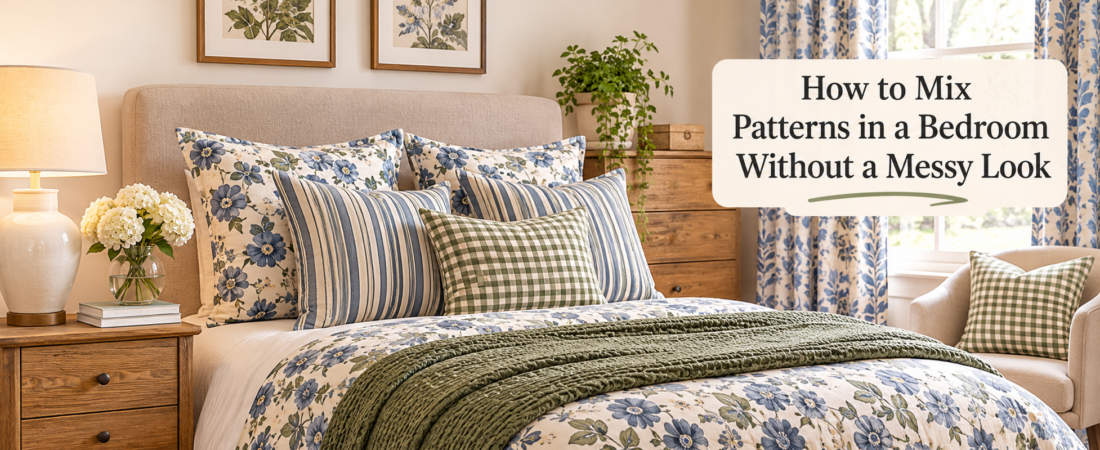
how to mix patterns in a bedroom without it looking messy starts with three simple choices. Pick a small color group, combine different print sizes, and leave some areas plain. This helps your bedroom feel warm and well-planned. You can mix florals, stripes, checks, and geometric prints. You do not need matching designs on every surface.
The best approach is to choose one main pattern. Then add two smaller patterns around it. Keep their colors connected. Use plain bedding or furniture to balance busy prints.
This guide explains how to combine bedroom patterns. It also covers common mistakes and simple ways to fix them.
1. Start With a Simple Bedroom Color Palette

Choose your colors before buying patterned items. This makes the other choices much easier.
A color palette is a small group of colors. Think of it as a plan for your room’s colors.
Start with two main colors and one accent color. An accent color is a smaller shade. It adds a little contrast.
Here are three bedroom color groups to try:
-
Cream, beige, and sage green: A soft, calm look.
-
Blue, white, and light gray: A fresh, simple look.
-
Terracotta, tan, and warm white: A warm, cozy look.
You can use these colors across your bedding and curtains. Add them to cushions, rugs, and small decor items too.
Your patterns do not need identical colors. They should share at least one shade. This small link helps different prints look related.
2. Choose One Main Pattern First

Do not start by choosing several bold patterns. Pick one main design first.
Your main pattern should be the first thing people notice. It could be a floral duvet cover. It could also be striped wallpaper or a large rug.
Once you choose it, keep the other prints quieter.
For example:
-
Main pattern: Large flowers on the duvet.
-
Second pattern: Thin stripes on two cushions.
-
Third pattern: Small checks on a throw.
This gives each pattern a clear role. The main design gets the most attention. The smaller designs add detail without competing.
If you already own patterned curtains, use those first. Build the bedding and cushions around their colors.
3. Mix Large, Medium, and Small Patterns

Pattern size matters as much as color. Three prints of the same size can look crowded.
A better choice is to use different print sizes. This creates a clear visual order.
Try this simple arrangement:
-
Choose one large print for the bed.
-
Add a medium print to the cushions.
-
Use a small print on a throw or pillow.
For example, use large flowers on your duvet. Add medium stripes to the cushions. Finish with a small check pattern.
Avoid using three large floral prints together. They may compete for attention.
You can also reverse the arrangement. Use small printed bedding with large patterned curtains. The same rule still applies.
4. Which Patterns Look Good Together in a Bedroom?

Some patterns naturally work well together. Their shapes create contrast without looking too different.
Here are some useful combinations.
Floral and striped patterns
Florals have curved shapes and natural details. Stripes use straight, simple lines.
This difference creates a balanced look.
Try floral bedding with striped cushions. Choose colors that appear in both designs.
Checks and geometric patterns
Checks use repeated squares or rectangles. Geometric prints use shapes such as circles and triangles.
These patterns can work together well. Keep one design smaller than the other.
For example, pair a small checked throw with geometric cushions.
Botanical and striped patterns
Botanical prints show leaves, branches, or flowers. They work well with simple stripes.
Use leaf-patterned bedding with plain striped curtains. You can also reverse this combination.
Polka dots and floral patterns
Polka dots are small, repeated circles. Their simple shape works with detailed floral prints.
Try a floral duvet with small dotted cushions. Keep the dots in a color from the duvet.
Plaid and small floral patterns
Plaid uses crossing lines to form repeated squares. Small floral prints can soften its strong lines.
Use plaid cushions with delicate floral bedding. Choose colors that suit the rest of the room.
5. Use Plain Fabrics to Balance Busy Patterns

Plain fabrics help your patterns stand out. They also stop the room from feeling too busy.
For example, imagine a bed with floral bedding. Add plain cream pillowcases and a simple beige throw. The bed will still have character. However, the different designs will have more space.
Good places for plain colors include:
-
Bedsheets and pillowcases.
-
Large curtains.
-
Upholstered headboards.
-
Bedside rugs.
-
Blankets and throws.
You can also use texture instead of another print. Texture means how a material feels or looks. Linen, cotton, and knitted fabric add detail without another busy design.
You do not need to remove every plain item. Keep some surfaces simple. This gives your eyes a break between patterns.
6. Spread Patterns Around the Bedroom

Avoid placing every patterned item on the bed. This can make one part of the room feel crowded.
Spread the prints across different areas. Give each pattern enough space around it.
For example:
-
Put a floral print on the duvet.
-
Add striped cushions to the bed.
-
Use a small geometric rug near the bed.
-
Choose plain curtains in a shared color.
You can also use a patterned lampshade. A small framed print can add another detail.
Look at the room from the doorway. Check whether one side feels busier than the other.
Move or remove items if needed. A balanced room does not need equal patterns everywhere. It needs a comfortable visual flow.
7. Include Existing Furniture and Floor Patterns

Your bedroom may already contain patterns. These can come from wallpaper, rugs, floors, or furniture.
Do not ignore them when choosing new fabrics.
A patterned floor rug counts as one design. So does floral wallpaper or printed furniture fabric.
Before buying anything, look around the room. Write down the patterns you already have.
Then decide which designs should stay. Choose new patterns that work with those items.
For example, imagine a bedroom with floral wallpaper. You could add simple striped cushions. Choose plain bedding in one wallpaper color.
If your rug has strong geometric shapes, keep the curtains simpler. Add a small print through a cushion or throw.
This approach can save money. You may only need a few small changes.
8. Use Furniture and Natural Materials to Keep Things Calm

Furniture can help balance a bedroom with several prints.
Natural wood, simple furniture, and plain surfaces work well. They give the patterns a calm background.
Consider these choices:
-
A simple wooden bedside table.
-
A plain upholstered headboard.
-
A neutral bed frame.
-
A simple wooden chest.
-
Woven baskets for storage.
You can also use ceramic decor. A plain lamp or vase adds shape without another print.
Avoid choosing patterned furniture for every large surface. One patterned chair may look attractive. Several competing pieces can make the room feel crowded.
9. Test Your Pattern Combinations Before Buying

A fabric can look different in your home. Store lighting and bedroom lighting may not match.
Testing samples helps you avoid poor choices. It also lets you compare patterns together.
Follow these simple steps:
-
Collect pictures of the patterns you like.
-
Place them together on one screen or table.
-
Check whether they share colors.
-
Compare their pattern sizes.
-
Look for prints that compete for attention.
-
Remove designs that feel too strong.
-
Test fabric samples in your bedroom.
Check the samples during daylight. Also look at them under your bedroom lights.
Place the samples near your bedding and curtains. Step back and view them from the doorway.
If two patterns look good separately, they may still clash together. Always judge them as one group.
You can start with cushions and throws. These are easier to change than wallpaper or large curtains.
10. Follow a Simple Pattern-Mixing Plan
If you are starting from an empty bedroom, use this order. It helps you avoid buying items without a clear plan.
A simple bedroom pattern plan

Step 1: Choose the main print
Start with floral bedding, wallpaper, or a rug.

Step 2: Add a second print
Choose stripes or another medium-sized design.

Step 3: Add a smaller print
Use small checks, dots, or tiny flowers.

Step 4: Add plain fabrics
Use solid pillows, sheets, and blankets.

Step 5: Check the whole room
Look at the patterns from the doorway. Remove anything that feels too busy.
This plan is flexible. You can stop after two patterns if that feels better.
The aim is not to fill every space. The aim is to make each choice work with the others.
11. Common Mistakes to Avoid When Mixing Bedroom Patterns
Even attractive patterns can look wrong together. Most problems come from using too many strong designs.
Watch out for these mistakes:
| Common mistake | How to fix it |
|---|---|
| Too many large prints | Keep one large print as the main feature. |
| Too many bright colors | Use a smaller color palette. |
| Every item has a pattern | Add plain bedding and furniture. |
| Patterns have no shared colors | Repeat at least one color. |
| All patterns sit together | Spread them around the room. |
| Buying without testing | Compare fabric samples first. |
A useful starting point is three patterns. This is a guide, not a strict rule. You can use more if the colors and sizes work together.
Interior design guides also recommend varying pattern sizes and using plain surfaces between prints.
When to Call a Professional
Most bedroom pattern changes are simple decorating projects. You can choose fabrics, cushions, and rugs yourself.
However, some changes need more planning.
Consider speaking with an interior designer or qualified decorator when:
-
You want several patterns across walls and furniture.
-
You plan to install custom wallpaper or wall coverings.
-
You need custom curtains or upholstered furniture.
-
Your room has unusual shapes or limited space.
-
You cannot find a color scheme that works with existing finishes.
A professional can help you compare materials. They can also prepare a design plan before you buy.
You do not need professional help for every small change. Start with removable items first.
Conclusion
Mixing patterns in a bedroom becomes easier with a little planning. Start with a simple color palette and choose one main pattern. Add smaller prints through cushions, curtains, rugs, or bedding. Balance these designs with plain fabrics and simple furniture. Most importantly, test your combinations before buying new items. A few well-chosen patterns can make your bedroom feel comfortable, balanced, and full of personality.
Frequently Asked Questions
1. How many patterns should you use in a bedroom?
Three patterns are a good starting point. Choose one large, one medium, and one small design. Add plain fabrics to balance them. You can use more patterns if they share colors and work together.
2. Can you mix floral and geometric patterns?
Yes, floral and geometric patterns can work together. Choose a shared color between both designs. Use different pattern sizes. For example, pair large floral bedding with small geometric cushions.
3. Should bedroom curtains match the bedding?
No, your curtains do not need identical patterns. They should work with your bedding colors. If your duvet has a bold print, try plain curtains or subtle stripes.
4. Can you mix different colors and patterns in a small bedroom?
Yes, but keep the color choices limited. Choose smaller prints and lighter shades. Use plain bedding or furniture to balance stronger designs. This helps the room feel less crowded.
Read also: How to Arrange Furniture in a Living Room Ideas for Every Space