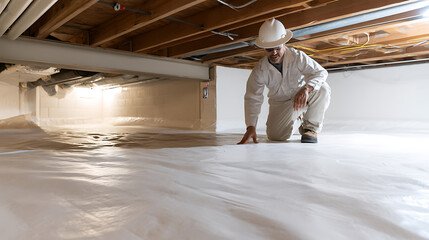
Crawl Space Encapsulation Contractors is a moisture-control process that seals a crawl space from the surrounding soil and outdoor environment. Contractors typically install a durable vapor barrier over the crawl space floor and may extend the material up foundation walls and around piers. Vents, access doors, plumbing penetrations, and other openings may also be sealed to reduce unwanted air and moisture movement.
The exact system depends on the property. Some crawl spaces need drainage improvements or a sump pump before encapsulation can make sense, while others may need a dehumidifier to maintain appropriate humidity after the space has been sealed.
Why Homeowners Consider Encapsulation
Moisture is one of the biggest reasons homeowners investigate crawl space encapsulation. Damp soil, rainwater, plumbing leaks, and humid outdoor air can all contribute to moisture beneath a house. Over time, persistent moisture may create unpleasant odors, condensation, mold growth, or conditions that can affect wood and insulation.
Encapsulation can also make the crawl space easier to manage. Instead of leaving exposed soil and open vents beneath the house, the contractor creates a more controlled environment. However, encapsulation should not be treated as a universal fix. If water is actively entering the crawl space, that source generally needs to be addressed first.
What Do Crawl Space Encapsulation Contractors Do?
A professional contractor normally begins with an inspection. They should examine the floor, foundation walls, vents, insulation, drainage, plumbing, wood components, and signs of previous or current moisture problems. This first step is important because the visible dampness may not be the original source of the problem.
After the inspection, the contractor can recommend the work that fits the property. Depending on the situation, this may include a ground vapor barrier, wall sealing, vent sealing, drainage work, sump pump installation, insulation changes, air sealing, or dehumidification.
The Crawl Space Inspection Comes First
A good encapsulation project starts with understanding the space. Contractors may look for standing water, wet soil, condensation, water stains, damaged insulation, musty odors, mold-like growth, and deteriorating wood. They may also check whether gutters and downspouts are directing water toward the foundation.
This inspection gives you useful information before you spend money. If the contractor immediately recommends an expensive encapsulation package without explaining the moisture source, ask for more detail.
What Is Included in a Typical Encapsulation?
There is no single package that fits every home, but many projects involve several basic components. A vapor barrier is installed over exposed soil to reduce moisture coming from the ground. The material may also be run up foundation walls and secured around structural supports.
The contractor may seal crawl space vents and other openings as part of creating a controlled environment. An access door can also be weather-sealed, while pipe and utility penetrations may receive additional air sealing.
Vapor Barrier Installation
The vapor barrier is one of the most visible parts of encapsulation. It is designed to reduce water vapor entering the crawl space from the soil below. The quality of the material, installation technique, seams, fasteners, and wall attachments all matter.
A professional contractor should explain what material they plan to use and where it will be installed. You should also ask how seams will be sealed and how the barrier will be protected from damage during future inspections or maintenance.
Sealing Crawl Space Vents
Traditional crawl spaces often have vents intended to allow outdoor air into the area. In humid climates, however, outdoor air can introduce additional moisture. Encapsulation systems commonly address these openings by sealing them as part of the overall moisture-control strategy.
The important point is that vent sealing should be considered alongside the rest of the system. Closing vents without dealing with existing water problems or indoor humidity does not automatically solve a crawl space moisture issue.
Dehumidifiers and Humidity Control
Once a crawl space is sealed, humidity still needs to be managed when conditions require it. A properly selected crawl space dehumidifier can help control moisture in the enclosed area.
Ask the contractor whether a dehumidifier is actually necessary for your home and how it will be drained, maintained, and monitored. The goal should be a complete moisture-management system rather than simply adding equipment because it increases the project price.
Drainage and Water Problems
Encapsulation is not a substitute for fixing active water intrusion. If rainwater, groundwater, or plumbing leaks are leaving water in the crawl space, those problems should be investigated before or as part of the encapsulation project.
Depending on the property, solutions may include improving grading, extending downspouts, installing interior drainage, repairing plumbing, or adding a sump pump. A reputable contractor should explain why a particular drainage solution is being recommended.
Signs You May Need a Crawl Space Specialist
A damp or musty smell is one reason to investigate the crawl space, but it is not the only warning sign. You may notice condensation, visibly wet soil, water stains, damaged insulation, deteriorating wood, or unusually high humidity.
You may also notice that odors seem to move from the lower part of the home into living areas. Because crawl spaces can be difficult and uncomfortable to inspect, getting a professional assessment can help determine whether the problem is minor or requires a larger moisture-control project.
How to Choose Crawl Space Encapsulation Contractors
Choosing a contractor should involve more than comparing the lowest price. Look for a company that has experience with crawl spaces, explains its recommendations clearly, provides a written proposal, and can show evidence of relevant experience.
Ask whether the company handles moisture problems, drainage, vapor barriers, insulation, air sealing, and dehumidification. You want to know whether the contractor understands the crawl space as a system rather than treating encapsulation as simply installing plastic sheeting.
Check Experience and Credentials
Before signing a contract, ask how long the company has been performing crawl space work and whether its technicians have relevant training. Licensing and insurance requirements vary by location, so homeowners should check the requirements that apply where they live.
It is also useful to ask for references or examples of similar projects. A company that regularly works on crawl spaces should be able to explain the challenges it encounters and how different homes require different solutions.
Read Reviews Carefully
Online reviews can help you build a shortlist, but they should not be the only factor in your decision. Look for patterns rather than focusing on one unusually positive or negative review.
Pay particular attention to comments about communication, cleanup, installation quality, unexpected charges, warranty issues, and whether the company returned to address problems. Recent reviews are generally more useful for understanding a contractor’s current service.
Ask for a Detailed Written Estimate
A written estimate should explain what you are actually paying for. It may list the vapor barrier material, approximate coverage, wall treatment, sealing work, drainage components, dehumidification equipment, insulation, labor, and cleanup.
Be cautious when a proposal contains only a single large price with little explanation. A lower price can look attractive until you discover that important work, such as wall sealing or drainage, was excluded.
Compare More Than the Price
Two contractors can provide very different proposals for the same crawl space. One may recommend basic vapor-barrier installation, while another may identify drainage and humidity-control issues that need attention first.
Instead of comparing only the final numbers, compare the scope of work. Look at what each company proposes, why it is recommended, what materials are being used, and what happens if additional moisture problems are discovered.
Questions to Ask Before Hiring a Contractor
Before hiring a crawl space company, ask who will perform the work, what moisture problems were identified, what materials will be installed, and how the system will be maintained. You should also ask whether drainage work is included, whether a dehumidifier is needed, and what the warranty covers.
It is worth asking what happens if the crawl space develops another moisture problem after installation. A clear answer can tell you a lot about how the contractor views the long-term performance of the project.
What Makes a Crawl Space Encapsulation Job Good?
A quality project should address the conditions that caused the moisture problem rather than hiding them. The vapor barrier should be properly installed and sealed, wall and floor transitions should be handled carefully, and openings should be addressed according to the encapsulation design.
The finished crawl space should also be accessible for future maintenance. Equipment such as sump pumps and dehumidifiers needs enough room for inspection and servicing. Good workmanship is often visible in the small details, including neat seams, secure attachments, clean transitions, and organized equipment.
Common Mistakes to Avoid
One common mistake is choosing a contractor based solely on the cheapest estimate. Another is assuming that a vapor barrier alone will solve standing-water or drainage problems.
Homeowners can also run into trouble when contractors fail to explain what is included in the warranty. Before work begins, make sure you understand whether the warranty covers materials, labor, equipment, or specific moisture-control issues.
How Much Does Crawl Space Encapsulation Cost?
The cost varies considerably from one property to another. Crawl space size, accessibility, moisture conditions, existing damage, vapor-barrier materials, drainage requirements, insulation, electrical work, and dehumidification can all affect the final price.
Because of those variables, a contractor should inspect the actual crawl space before giving a meaningful project estimate. Online cost averages can provide general context, but they should not replace a property-specific quote.
Is Crawl Space Encapsulation Worth It?
Whether encapsulation makes sense depends on the condition of the crawl space and the problems you are trying to solve. If the area has persistent ground moisture, humidity, odors, or other moisture-related concerns, a properly designed system may provide a practical way to control the environment.
The key is addressing the underlying issue. Encapsulation is most useful when it is part of a broader moisture-management plan rather than an isolated installation.
Should You Hire a Specialist or General Contractor?
A general contractor may be able to handle some crawl space improvements, but a company that regularly specializes in crawl space moisture control may have more experience with the specific problems involved. This can be particularly important when the project includes drainage, vapor barriers, insulation, air sealing, and humidity control.
For a straightforward repair, a general contractor may be suitable. For a complicated moisture problem, it can be helpful to compare proposals from contractors who routinely perform crawl space encapsulation.
Conclusion
Finding the right crawl space encapsulation contractors is really about finding someone who understands why the crawl space is wet or humid in the first place. The best starting point is a careful inspection followed by a clear explanation of the recommended work.
Take time to compare written estimates, ask questions, check experience, and understand the warranty before signing. A properly planned crawl space project should do more than make the space look cleaner. It should address moisture, improve control of the environment, and give you a practical system that can be maintained over time.
FAQs About Crawl Space Encapsulation Contractors
1. What does a crawl space encapsulation contractor do?
A crawl space encapsulation contractor evaluates moisture and humidity problems and may install a vapor barrier, seal vents and openings, improve drainage, install insulation, and add dehumidification when appropriate. The exact work depends on the condition of the crawl space.
2. How do I find a reliable crawl space contractor?
Start by comparing several local contractors and checking their experience, insurance, licensing requirements, reviews, references, written estimates, and warranty terms. Ask each contractor to explain the moisture problem and why the proposed work is necessary.
3. Does encapsulation stop crawl space moisture?
Encapsulation can significantly reduce moisture entering through exposed soil and outside air, but it does not automatically fix every source of water. Active leaks, groundwater, poor drainage, or plumbing problems may require separate repairs.
4. Is a dehumidifier always needed after encapsulation?
Not necessarily. The need for a dehumidifier depends on the climate, crawl space conditions, ventilation strategy, and humidity level. A contractor should assess the space and explain why dehumidification is or is not recommended.
5. How long does crawl space encapsulation take?
The timeline depends on the size and condition of the crawl space and whether drainage, repairs, insulation removal, or electrical work is required. A relatively straightforward installation may take much less time than a project involving significant water problems or damaged materials.
Read also: Steel Garage Kits Costs, Types, and Benefits