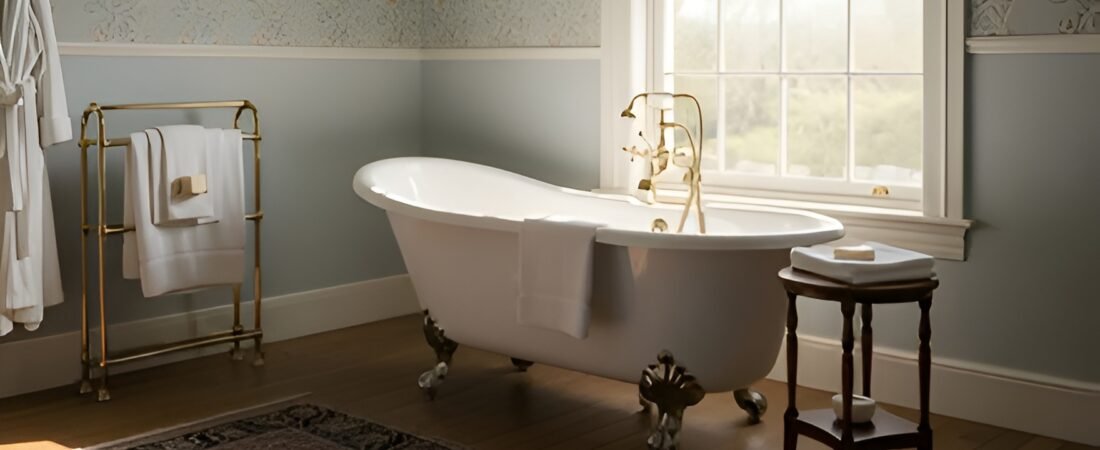
A clawfoot tub with shower is a freestanding bathtub fitted with a shower system, usually including an exposed shower riser, showerhead, faucet, and curtain enclosure. Unlike a standard bathtub built against a wall, the clawfoot design stands independently on decorative feet, so the shower setup needs to direct water safely and prevent it from reaching the surrounding floor.
Can You Put a Shower in a Clawfoot Tub?
Yes, you can put a shower in a clawfoot tub if the tub, plumbing, and bathroom layout are suitable. Most installations use a shower conversion kit with a vertical riser pipe and an overhead showerhead, while a circular or oval curtain rod surrounds the tub to contain splashing water and protect nearby walls and flooring.
Why Choose a Clawfoot Tub with Shower?
The biggest advantage is that you do not have to choose between a bathtub and a shower. A clawfoot tub can create a luxurious focal point in the bathroom while still serving as a practical bathing space for daily use, making it especially useful when you only have room for one main tub.
The Classic Appeal of a Clawfoot Tub
Clawfoot tubs have a timeless appearance that works beautifully in Victorian, farmhouse, traditional, cottage, and even modern bathrooms. The shape of the tub and its raised feet create a sense of space and elegance, while the addition of updated fixtures allows an old-fashioned design to fit comfortably into modern life.
How Does the Shower Setup Work?
The shower system normally rises from the faucet area through an exposed vertical pipe before connecting to a showerhead above the tub. A curtain rod is then installed around the upper perimeter of the bathtub, allowing a shower curtain to surround the bathing area and help keep water inside while you shower.
The Shower Riser
The shower riser is the tall pipe that carries water upward from the faucet assembly to the showerhead. Because it remains visible, its finish can have a major impact on the overall look of the bathroom, with chrome, polished nickel, brass, and matte black being popular choices.
The Shower Curtain Rod
A clawfoot tub usually requires a circular, oval, or D-shaped shower curtain rod because the tub is exposed on multiple sides. This rod gives the curtain enough coverage to create a protective enclosure, which is important because a freestanding tub does not have built-in shower walls like a conventional bathtub.
The Shower Curtain
A long shower curtain, often paired with a waterproof liner, hangs from the surrounding rod and helps prevent water from splashing onto the floor. Choosing a curtain that reaches close to the tub rim and a liner that stays inside the tub can make a noticeable difference in keeping the bathroom dry.
Different Types of Clawfoot Tub Shower Systems
Several shower configurations are available, and the best choice depends on your plumbing, bathroom layout, and preferred style. Some systems are designed for traditional exposed plumbing, while others use wall-mounted fixtures or hand showers to create a more flexible and contemporary setup.
Freestanding Shower Conversion Kits
A freestanding conversion kit is one of the most recognizable options for turning a clawfoot tub into a shower bath. These kits usually connect directly to the tub faucet and include the riser, showerhead, and support components needed to create a classic overhead shower arrangement.
Wall-Mounted Shower Systems
A wall-mounted system places the shower controls or showerhead on a nearby wall instead of relying entirely on plumbing attached to the tub. This approach can provide stronger structural support and may work well in bathrooms where the clawfoot tub is positioned close enough to a wall.
Handheld Shower Options
A handheld shower can be a practical addition because it gives you more control over where the water goes. It is useful for washing hair, cleaning the tub, bathing children, or reducing splashing, and some homeowners combine a handheld unit with a fixed overhead showerhead.
Best Clawfoot Tub Styles for a Shower
Many traditional clawfoot tubs can be adapted for shower use, but the shape and condition of the tub matter. A tub with a relatively even rim and enough interior standing room is generally more practical than an unusually narrow or heavily sloped design.
Single-Ended Clawfoot Tubs
A single-ended tub has one raised end designed for reclining and a faucet positioned at the opposite end. This traditional style can work with a shower conversion, although the curtain arrangement and showerhead position should be planned carefully to provide comfortable standing space.
Double-Ended Clawfoot Tubs
A double-ended tub has raised ends on both sides, with plumbing often positioned near the center. This design can look especially elegant, but adding a shower may require a compatible center-mounted fixture and a properly sized curtain rod.
Slipper Clawfoot Tubs
A slipper tub has one or both ends raised higher than the rest of the tub, creating a comfortable backrest for soaking. It can still be used with a shower, although the taller profile and curved shape may require extra attention when choosing a curtain rod and ensuring proper water coverage.
What Size Bathroom Do You Need?
A clawfoot tub with shower needs enough open space around the tub for safe movement and for the shower curtain to hang properly. Before buying a tub, measure the bathroom carefully and consider the tub dimensions, curtain enclosure, plumbing location, door clearance, and the space needed to enter and exit safely.
Where Should You Place the Tub?
The placement depends largely on where the water supply and drain can be installed, although a clawfoot tub can be positioned more creatively than a built-in bathtub. Many homeowners place it near a wall for easier plumbing, while larger bathrooms may allow the tub to stand as a dramatic centerpiece.
Plumbing Considerations Before Installation
Plumbing is one of the most important parts of installing a clawfoot tub with shower because exposed fixtures must line up correctly with the water supply. The drain, hot and cold water lines, faucet spacing, water pressure, and shower riser all need to be considered before final installation.
Does the Floor Need Extra Support?
A large tub filled with water can become extremely heavy, especially when a person is inside it. Older homes may need a professional assessment to determine whether the floor structure can safely support the combined weight of the tub, water, fixtures, and user.
Choosing the Right Shower Curtain Rod
The curtain rod should match both the shape of the tub and the available space around it. Oval rods are popular because they follow the general shape of many clawfoot tubs, while circular or custom-shaped rods may be better suited to specific bathroom layouts.
Ceiling-Mounted or Wall-Supported Rods
Some curtain rods hang from ceiling supports, while others connect partly to nearby walls for additional stability. The right option depends on the ceiling height, tub placement, wall location, and weight of the curtain and liner, so measuring the space before purchasing is essential.
How to Prevent Water From Splashing Out
The most effective approach is to use a properly fitted waterproof liner that hangs inside the tub during showers. Keeping the curtain fully closed, using a suitable showerhead angle, and making sure the tub sits level can also reduce the amount of water that escapes onto the floor.
Flooring Around a Clawfoot Tub with Shower
Because water can occasionally splash outside the curtain, moisture-resistant flooring is important. Tile is a popular choice, but properly sealed stone and other water-resistant surfaces can also work well when combined with good ventilation and regular maintenance.
Ventilation Matters More Than You Think
A bathroom with a shower produces moisture, and poor ventilation can lead to condensation, peeling paint, mildew, and other moisture-related problems. An effective exhaust fan and good airflow help protect the room, especially when a shower is being added to a bathroom that was originally designed mainly around a soaking tub.
Best Fixture Finishes
The fixture finish can completely change the personality of a clawfoot tub bathroom. Chrome offers a bright traditional appearance, polished nickel feels refined, brass brings warmth and vintage character, while matte black can create a striking contrast in a more modern design.
Chrome Fixtures
Chrome is a common choice because it looks clean, bright, and versatile with many bathroom styles. It pairs naturally with white porcelain tubs and can be easier to match with other bathroom hardware if you want a classic and coordinated appearance.
Brass Fixtures
Brass can give a clawfoot tub with shower a warm and distinctive look, particularly in vintage or traditional bathrooms. The finish works beautifully with rich colors, patterned tile, natural wood, and antique-inspired accessories, although the exact tone should match the other metals used in the room.
Matte Black Fixtures
Matte black fixtures create a bold contrast against a white clawfoot tub and can help modernize the entire space. This finish works especially well in bathrooms that combine traditional elements with contemporary tile, lighting, or minimalist décor.
Is a Clawfoot Tub with Shower Practical for Daily Use?
Yes, it can be practical for daily use when the shower system is installed correctly and the curtain provides reliable coverage. The biggest adjustment is that you must step over the high side of the tub, which may be less convenient for some people than entering a standard low-sided shower enclosure.
Is It Safe to Shower in a Clawfoot Tub?
It can be safe, but safety features are worth considering because the tub floor may become slippery and the sides are usually high. A non-slip surface, secure grab bars where appropriate, a stable tub installation, and careful entry and exit can make the setup safer and more comfortable.
How Much Does a Clawfoot Tub with Shower Cost?
The total cost varies depending on whether you already own the tub and how much plumbing work is required. A simple conversion can cost far less than a full bathroom renovation, while restoring an antique tub, relocating plumbing, upgrading floors, and installing premium fixtures can increase the overall budget significantly.
New vs. Antique Clawfoot Tubs
A new tub may offer predictable dimensions and easier compatibility with modern fixtures, while an antique tub brings genuine history and character. Older tubs should be inspected for cracks, rust, damaged enamel, and structural issues before being converted into a shower bath.
Cleaning and Maintaining the Setup
Regular cleaning keeps the tub, fixtures, curtain liner, and surrounding floor in better condition. Wiping away excess water, cleaning the curtain periodically, checking for leaks, and avoiding harsh cleaners that could damage specialty finishes can help the bathroom stay attractive and functional.
Common Problems With Clawfoot Tub Showers
The most common issues include water escaping the curtain, an unstable curtain rod, plumbing leaks, poor shower pressure, and moisture collecting around the bathroom. Most of these problems can be reduced by using compatible hardware, installing the system carefully, and addressing small leaks before they cause larger damage.
Design Ideas for a Clawfoot Tub with Shower
The design possibilities are wide because the tub itself can become the centerpiece of the room. You might choose white subway tile for a timeless look, patterned flooring for vintage character, dark walls for drama, or light natural finishes for a calm and simple farmhouse-style bathroom.
Vintage Bathroom Style
For a traditional look, combine a white clawfoot tub with polished chrome or brass fixtures, classic tile, and soft-colored walls. Small details such as an elegant shower curtain, vintage-style lighting, and framed artwork can make the room feel personal without turning it into a museum.
Modern Clawfoot Bathroom Style
A clawfoot tub can also work in a modern bathroom when paired with simple finishes and clean lines. Matte black hardware, large-format tile, neutral walls, and minimal accessories can balance the ornate shape of the tub with a more contemporary setting.
Farmhouse-Inspired Bathroom Style
A farmhouse design can combine a clawfoot tub with warm wood accents, simple wall finishes, soft neutral colors, and practical storage. The result feels comfortable rather than overly formal, which makes the bathroom suitable for everyday family use.
Small Bathroom Clawfoot Tub Ideas
A smaller bathroom can still accommodate this type of tub if the layout is planned carefully. Choosing a compact model, placing it strategically near existing plumbing, and keeping surrounding décor simple can prevent the room from feeling crowded.
Before You Buy a Clawfoot Tub with Shower
Measure everything before purchasing, including the tub footprint, ceiling height, shower rod dimensions, plumbing connections, and available clearance around the tub. It is much easier to identify compatibility problems before the tub arrives than after you have started a renovation.
Is a Clawfoot Tub with Shower Worth It?
A clawfoot tub with shower is worth considering if you love the look of a freestanding vintage tub but still need a functional shower for daily life. It requires more planning than a standard bathtub, particularly when it comes to plumbing and splash control, but the finished result can be both practical and visually memorable.
Conclusion
A clawfoot tub with shower proves that a bathroom does not have to choose between beauty and function. With the right tub, compatible shower fixtures, secure curtain system, careful plumbing, and proper moisture protection, you can enjoy a relaxing soaking tub and a convenient shower in the same space. Plan the details before installation, and the result can become one of the most distinctive features in your home.
Frequently Asked Questions
Can any clawfoot tub be converted into a shower?
Many clawfoot tubs can be converted, but compatibility depends on the tub design, faucet connections, plumbing layout, and available shower hardware. Measuring the tub and checking fixture requirements before buying a conversion system is the safest approach.
Do you need a shower curtain with a clawfoot tub shower?
Yes, in most cases a shower curtain and waterproof liner are needed to contain water because a clawfoot tub does not have built-in shower walls. The curtain rod should provide enough coverage around the open sides of the tub.
What shape shower curtain rod is best for a clawfoot tub?
An oval or custom-shaped rod is often best because it follows the shape of the bathtub and provides coverage around the shower area. The ideal choice depends on the tub dimensions and whether the installation includes wall or ceiling supports.
Can you put a clawfoot tub with shower in a small bathroom?
Yes, provided there is enough room for the tub, safe access, plumbing, and the shower curtain enclosure. Compact clawfoot tubs and thoughtful placement can make the design possible even in smaller bathrooms.
Does a clawfoot tub with shower splash a lot?
It can splash if the curtain liner is too short, the showerhead is poorly positioned, or the curtain does not fully close. A properly fitted enclosure and careful showerhead placement can greatly reduce water escaping from the tub.