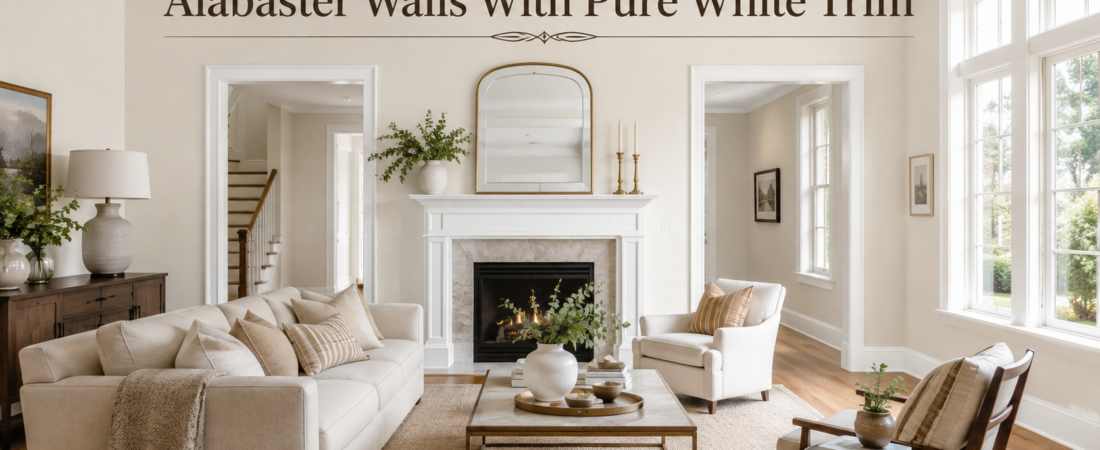
What Are Alabaster Walls With Pure White Trim?
Alabaster walls with Pure White trim typically means using Sherwin-Williams Alabaster SW 7008 as the main wall color and Sherwin-Williams Pure White SW 7005 for architectural details. Alabaster is a warm off-white with creamy characteristics, while Pure White is a soft white that generally reads cleaner and brighter. Because both shades belong to the white family, the difference is gentle. You get enough contrast to define the trim, but not so much that the room feels visually divided.
Why This Color Combination Works
The biggest reason this pairing works is that the colors are related rather than completely different. Alabaster has warmth, softness, and a slightly creamy appearance, while Pure White provides a crisp finish without becoming an extremely cool white. This allows the trim to stand out while still feeling connected to the walls. In a room with natural light, the effect can be especially attractive because the changing daylight reveals small differences between the two colors instead of creating harsh boundaries.
Alabaster vs. Pure White
Alabaster and Pure White are close enough to complement each other, but they do not look identical. Alabaster generally appears warmer and creamier, particularly beside a very bright white surface. Pure White tends to look cleaner and more neutral by comparison. This distinction is useful because trim needs enough separation from the wall to look intentional. If both surfaces were exactly the same shade, the room could still look polished, but architectural details would have less visual definition.
Is Pure White Trim Too Bright With Alabaster?
For most homes, Pure White trim is not too bright with Alabaster. In fact, it can be a smart way to give warm walls a fresher appearance. However, lighting and surrounding finishes matter. A room filled with very cool daylight may make Pure White appear somewhat brighter, while warm artificial bulbs can make both colors look creamier. Before painting the entire house, test the two shades together on a large section of wall and observe them throughout the day.
How Alabaster Looks in Natural Light
Natural light can change the personality of Alabaster quite a bit. In a sunny south-facing room, its warm undertones may become more noticeable, giving the space a comfortable, creamy appearance. North-facing rooms usually receive cooler light, which can make Alabaster look more balanced and slightly less warm. East- and west-facing rooms can shift throughout the day. This is why a paint color that looks perfect in a showroom can look completely different on your wall.
How Pure White Trim Changes the Look
Pure White trim can make Alabaster walls appear slightly warmer because the cleaner trim provides a visual reference point. Around windows, doors, and baseboards, this contrast gives the eye a clear boundary. The effect is understated rather than bold. That makes the combination particularly useful if you want a home to feel finished and coordinated without relying on strong accent colors.
Best Rooms for This Combination
This palette works in almost any room, but it is especially attractive in living rooms, bedrooms, dining rooms, hallways, kitchens, and home offices. In living areas, Alabaster creates a relaxed backdrop for furniture and artwork. Bedrooms benefit from its soft character, while Pure White trim keeps the space from feeling too heavy. In hallways, the combination can make architectural details look cleaner and more defined.
Alabaster Walls With Pure White Trim in the Living Room
A living room painted in Alabaster can feel warm, bright, and comfortable without becoming overly beige. Pure White baseboards and door casings add a subtle frame around the room. Add natural wood, cream upholstery, warm gray textiles, or muted black accents, and the result feels layered rather than overly decorated. This is also a good palette for homes where you want the furniture, artwork, or views outside the windows to remain the main focus.
Alabaster Walls With Pure White Trim in the Bedroom
In a bedroom, this combination can create a calm backdrop without making the space look sterile. Alabaster works nicely with linen bedding, light oak furniture, woven textures, and muted neutral fabrics. Pure White trim gives the room a clean outline around doors and windows. If you prefer a cozy bedroom rather than a stark white one, this pairing offers warmth while keeping the overall design light.
Alabaster in the Kitchen
Alabaster walls can work particularly well in kitchens with white or light-colored cabinets. Pure White trim helps define the room’s edges while allowing the wall color to introduce a little warmth. The key is to consider the cabinet color before choosing your final finishes. If the cabinets are Pure White, Alabaster walls can create a soft tonal difference. If the cabinets are much warmer, the walls may need to be tested carefully to prevent the space from looking too creamy.
Alabaster Walls With Pure White Trim and Wood
Wood is one of the easiest materials to pair with this color scheme. Natural oak, walnut, maple, and medium-toned woods can all work depending on the overall style. Alabaster provides a warm neutral background, while Pure White trim keeps the room visually fresh. If your floors already contain strong wood tones, you do not necessarily need another major color. Let the natural grain provide some of the visual interest.
Best Accent Colors
Several accent colors work beautifully with this palette. Soft beige, taupe, warm gray, muted green, dusty blue, charcoal, terracotta, and natural brown can all complement Alabaster. For a softer look, stay with warm neutrals and organic colors. For more contrast, introduce black hardware or deeper charcoal furniture. The trick is to use accent colors as supporting elements rather than covering every surface with another shade.
Alabaster With Black Accents
Black can give an Alabaster-and-Pure-White room a more modern edge. Think black window frames, light fixtures, cabinet handles, picture frames, or occasional furniture. The contrast is strong enough to add personality without overwhelming the warm walls. If you like the popular modern farmhouse or transitional style, this combination can be particularly effective.
Alabaster With Brass Fixtures
Warm brass and Alabaster naturally complement each other because both have warm visual qualities. Brass lighting, cabinet hardware, mirrors, or decorative accessories can make the room feel more polished. However, you do not need brass everywhere. A few carefully chosen pieces are usually enough to create the effect without making the room feel overly coordinated.
What Flooring Works Best?
Light oak, medium wood, natural stone, warm beige tile, and neutral carpet can all work with Alabaster walls. The best choice depends on the undertones already present in the flooring. If your floor has strong yellow or orange undertones, test the paint carefully because warm walls can amplify that appearance. Neutral or natural flooring usually gives you more flexibility.
What Ceiling Color Should You Use?
Pure White can be an excellent ceiling color when the trim is also Pure White. Keeping the ceiling and trim consistent creates a clean architectural frame around Alabaster walls. However, some homeowners prefer Alabaster on the ceiling for a softer, more enveloping effect. There is no universal rule. If your goal is definition and brightness, Pure White is a strong choice; if you want a quieter, warmer atmosphere, using Alabaster overhead can work beautifully.
Should Doors Match the Trim?
Matching interior doors to the Pure White trim is usually the easiest approach. It creates visual consistency and makes the room feel intentional. White doors also stand out nicely against Alabaster walls without creating an aggressive contrast. If you have stained wood doors, however, you can keep them natural. The warm wood can actually add character to the otherwise light palette.
How Lighting Affects the Paint
Lighting is one of the most important factors when choosing between warm whites. LED bulbs with warmer color temperatures can make Alabaster appear creamier, while cooler bulbs can make it look more neutral. Pure White can also shift depending on the light source. For the most reliable result, test paint samples under the actual bulbs you plan to use in the room instead of judging the colors only during daylight.
Common Mistakes to Avoid
One common mistake is assuming that every white will look the same once it is on the wall. White paint is highly affected by surrounding colors, flooring, furniture, and natural light. Another mistake is choosing a trim color without testing it beside the wall color. Even small undertone differences can become obvious across a large room. Finally, avoid judging paint from a tiny sample card alone. A larger sample gives you a much better idea of how the color will behave.
Should You Use the Same Finish?
Using different paint finishes can help define the surfaces. Walls are commonly painted in a matte or eggshell finish, while trim is often painted in satin, semi-gloss, or another finish that is easier to clean. Even when Alabaster and Pure White are close in color, the difference in sheen can make the architectural details more noticeable. The exact finish should depend on the room, cleaning needs, and the look you prefer.
Is This Combination Good for a Small Room?
Yes, Alabaster walls with Pure White trim can work very well in small rooms. The light palette helps reflect available light and keeps the space from feeling visually crowded. Because the contrast between the wall and trim is relatively gentle, the room can also feel more continuous. For a small space with limited natural light, test the colors first because the warmth of Alabaster may become more noticeable.
Is It Good for an Open Floor Plan?
This combination is especially useful in open floor plans because it creates a neutral foundation that can connect several areas. You can use Alabaster across the main living spaces while allowing furniture, rugs, lighting, and artwork to introduce different personalities. Pure White trim helps maintain consistency from one room to another. This approach can make an open layout feel coordinated without requiring every furnishing to match.
How to Make the Room Feel More Expensive
You do not need expensive furniture to make this palette look sophisticated. Focus on proportions, texture, and quality-looking details. Natural wood, substantial curtains, layered lighting, textured rugs, simple artwork, and carefully selected hardware can elevate the space. The neutral walls provide a quiet background, so even small design decisions become more noticeable.
Is Alabaster a Good Whole-House Color?
Alabaster can be an excellent whole-house color because it is versatile and relatively easy to coordinate. It works with many decorating styles and does not demand a specific furniture palette. Using Pure White consistently on trim, doors, and ceilings can create continuity throughout the home. You can then introduce different accent colors in individual rooms without making the house feel disconnected.
Alabaster Walls With Pure White Trim
If you want a home that feels warm, clean, and timeless, Alabaster walls with Pure White trim are a strong choice. Alabaster brings softness to the walls, while Pure White adds definition and freshness to architectural details. The combination is flexible enough for modern, traditional, farmhouse, transitional, and minimalist interiors. Still, paint should never be chosen from a name alone. Your home’s lighting, flooring, cabinets, and existing finishes can change the way these colors appear, so large samples are worth the small effort.
Conclusion
Alabaster walls with Pure White trim strike a nice balance between warmth and freshness. The walls feel inviting without becoming heavy, while the trim adds enough contrast to highlight doors, windows, baseboards, and other architectural details. Whether you are refreshing a single bedroom or choosing a whole-house color scheme, this pairing gives you plenty of room to experiment with wood, metal, textiles, artwork, and accent colors. The most important step is simple: sample the colors in your actual space before committing. Paint names can give you a starting point, but your home’s light is what ultimately tells the story.
FAQs
1. Do Alabaster walls and Pure White trim go together?
Yes. Alabaster and Pure White are closely related shades that create gentle contrast. Alabaster adds warmth, while Pure White gives trim a cleaner appearance.
2. Is Alabaster warmer than Pure White?
Generally, yes. Alabaster has more noticeable warm, creamy qualities, while Pure White usually appears cleaner and more neutral beside it.
3. What trim color goes best with Alabaster walls?
Pure White is a popular choice because it provides subtle contrast without looking harsh. Other whites can work too, but their undertones should be tested beside Alabaster.
4. Can I use Alabaster on walls and Pure White on the ceiling?
Absolutely. Pure White ceilings can make the room feel brighter and give the Alabaster walls a defined edge. It is also common to use Pure White on both ceilings and trim.
5. What colors go well with Alabaster?
Alabaster works nicely with warm wood, beige, taupe, muted green, dusty blue, charcoal, black, brass, and other natural neutral tones.
Read also: How Much Does a Costco Jacuzzi Bath Remodel Cost?