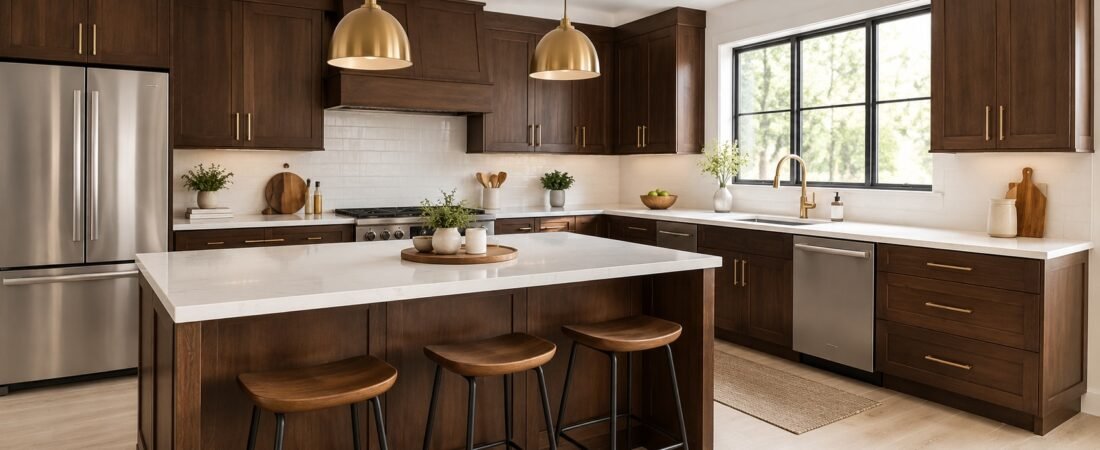
dark wood cabinets with light countertops, including the best colors, materials, backsplash ideas, and styling tips for a beautiful kitchen. Dark wood cabinets with light countertops create a beautiful balance between warmth and brightness. The rich color of walnut, espresso, or deep oak brings depth to a kitchen, while white, cream, or light gray countertops keep the space feeling open and fresh. This combination works well in modern, traditional, farmhouse, and transitional kitchens, making it a versatile choice for homeowners who want a stylish look that will last.
One of the best things about this color combination is its flexibility. You can pair dark cabinets with crisp white quartz for a clean, modern finish or choose creamy marble-look surfaces for a softer, more welcoming atmosphere. With the right backsplash, flooring, hardware, and lighting, even a small kitchen can feel balanced and inviting.
In this guide, you will discover the best countertop colors, practical design ideas, material options, and styling tips to help you create a kitchen that looks attractive and works well for everyday life.
Why Dark Wood Cabinets with Light Countertops Work So Well
The secret behind this combination is contrast. Dark cabinetry creates a strong visual foundation, while lighter countertops reflect light and prevent the kitchen from feeling too heavy. Together, they create a balanced appearance that feels both elegant and comfortable.
Dark wood also adds a natural quality that painted cabinets sometimes lack. The grain of walnut, oak, or other wood finishes introduces texture and character, while a light countertop gives the eye a clean surface to rest on. This pairing can make the kitchen feel carefully designed without requiring expensive decorative details.
Another advantage is that it suits different design styles. A kitchen with flat-panel walnut cabinets and white quartz can look contemporary, while raised-panel cherry cabinets paired with cream granite may feel more traditional. The basic color combination stays the same, but the materials and details completely change the mood.
1. Dark Walnut Cabinets with White Quartz Countertops
Dark walnut cabinets with white quartz countertops are an excellent choice for homeowners who prefer a clean and sophisticated kitchen. Walnut has rich brown tones and natural grain patterns that make cabinetry feel warm and distinctive. White quartz adds a smooth, bright surface that complements the wood without competing with its texture.
This pairing works especially well in modern and transitional kitchens. Choose simple cabinet doors, understated handles, and a white backsplash to keep the overall design uncluttered. If you want a little more personality, brass hardware or a warm pendant light can add a subtle decorative touch.
Quartz is also practical for busy households because it is nonporous and generally requires less maintenance than natural marble. However, it is not completely heatproof, so hot pans should be placed on trivets rather than directly on the surface.

2. Espresso Cabinets with Cream Countertops
Espresso cabinets paired with cream countertops create a softer contrast than dark brown cabinets with bright white surfaces. The creamy color reduces the sharpness of the difference between light and dark, making the kitchen feel warm, relaxed, and welcoming.
This combination is particularly attractive in homes with beige walls, natural wood floors, or warm-toned furniture. Cream countertops also complement bronze, brushed brass, and black cabinet hardware, giving you several options for finishing the design.
For the best result, choose a cream surface with a subtle pattern rather than a strong yellow undertone. A gentle ivory shade can connect the dark cabinets with the rest of the room without making the kitchen appear dated.

3. Dark Oak Cabinets with Light Gray Countertops
Dark oak cabinets offer a natural wood appearance with noticeable grain, making them ideal for kitchens that need texture and character. When paired with light gray countertops, the result feels modern but not overly stark. The gray surface softens the contrast while maintaining a clean and balanced appearance.
This combination works well with stainless steel appliances, gray or white backsplashes, and simple cabinet pulls. It is also a good option if you like neutral interiors but want something more interesting than an entirely white kitchen.
Pay attention to the undertones before choosing materials. Warm brown oak generally looks better with warm gray countertops, while cooler wood finishes may work with a more neutral gray. Matching these undertones helps the different surfaces feel connected rather than randomly selected.

4. Dark Cherry Cabinets with White Marble-Look Countertops
Cherry wood cabinets have a reddish-brown appearance that adds richness and a traditional feel to a kitchen. Pairing them with white marble-look countertops creates a lighter backdrop that prevents the deep wood color from dominating the room.
A countertop with delicate gray veining can make the kitchen feel elegant without introducing too much visual activity. This is especially useful when the cabinet grain is already prominent or the room includes decorative moldings.
For a cohesive finish, consider a white subway tile backsplash, warm metal hardware, and neutral flooring. These elements allow the cherry cabinets and light countertops to remain the main features of the design.

5. Dark Wood Cabinets with Light Beige Countertops
Light beige countertops are a lovely choice if you want your kitchen to feel warm rather than sharply contrasted. Beige works naturally with dark brown wood because both colors have earthy qualities, but the lighter surface keeps the room from looking too dark. This combination suits traditional kitchens, modern farmhouse interiors, and homes with warm neutral decor.
You can complete the look with sandy beige backsplash tiles, cream walls, and medium-toned wood flooring. If your cabinets have a strong grain pattern, choose a countertop with a quieter finish to keep the space from feeling busy. The result is a comfortable kitchen that feels timeless rather than tied to a short-lived design trend.

6. Dark Wood Cabinets with Light Marble Countertops
Natural marble brings a distinctive pattern to dark wood cabinetry, making the combination suitable for homeowners who want a more luxurious kitchen. White marble with gray or beige veins creates movement across the countertop, while the deep wood cabinets provide a strong visual anchor. A matching marble backsplash can make the entire kitchen feel more connected.
Before choosing marble, consider how you use your kitchen. Natural marble is porous and can stain or etch when exposed to acidic foods, so it needs appropriate sealing and careful maintenance. If you love the marble appearance but prefer easier upkeep, a marble-look quartz or porcelain surface may be a better fit.

7. Dark Wood Cabinets with White Countertops in a Small Kitchen
Dark cabinets can work beautifully in a small kitchen when the rest of the design is planned carefully. White countertops create a bright horizontal surface that breaks up the darker cabinetry, while a light backsplash and pale walls help the room feel more open. The key is to use contrast intentionally rather than covering every surface in dark colors.
Keep the countertop relatively clear, choose simple cabinet hardware, and use under-cabinet lighting to brighten the work area. If possible, add a reflective backsplash or a well-positioned mirror-like surface to spread light around the room. You do not have to avoid dark cabinets in a compact space; you simply need enough lighter elements to balance them.

8. Dark Wood Cabinets with Light Countertops and a Matching Backsplash
A backsplash that complements the countertop helps create a coordinated appearance. White countertops with a white subway tile backsplash offer a classic look, while a slab backsplash in a similar color creates a cleaner, more continuous surface. Both options work well with dark wood because they keep the visual contrast consistent.
If you prefer a little more texture, choose handmade-look tiles, lightly veined porcelain, or subtle off-white stone. Avoid adding too many competing patterns when your cabinets already have visible wood grain. A simple backsplash often gives dark cabinetry more room to stand out.

9. Dark Wood Cabinets with Light Countertops and Brass Hardware
Brass hardware can make dark wood cabinets and light countertops feel warmer and more refined. The golden finish complements the brown tones in walnut, espresso, and oak while adding a small amount of shine against the cabinetry. It is a useful detail when you want a kitchen to feel polished without adding more colors or patterns.
For a coordinated look, repeat the brass finish in a faucet, pendant lights, or cabinet knobs. You do not need every metal detail to match perfectly, but keeping the finishes intentional helps the room feel unified. Brushed brass is especially useful if you prefer a softer appearance than highly polished gold.

10. Dark Wood Cabinets with Light Countertops and Black Hardware
Black hardware gives dark wood cabinetry a crisp, modern finish. When paired with light countertops, the black handles create a visual connection between the deep cabinets and other dark accents, such as window frames or pendant lights. This works particularly well in contemporary, industrial, and minimalist kitchens.
To keep the design balanced, introduce black in a few deliberate places rather than everywhere. A black faucet, simple cabinet pulls, and one or two lighting fixtures may be enough. If the kitchen has limited natural light, make sure the backsplash and surrounding walls remain light enough to prevent the overall palette from feeling too heavy.

How to Choose the Best Light Countertop Color
The right countertop color depends on your cabinet undertones, lighting, flooring, and preferred style. White creates a noticeable contrast, cream feels warmer, and light gray gives the kitchen a more understated contemporary appearance. Beige is a strong option for earthy interiors, while marble-look surfaces introduce additional movement through veining.
Before making a final decision, compare physical samples of the cabinet finish and countertop together. Place them near a window and under your usual kitchen lighting because colors can look different throughout the day. Even two materials described as white may clash if one has a cool blue undertone and the other has a warm yellow undertone.
White Countertops
White countertops are ideal when you want a fresh, bright appearance with strong contrast against dark cabinetry. They work with nearly every dark wood tone and are particularly effective in kitchens that receive limited natural light. A pure white finish looks crisp, while a softly patterned white surface can make the overall design feel less stark.
Cream Countertops
Cream countertops suit kitchens with warm wood, beige walls, bronze fittings, and natural flooring. They create a gentler contrast than pure white and help the space feel comfortable and inviting. Choose a balanced ivory or cream shade so it complements the cabinetry rather than making it appear unusually red or orange.
Light Gray Countertops
Light gray countertops are a practical choice for modern interiors. They pair especially well with neutral brown cabinets, stainless steel appliances, and simple backsplashes. Look at the undertones carefully, since some gray surfaces appear blue in cool lighting while others have warmer beige undertones.
Beige and Greige Countertops
Beige and greige combine naturally with dark wood because they bring together warm and neutral tones. They are excellent for kitchens with oak flooring, cream walls, or natural stone details. Greige, which sits between gray and beige, can be particularly useful when your room contains both warm wood and cooler metal finishes.
Which Countertop Material Is Best for Dark Wood Cabinets?
Color matters, but material affects everyday use just as much. The best option depends on your budget, cooking habits, maintenance preferences, and desired appearance.
| Countertop material | Best feature | Main consideration |
|---|---|---|
| Quartz | Consistent color and easy routine care | Can be damaged by excessive heat |
| Granite | Natural patterns and good durability | Usually needs periodic sealing |
| Marble | Distinctive veining and classic appeal | Can stain and etch |
| Porcelain | Many colors and stone-look finishes | Edges can chip if struck |
| Laminate | Budget-friendly and widely available | Less resistant to heat and cutting |
| Solid surface | Smooth appearance and repairability | Can scratch or be damaged by heat |
For many busy households, quartz is a sensible starting point because it offers a wide range of white, cream, and gray finishes without requiring routine sealing. Granite is worth considering if you prefer natural stone, while laminate can help keep a renovation within budget. Always check the manufacturer’s care instructions and compare installed costs rather than material prices alone.
How to Choose Flooring for Dark Wood Cabinets and Light Countertops
Flooring has a major influence on how dark cabinets and light countertops look together. Light oak flooring creates an airy, natural appearance, while beige porcelain tiles offer a clean and practical finish. Medium-brown flooring can also work, especially when its undertone complements the cabinets without making the entire room look like one continuous dark surface.
If you prefer a modern kitchen, consider large-format light gray or warm ivory tiles. For a farmhouse or traditional design, natural wood flooring can make the room feel more inviting. Try to avoid matching every wood finish exactly; a little variation in tone and grain often creates a more natural result.
Lighting Ideas That Make the Kitchen Look Better
Good lighting helps dark cabinetry look rich rather than gloomy. Under-cabinet LED lights brighten the countertop and make food preparation easier, while pendant lights over an island can provide both practical illumination and decorative interest. Warm or neutral-white lighting often works well with brown wood, although the best color temperature depends on your overall palette.
Natural light is equally important. If your kitchen has a window, avoid blocking it with heavy coverings, and use lighter colors on nearby walls to reflect daylight. In a kitchen with limited windows, combine general ceiling lighting with task lighting rather than relying on a single overhead fixture.
Common Design Mistakes to Avoid
One common mistake is choosing a countertop that clashes with the cabinet undertones. For example, a very cool gray surface may look out of place beside reddish cherry wood, while a strongly yellow cream countertop can make neutral walnut look cooler by comparison. Checking samples together before purchasing can help prevent this problem.
Another mistake is using too many bold patterns. If the cabinets have pronounced grain and the countertop has dramatic veining, a busy backsplash can make the kitchen feel visually crowded. Choose one main feature and let the other surfaces support it. Finally, do not overlook practical details such as edge profiles, stain resistance, cleaning requirements, and the amount of light available in the room.
Are Dark Wood Cabinets with Light Countertops Still in Style?
Yes, dark wood cabinets with light countertops remain a versatile design choice because they combine natural texture with a bright, neutral surface. Rather than depending on one specific trend, the pairing works across several styles, from contemporary walnut kitchens to traditional cherry cabinetry.
For a more current look, choose simple cabinet fronts, understated hardware, and a countertop with subtle veining. If you prefer a traditional kitchen, decorative doors, warm metals, and natural stone can make the same color combination feel classic. The best approach is to select materials and details that suit your home instead of following a trend that may not fit your everyday needs.
Conclusion
Dark wood cabinets with light countertops can give your kitchen depth, warmth, and a clean visual balance. White quartz creates a crisp modern contrast, cream adds softness, and light gray provides a subtle contemporary finish. The right choice depends on your cabinet color, room lighting, flooring, budget, and how much maintenance you are comfortable with.
Take time to compare material samples, think about how the kitchen will be used, and coordinate the backsplash and hardware with the main colors. A thoughtful combination of these elements can create a kitchen that looks beautiful today and remains practical for years to come.
Frequently Asked Questions
1. What color countertops look best with dark wood cabinets?
White, cream, light gray, and beige countertops all work well with dark wood cabinets. White offers the strongest contrast, while cream and beige create a warmer appearance. Light gray is ideal for a more contemporary kitchen.
2. Are dark wood cabinets with white countertops a good combination?
Yes, dark wood cabinets with white countertops create a balanced appearance by combining rich wood tones with a bright surface. This pairing suits modern, traditional, and transitional kitchens and can help a smaller room feel lighter.
3. Do dark cabinets make a small kitchen look smaller?
Dark cabinets can make a small kitchen feel more enclosed if the room lacks sufficient light. Pairing them with light countertops, pale walls, a simple backsplash, and good lighting helps create a more open appearance.
4. What backsplash goes with dark wood cabinets and light countertops?
White subway tiles, cream ceramic tiles, light gray porcelain, and subtle marble-look slabs are excellent choices. Select a backsplash that complements the countertop and does not compete with the cabinet grain.
5. Are quartz countertops good for dark wood cabinets?
Yes, quartz is a popular option because it comes in many light colors and generally requires little routine maintenance. It is available in plain white, cream, gray, and marble-look finishes, although it should be protected from excessive heat.
Read also: Best Foundation for a House on Sloped Land