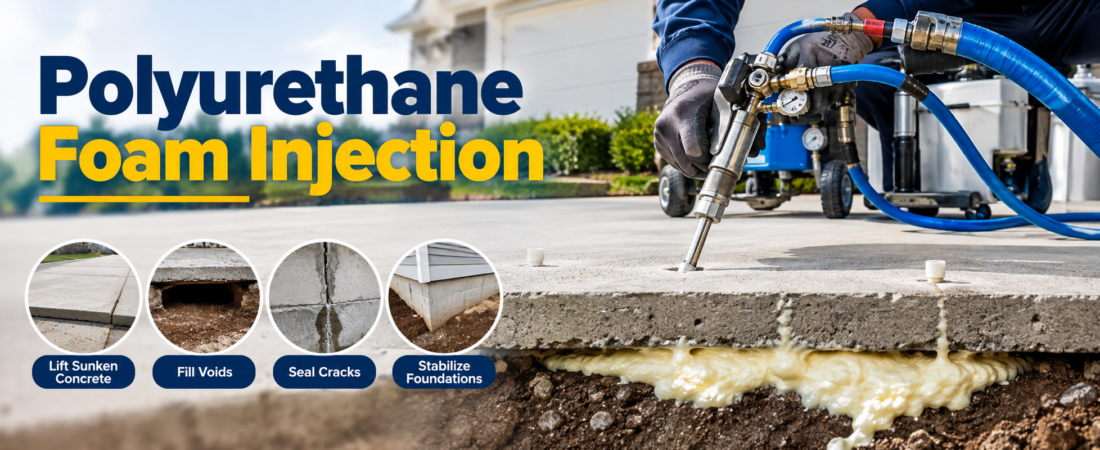
Polyurethane foam injection is a modern repair method used to fill empty spaces, stabilize concrete, seal certain leaks, and lift settled slabs. Instead of removing large sections of concrete or bringing in heavy equipment, contractors inject a liquid polyurethane material through small drilled holes. The material expands beneath the surface and creates a lightweight foam that fills available voids. For homeowners dealing with a sinking driveway, uneven walkway, patio, garage floor, or similar concrete problem, this technique can offer a faster and less disruptive alternative to traditional repair methods.
What Is Polyurethane Foam Injection?
Polyurethane foam injection is a process in which expanding polyurethane resin is injected into cracks, joints, voids, or spaces beneath concrete and other structures. Once the two-part material reacts, it expands into foam and hardens. Depending on the product and application, the foam can be designed for lifting concrete, filling cavities, sealing water pathways, or improving support beneath a slab.
How Does Polyurethane Foam Injection Work?
The process normally begins with an inspection of the damaged or settled area. Contractors drill small access holes into the concrete and insert injection ports. The polyurethane material is then pumped beneath the slab in carefully controlled amounts. As the foam expands, it occupies empty spaces and can exert enough pressure to raise a settled slab. The contractor watches the movement closely and adjusts the injection pattern until the desired position is reached.
Why Does Concrete Need Foam Injection?
Concrete can settle for several reasons, and the problem is not always obvious from the surface. Poorly compacted soil, erosion, drainage problems, shrinking soil, construction defects, or underground voids can leave portions of a slab without adequate support. Over time, the unsupported concrete may sink, tilt, or crack. Foam injection can address some of these conditions by filling voids and restoring support beneath the affected area, although the underlying cause should always be considered before repair.
Polyurethane Foam Injection for Sunken Concrete
One of the best-known applications is lifting sunken concrete slabs. Driveways, sidewalks, patios, garage floors, pool decks, and other flatwork can gradually become uneven as the soil beneath them changes. A contractor can inject expanding foam below the low section and use controlled pressure to bring the slab closer to its original elevation. This can improve appearance, drainage, and usability without completely replacing the concrete.
Using Foam to Fill Voids Beneath Concrete
Empty spaces beneath a concrete slab can create serious support problems. These voids may develop because water washes away soil, underground materials settle, or the original fill was not compacted properly. Polyurethane foam can expand into irregular spaces that would be difficult to reach using conventional materials. Once cured, the foam provides additional support and reduces the amount of unsupported space beneath the slab.
Polyurethane Foam Injection for Foundation Repair
Foundation repair is a more complicated application and requires professional evaluation. In selected situations, polyurethane injection can fill gaps, seal water intrusion, or stabilize areas around a foundation. However, it should not automatically be considered a cure for every foundation problem. Significant structural movement, major settlement, bowing walls, or damaged footings may require engineered solutions rather than foam alone.
Polyurethane Foam Injection for Crack Repair
Certain concrete cracks can be treated with polyurethane injection, particularly when water infiltration is part of the problem. The material can expand inside a crack and create a barrier that helps reduce water movement. However, not every crack should be injected. A crack caused by continuing structural movement, severe settlement, or another underlying issue needs proper diagnosis before deciding on a repair material.
How Long Does Polyurethane Foam Take to Cure?
One reason contractors use polyurethane systems is their relatively fast reaction and curing characteristics. The exact curing time depends on the formulation, temperature, moisture conditions, application, and manufacturer specifications. Some products become firm very quickly, while others require additional time before the repaired area can handle normal loads. The contractor should follow the specific product requirements rather than relying on a general curing time.
Benefits of Polyurethane Foam Injection
The biggest advantage is that the repair can often be completed through relatively small access holes rather than removing an entire concrete slab. The material is also lightweight compared with many traditional lifting materials, expands into difficult-to-reach spaces, and can be installed with limited surface disruption. For the right application, this means a repair can be quicker, cleaner, and less invasive than complete concrete replacement.
Lightweight Material for Slab Lifting
Traditional slab-lifting methods may use cement-based mixtures that add substantial weight to the soil. Polyurethane foam is considerably lighter, which can be useful where the existing soil has limited bearing capacity. This does not mean foam eliminates every settlement risk, but reducing the additional load can be an important advantage when selecting a repair method.
Small Injection Holes Mean Less Surface Damage
A noticeable benefit of foam injection is the size of the access points. Contractors generally create relatively small holes through the concrete to deliver the material underneath. After injection, these holes can typically be patched with an appropriate material. Compared with removing and replacing a large concrete section, the visual and physical disruption can be much smaller.
Can Polyurethane Foam Stop Water?
Certain polyurethane formulations are specifically designed to react with moisture and create a water-resistant or waterproof barrier. They can be useful for sealing leaks through cracks, joints, and other pathways in concrete. Still, foam injection should not be viewed as a universal waterproofing solution. Poor drainage, hydrostatic pressure, damaged waterproofing membranes, or groundwater problems may continue to cause issues unless the larger water-management problem is addressed.
Polyurethane Foam Injection vs. Mudjacking
Polyurethane foam injection and mudjacking both aim to raise or stabilize settled concrete, but they use very different materials. Mudjacking pumps a cement-based slurry beneath the slab, while foam lifting uses expanding polyurethane. Foam is generally lighter and requires smaller access holes, whereas mudjacking can be useful for larger voids and certain heavier-duty applications. The better option depends on soil conditions, slab size, accessibility, budget, and the specific repair objective.
Polyurethane Foam Injection vs. Concrete Replacement
Replacement provides a completely new slab, which can make sense when concrete is extensively cracked, badly deteriorated, or structurally unsound. Foam injection, by contrast, works with the existing concrete and focuses on correcting problems such as settlement or inadequate support. If the slab itself remains in reasonably good condition, lifting and stabilizing it may be more practical than tearing it out and starting over.
What Does Polyurethane Foam Injection Cost?
The cost varies significantly because contractors price these projects according to factors such as the size of the affected area, amount of foam required, accessibility, degree of settlement, soil conditions, and location. Small repairs may be relatively affordable, while large slab-lifting or foundation projects can become considerably more expensive. A reliable estimate requires an on-site assessment because the visible crack or low spot does not necessarily reveal the amount of material needed underneath.
What Factors Affect the Price?
Several factors influence the final price of foam injection. The area and thickness of the concrete matter, as does the depth and size of any void beneath it. Contractors also consider how much lifting is required, how many injection points are necessary, whether water or soil erosion is involved, and whether additional drainage or structural work is needed. Comparing estimates based only on the price per hole can therefore be misleading.
Is Polyurethane Foam Injection Permanent?
A properly selected and installed polyurethane repair can provide long-lasting results, but no injection method can guarantee that a settlement problem will never return. The long-term performance depends heavily on the condition of the soil, water movement, concrete quality, and whether the original cause of the problem has been addressed. A slab lifted over actively eroding soil, for example, may experience future movement if drainage problems remain.
What Problems Can Foam Injection Solve?
Foam injection is particularly useful for problems involving settled slabs, underground voids, certain concrete leaks, and localized support deficiencies. It can also help stabilize some areas where erosion has created empty spaces. The key is matching the foam formulation and injection technique to the actual problem rather than treating every concrete defect in the same way.
What Problems Can It Not Solve?
Foam injection is not a magic solution for severely damaged concrete or every type of foundation failure. It cannot turn badly deteriorated concrete into new concrete, and it may not correct major structural defects, extensive soil instability, or serious foundation movement. When the underlying issue involves structural engineering, drainage, expansive soil, or significant settlement, additional repair work may be necessary.
Signs You May Need Professional Foam Injection
Uneven concrete, visible gaps beneath slabs, rocking sections, water flowing beneath pavement, and sudden changes in elevation can all indicate an underlying support problem. Cracks that appear alongside settlement deserve particular attention because they may indicate movement below the surface. Rather than assuming injection is the answer, a qualified contractor should inspect the area and determine what is actually causing the movement.
How Contractors Prepare for Foam Injection
Before injection begins, the contractor normally evaluates the slab, surrounding soil, drainage, cracks, and areas of settlement. They may mark injection points based on the size and geometry of the affected slab. Proper preparation matters because the material needs to be distributed strategically rather than simply pumped into one location. Controlled placement helps reduce the risk of excessive lifting or uneven movement.
The Importance of Controlled Injection
Polyurethane foam expands quickly, which makes injection control extremely important. Too little material may fail to provide sufficient support, while excessive injection in the wrong location can cause unwanted movement. Experienced contractors monitor slab elevation during the process and adjust pressure, injection location, and material volume accordingly. This is one area where professional experience can make a significant difference.
Is DIY Polyurethane Foam Injection a Good Idea?
DIY repair kits may look appealing, especially when the visible problem seems small, but professional injection equipment and experience provide much greater control. A contractor can identify voids, assess settlement, choose the correct formulation, and monitor the slab while material is being injected. For structural or expensive concrete, experimenting without understanding what is happening beneath the surface can create a much larger problem.
Choosing a Polyurethane Foam Injection Contractor
Look for a contractor who has specific experience with polyurethane slab lifting or injection rather than someone who simply performs general concrete work. Ask how they diagnose settlement, what type of foam they use, how they determine injection locations, and whether they address drainage or soil problems when necessary. A trustworthy contractor should be willing to explain the repair rather than promising that foam will solve everything.
Questions to Ask Before Hiring a Contractor
Before signing an agreement, ask what is causing the settlement, whether the existing concrete is suitable for lifting, what injection material will be used, and how the contractor will monitor the elevation. It is also worth asking about the expected service life, warranty terms, surface patching, and what happens if the slab moves again. Clear answers can help you distinguish a thoughtful repair plan from a quick sales pitch.
Environmental Considerations
Polyurethane foam has a relatively low material weight, and the installation process can reduce the need to remove and dispose of large quantities of concrete. That can be an advantage from a waste-reduction perspective. However, polyurethane is still a synthetic chemical material, so proper handling, mixing, curing, and disposal practices matter. Professional installers should follow the product manufacturer’s safety and application requirements.
Does Weather Affect Foam Injection?
Temperature and moisture can influence how polyurethane products react and cure. Some formulations are designed to work in wet environments, while others have specific temperature limitations. Professional contractors should account for site conditions before beginning the injection process. Following the manufacturer’s technical requirements is important for achieving predictable expansion and curing.
How Long Does a Foam Injection Repair Last?
There is no single lifespan that applies to every project. The durability of an injection repair depends on the foam formulation, installation quality, concrete condition, soil stability, drainage, and the reason the slab originally settled. When the surrounding conditions are stable and the repair is properly designed, polyurethane foam can provide a durable solution for many concrete applications.
Maintenance After Foam Injection
Once the repair is complete, keeping water away from the affected area can help protect the result. Gutters, downspouts, grading, irrigation systems, and surface drainage should be checked if water contributed to soil erosion or settlement. It is also sensible to monitor the repaired slab periodically. New movement, widening cracks, or recurring water intrusion should be investigated instead of ignored.
Conclusion
Polyurethane foam injection has become a useful option for repairing and stabilizing certain concrete and foundation-related problems without the disruption of complete replacement. Its lightweight nature, expanding action, and relatively small access holes make it particularly attractive for settled slabs and underground voids. However, the best results come from treating the cause as well as the symptom. Before choosing foam, have the concrete and surrounding conditions evaluated so you know whether injection is genuinely appropriate for the problem.
FAQs About Polyurethane Foam Injection
What is polyurethane foam injection used for?
Polyurethane foam injection is commonly used to lift settled concrete, fill voids beneath slabs, stabilize certain areas, and seal some cracks or water pathways. The exact application depends on the foam formulation and site conditions.
How much does polyurethane foam injection cost?
There is no universal price because project costs depend on slab size, settlement depth, void size, material requirements, accessibility, and local labor rates. An on-site inspection provides a more accurate estimate.
Is polyurethane foam better than mudjacking?
Neither method is automatically better for every project. Polyurethane foam is lightweight and uses small injection holes, while mudjacking can be suitable for some larger or heavier concrete-lifting applications. Soil and project conditions should guide the choice.
How long does polyurethane foam injection last?
A properly installed repair can be long-lasting, but its performance depends on soil stability, drainage, concrete condition, product selection, and installation quality. Fixing the cause of settlement improves the chances of long-term results.
Can polyurethane foam injection fix foundation cracks?
It can help with certain types of foundation cracks, particularly when sealing water intrusion is the primary objective. Structural cracks or cracks caused by significant foundation movement require professional evaluation before selecting an injection method.
Is polyurethane foam injection safe?
Professional polyurethane injection can be performed safely when the correct products, equipment, ventilation, protective measures, and manufacturer instructions are followed. Installation should be handled by trained professionals, particularly for structural applications.
Can polyurethane foam lift a driveway?
Yes. Polyurethane foam is commonly used to raise settled driveways and other concrete slabs. The contractor injects expanding material beneath the slab and carefully controls the process to achieve the desired elevation.
Read also: How Does a Stem Wall Foundation Work?