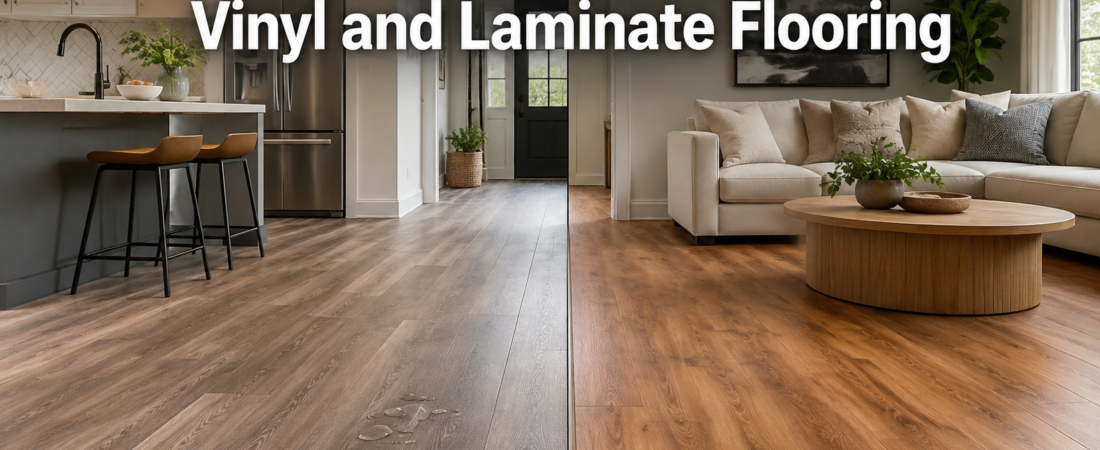
The key difference between vinyl and laminate flooring, including cost, durability, water resistance, maintenance, and the best choice for each room.
The difference between vinyl and laminate flooring mainly comes down to what they are made from, how they handle moisture, how they feel underfoot, and where they work best. Vinyl is made primarily from synthetic materials and is known for its water resistance. Laminate has a wood-based core and is often chosen for its convincing wood appearance and solid feel.
Neither option is automatically better for every room. The right choice depends on what you expect from your floor and where you plan to install it.
What Is Vinyl Flooring?
Vinyl flooring is a synthetic flooring material made with multiple layers, including a protective wear layer, decorative design layer, and resilient backing or core. Modern luxury vinyl plank (LVP) and luxury vinyl tile (LVT) can closely mimic hardwood, stone, or ceramic tile while offering a softer feel underfoot.
Vinyl has changed a lot over the years. Older vinyl sheets were sometimes associated with basic patterns and a plastic appearance, but today’s products can have detailed textures, realistic grain patterns, and embossed surfaces that make them surprisingly convincing.
What Is Laminate Flooring?
Laminate flooring is a multi-layer product designed to reproduce the appearance of natural wood, stone, or other materials. It generally includes a wear layer, decorative image layer, dense fiberboard-based core, and backing layer.
One reason laminate remains popular is its realistic visual appeal. A good laminate floor can provide the warm appearance of hardwood without the same price or maintenance requirements as solid wood. It also has a firmer feel that many homeowners associate with traditional wood flooring.
Difference Between Vinyl and Laminate Flooring at a Glance
The simplest way to understand the difference between vinyl and laminate flooring is to look at their strengths. Vinyl is usually the better choice when moisture resistance is a major concern, while laminate is often attractive to people who prioritize the look and feel of wood in relatively dry rooms.
Vinyl is generally more forgiving when exposed to spills, damp mopping, and everyday moisture. Laminate can perform very well in normal living spaces, but excess water can cause problems with its wood-based core if it reaches vulnerable areas.
Vinyl vs. Laminate: Material and Construction
The biggest technical difference is hidden beneath the surface. Vinyl flooring is primarily made from synthetic materials, while laminate flooring uses a fiber-based core.
This affects how the two materials react to water, how they bend, and how they feel when you walk across them. Vinyl tends to have a little more resilience, while laminate often feels harder and more solid.
That construction difference is easy to overlook when shopping because both products can look almost identical from across the room.
Which Flooring Is More Water Resistant?
For most homeowners, this is the deciding factor. Vinyl flooring generally has the advantage when water resistance is important. Many luxury vinyl products are designed to handle moisture and spills extremely well, making them suitable for areas where accidental water exposure is common.
Laminate flooring has improved significantly, and some newer products offer strong water-resistant protection. Still, the core material remains an important consideration. If water gets into seams or damaged areas and stays there, swelling can occur.
Is Vinyl Better for Bathrooms?
Vinyl is usually the more practical option for bathrooms because of its moisture resistance. A well-installed vinyl floor can handle splashes, humidity, and routine cleaning better than many traditional laminate products.
Laminate can work in some bathroom situations when the manufacturer specifically approves it for that environment, but homeowners should check the product warranty and installation instructions carefully rather than assuming all laminate is suitable.
Is Laminate Better for Living Rooms and Bedrooms?
Laminate can be an excellent choice for living rooms and bedrooms, particularly when the goal is to create a warm, wood-inspired look. It tends to feel firm and stable underfoot and can make a room look more polished without the expense of hardwood.
Vinyl also performs very well in these spaces. In fact, many modern luxury vinyl products are so realistic that appearance alone is no longer a clear reason to choose laminate.
Which Is More Durable?
Both vinyl and laminate can be highly durable, but they handle damage in different ways. Quality products in either category can stand up to busy households, children, pets, and frequent foot traffic when selected and installed correctly.
Vinyl is often praised for its resistance to moisture and everyday impacts, while laminate is known for good scratch and wear resistance. The quality of the wear layer, thickness, installation, and product rating can matter just as much as the flooring category itself.
Which Is Better for Homes With Pets?
For homes with dogs or cats, vinyl is often the safer overall choice. Pet accidents are easier to manage when the flooring has strong moisture resistance, and vinyl also tends to provide a comfortable walking surface for pets.
Laminate can still be a good option for pet owners, especially in dry areas. However, repeated exposure to liquid around seams can become a concern, particularly when accidents are not cleaned up quickly.
Which Flooring Is Easier to Clean?
Both options are relatively easy to maintain compared with many traditional flooring materials. Regular sweeping or vacuuming can remove dirt and grit, while occasional damp cleaning helps keep the surface looking fresh.
Vinyl generally gives homeowners more flexibility around moisture during cleaning. With laminate, it is usually better to avoid excessive water and follow the manufacturer’s cleaning recommendations closely.
Which Feels Better Underfoot?
The answer comes down to personal preference. Vinyl tends to feel slightly softer and more forgiving, which can be comfortable when you’re standing for long periods in a kitchen or working area.
Laminate usually has a firmer, more rigid feel. Some people prefer that because it feels more like a traditional wood floor. Others prefer vinyl because it is quieter and a little easier on the feet.
Which Is Quieter?
Vinyl often has an advantage when it comes to sound. Its resilient construction can help reduce the sharper clicking sounds that sometimes come from hard flooring.
Laminate can produce a hollow or tapping sound, particularly when installed over a hard subfloor without suitable underlayment. A quality underlayment can make a noticeable difference, though.
Vinyl vs. Laminate Appearance
Both flooring types have come a long way in terms of appearance. Vinyl planks can reproduce wood grain, knots, color variation, and stone patterns with impressive detail.
Laminate has also built a strong reputation for realistic wood visuals. Depending on the product, laminate can have a textured surface that closely follows the printed grain pattern, making it difficult to distinguish from real wood at a glance.
Which Looks More Like Real Wood?
There is no universal winner here. High-end laminate can have an extremely convincing wood appearance, while premium luxury vinyl can also look remarkably realistic.
The closer you look, the more the details matter. Plank width, texture, repeating patterns, edge design, and color variation can all influence whether a floor looks natural or overly manufactured.
Which Is Easier to Install?
Both vinyl and laminate are available in click-lock floating systems, which makes them popular choices for renovation projects. These products can often be installed without nailing or gluing every individual plank to the subfloor.
Vinyl is also available in glue-down formats, while laminate commonly uses a floating installation method. The best approach depends on the product, room conditions, subfloor, and manufacturer’s instructions.
Can You Install Vinyl or Laminate Over Existing Flooring?
In some situations, both can be installed over an existing floor, provided the surface is suitable. The subfloor generally needs to be clean, stable, dry, and reasonably level.
This is one area where preparation matters more than many first-time DIY installers expect. Installing a beautiful new floor over an uneven or damaged surface can lead to movement, gaps, squeaks, or premature wear.
Which Is More Affordable?
Pricing varies widely depending on quality, thickness, brand, installation method, and design. Budget versions of both vinyl and laminate can be relatively affordable, while premium products can cost significantly more.
Instead of comparing only the price per square foot, look at the full project cost. Underlayment, floor preparation, trim, transitions, delivery, removal of old flooring, and professional installation can all affect the final budget.
Vinyl vs. Laminate for Kitchens
The kitchen is one of the areas where vinyl makes a strong case for itself. Spills, wet shoes, dropped drinks, and frequent cleaning are normal parts of kitchen life.
Laminate can still look fantastic in a kitchen, particularly in a dry installation area where spills are cleaned promptly. However, homeowners who want more peace of mind around moisture will often prefer vinyl.
Vinyl vs. Laminate for Basements
Basements can present moisture challenges that are not obvious at first. Humidity, damp concrete, and occasional water intrusion can create problems for moisture-sensitive materials.
Because of that, vinyl is often considered the safer flooring choice for basement applications, especially when the specific product is designed for the environment. Laminate may be appropriate in a properly controlled, dry basement, but moisture conditions should be evaluated first.
Vinyl vs. Laminate for Bedrooms
Bedrooms are generally low-moisture areas, so both flooring types can work well. Laminate may appeal to homeowners looking for a wood-like appearance and firmer feel, while vinyl can provide a quieter and slightly softer surface.
The decision here is mostly about style, comfort, budget, and personal preference rather than moisture performance.
Vinyl vs. Laminate for Hallways
Hallways can receive plenty of foot traffic, so durability and scratch resistance matter. Both materials can handle busy areas when you choose a product with an appropriate wear rating.
Vinyl may offer an extra advantage when muddy shoes or wet weather are common. Laminate remains a solid choice when the hallway connects several dry rooms and the homeowner wants a consistent wood-look design.
How Long Does Vinyl Flooring Last?
The lifespan of vinyl flooring depends heavily on product quality, installation, maintenance, and traffic. A well-made floor that is properly installed can remain attractive for many years.
Lower-cost products may wear faster in busy areas, especially when the protective layer is thin. This is why buying the cheapest flooring available is not always the best way to save money.
How Long Does Laminate Flooring Last?
Quality laminate flooring can also provide many years of service. Its lifespan depends on the wear layer, core quality, installation, traffic level, and moisture exposure.
A well-maintained laminate floor in a bedroom may age very differently from the same product installed in a busy entryway where dirt and moisture are regularly tracked inside.
Which Is Easier to Repair?
Minor damage can sometimes be managed on both types of flooring, but repair options depend on the product and installation method. Click-lock floors can make individual plank replacement possible if replacement boards are available.
For larger damage, the repair process may involve removing several planks to reach the affected section. Keeping a few spare planks after installation can be a smart move, especially when you are using a product that may eventually be discontinued.
Which Is Better for DIY Projects?
Both are friendly to DIY homeowners compared with many traditional flooring options. Click-lock installation is particularly appealing because it does not require specialized tools for every stage.
Still, a successful installation is not just about snapping boards together. Measuring correctly, preparing the subfloor, allowing for expansion where required, and following the manufacturer’s instructions are essential.
Environmental Considerations
Homeowners who care about environmental impact should look beyond the flooring category and examine the specific product. Manufacturing methods, recycled content, certifications, product lifespan, and disposal options can all influence the bigger picture.
Neither vinyl nor laminate should automatically be labeled the more sustainable choice in every situation. The details of the product and how long it remains in service matter.
Can Vinyl and Laminate Increase Home Value?
Flooring can influence how buyers perceive a home, but it is only one part of the overall picture. Clean, modern, well-installed flooring can make a property feel more cared for and visually appealing.
High-quality flooring that suits the home’s style is usually a better investment than choosing a material simply because it is currently trendy. Poor installation can undermine even an expensive product.
Difference Between Vinyl and Laminate Flooring: Pros and Cons
Vinyl’s major strengths are moisture resistance, comfort, easy maintenance, and versatility. Its weaknesses can include a less traditional feel compared with genuine wood and the fact that lower-quality products may look or feel less convincing.
Laminate’s strengths include realistic wood visuals, durability against everyday wear, and a firm feel that many homeowners enjoy. Its biggest weakness is moisture sensitivity, particularly when water reaches the wood-based core.
Which One Should You Choose?
Choose vinyl flooring when moisture resistance is high on your list, especially for kitchens, bathrooms, laundry rooms, basements, entryways, or homes with pets. It is also a strong choice when easy cleaning and a quieter surface matter.
Choose laminate flooring when you primarily want a wood-style appearance and are installing it in relatively dry spaces such as bedrooms, dining rooms, living rooms, or hallways. A good laminate can deliver a warm, convincing look at a reasonable cost.
Is Vinyl or Laminate Better Overall?
There is no single winner for every home. Vinyl is usually the more versatile option because it handles moisture better and works in more areas of the house.
Laminate remains a great flooring choice when appearance, firmness, and a wood-like look are the priorities. The best floor is the one that fits the room instead of forcing one material into every situation.
Conclusion
The difference between vinyl and laminate flooring becomes much clearer once you stop comparing them only by appearance. Vinyl is generally the better all-around option for moisture-prone spaces, active households, and homeowners who want easy maintenance. Laminate can be an excellent choice for dry living spaces where realistic wood styling and a firm feel are more important.
Before buying, look at the product’s warranty, wear layer, water-resistance rating, installation requirements, and suitability for the specific room. Two floors that look nearly identical in a showroom can perform very differently once they are exposed to everyday life.
FAQs About Vinyl and Laminate Flooring
Is vinyl flooring better than laminate?
Vinyl is generally better when moisture resistance, easy maintenance, and versatility are priorities. Laminate can be the better choice for homeowners who prefer its firm feel and realistic wood appearance in dry rooms.
Which lasts longer, vinyl or laminate?
Both can last many years when properly installed and maintained. Product quality, wear layer, traffic, moisture exposure, and installation quality usually have a bigger impact on lifespan than the material name alone.
Can you mop vinyl and laminate flooring?
Vinyl is generally more tolerant of damp cleaning. Laminate should usually be cleaned with limited moisture and according to the manufacturer’s instructions to reduce the risk of water reaching the core.
Is vinyl or laminate better for pets?
Vinyl is often the better option for pet owners because it handles moisture and accidents more easily. Laminate can still work well, but spills and accidents should be cleaned promptly.
Is laminate flooring cheaper than vinyl?
Either material can be cheaper depending on the product. Entry-level versions of both are available, while premium vinyl and laminate can cost considerably more. Compare the complete installation cost rather than just the plank price.
Read also: How Much Does a Trailer Home Cost in 2026?