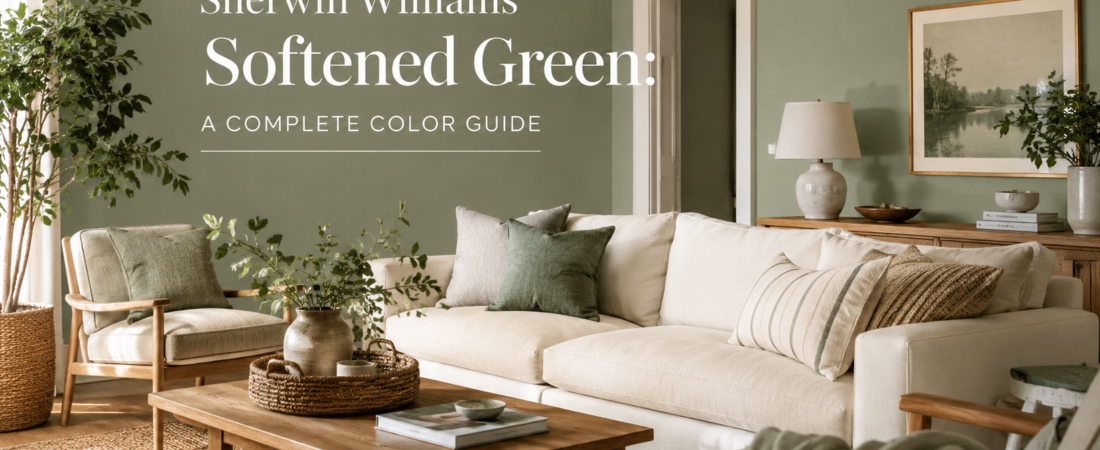
Sherwin Williams Softened Green is the kind of paint color that can quietly change the mood of a room without taking over the space. It brings a gentle green character that feels connected to nature while remaining easy to live with. If you’re searching for a wall color that feels fresh but not overly bright, Softened Green can be an interesting option. It works particularly well with natural wood, warm neutrals, creamy whites, and relaxed interior styles. Before putting it on every wall, though, it helps to understand how the color behaves in different rooms and lighting conditions.
What Is Sherwin Williams Softened Green?
Sherwin Williams Softened Green is a muted green paint color designed to create a softer, more relaxed impression than stronger greens. Rather than looking intensely botanical or jewel-toned, it has a subdued quality that makes it easier to incorporate into everyday interiors. This is one reason green paint has become such a popular choice for homeowners who want something more interesting than beige but less demanding than a bold accent color.
What Does Softened Green Look Like?
Softened Green has a calm, natural appearance that can shift slightly depending on the surrounding colors and the amount of light entering a room. In brighter spaces, it can feel fresher and more lively, while lower or cooler light may make it appear quieter and more subdued. That variation is important because paint rarely looks exactly like its sample card once it covers an entire wall.
Is Softened Green Light or Dark?
Softened Green sits in a comfortable middle ground rather than feeling extremely pale or dramatically dark. This makes it flexible for bedrooms, living areas, offices, and other spaces where you want visible color without creating a heavy atmosphere. The perceived depth can change considerably with artificial and natural lighting, so testing a sample is always smarter than relying only on an online image.
Why Green Paint Works So Well at Home
Green has an unusual ability to feel both colorful and neutral at the same time. A muted green can add personality to a room while still working with many of the materials people already have in their homes. Wood furniture, woven textures, linen fabrics, stone surfaces, and neutral rugs can all sit comfortably beside green walls. Softened Green takes advantage of that quality by offering color without making the room feel overly decorated.
Best Rooms for Sherwin Williams Softened Green
One of the strengths of this shade is its versatility. It can work in several areas of the home, although the final appearance will depend on room size, lighting, furniture, and surrounding finishes. A bedroom can make the color feel peaceful, while a living room can give it a more natural and welcoming personality. It can also work beautifully in a home office where a soft wall color is preferable to something distracting.
Softened Green in the Living Room
In a living room, Softened Green can create a comfortable backdrop for sofas, wooden furniture, artwork, and neutral accessories. It is especially appealing when the space already contains natural materials. Imagine warm oak furniture, a cream-colored sofa, a textured rug, and a few leafy plants against the green walls. The result can feel relaxed without looking overly themed.
Softened Green in the Bedroom
A bedroom is another strong candidate for this color because muted greens tend to create a restful visual environment. Softened Green can pair nicely with white or cream bedding, light wood nightstands, woven baskets, and understated textiles. If the bedroom receives plenty of daylight, the green may feel brighter during the day and more intimate under warm evening lamps.
Softened Green in the Bathroom
Bathrooms can benefit from green because the color naturally complements white fixtures and organic-looking materials. Softened Green can be paired with white tile, brushed metal fixtures, wood accents, or stone-inspired surfaces. In a small bathroom, however, it is worth testing the shade first because limited natural light can noticeably change how the paint appears.
Softened Green in the Kitchen
Green walls can bring warmth and character to a kitchen, particularly when the room has white cabinetry or natural wood finishes. Softened Green can provide enough contrast to make the cabinets stand out without competing with countertops and appliances. It can also work as an accent color if painting the entire kitchen feels like too much commitment.
Softened Green in a Home Office
For a home office, the appeal is its relatively calm personality. A muted green background can add visual interest without the intensity of saturated colors. Pair it with a wood desk, simple shelving, warm white trim, and a few plants for a workspace that feels grounded rather than sterile.
What Colors Go With Softened Green?
Softened Green can be combined with a surprisingly wide range of colors. Warm whites and creamy neutrals are easy choices because they keep the room bright while allowing the green to remain the main color. Beige, taupe, natural wood tones, muted browns, and soft gray can also create a balanced palette. For a little more contrast, black accents or darker wood can add definition without overwhelming the walls.
Softened Green With White
White is one of the simplest companions for green. A clean white can create stronger contrast, while a warmer off-white produces a softer transition. If your room already has white trim, cabinets, or doors, the existing architectural details can help frame the green walls beautifully.
Softened Green With Natural Wood
Natural wood is a particularly natural partner for green. Oak, walnut, pine, and other wood tones can reinforce the organic feeling of the color. This combination works especially well in homes with farmhouse, cottage, Scandinavian, transitional, or modern organic interiors.
Softened Green With Beige
Beige can make the palette feel warmer and more traditional. If you’re worried that green might make your room feel too cool, beige upholstery, curtains, rugs, or accessories can bring some warmth back into the space. The result is generally softer than pairing green with stark white throughout the room.
How Lighting Changes Softened Green
Lighting is one of the biggest factors to consider before choosing any paint color. Natural daylight changes throughout the day, and artificial bulbs can influence the appearance once the sun goes down. A wall facing a bright window may look noticeably different from one tucked into a darker corner. For this reason, a paint color should always be evaluated inside the actual room where you intend to use it.
North-Facing Rooms
North-facing rooms generally receive cooler and less direct daylight, which can make paint colors appear more subdued or cooler. Softened Green may therefore feel quieter in this setting. If the room already has cool flooring or gray furniture, consider adding warmer textiles and wood accents to prevent the overall palette from feeling flat.
South-Facing Rooms
South-facing spaces usually receive stronger natural light, which can make colors appear brighter and warmer. In this type of room, Softened Green may show more of its fresh and lively character. If you want to maintain a relaxed atmosphere, balance it with soft neutrals rather than adding too many other strong colors.
Artificial Lighting
Don’t forget about evening lighting. Warm bulbs can make green paint appear warmer and cozier, while cooler bulbs may emphasize a fresher or more subdued side of the color. Looking at a sample both during daylight and after sunset gives you a much more realistic idea of what you’re getting.
Is Softened Green Good for an Exterior?
A muted green can also be considered for exterior applications, particularly on homes surrounded by landscaping. Green naturally sits comfortably beside grass, trees, stone, and other outdoor elements. However, exterior paint receives much stronger and more variable light than interior walls, so a color that looks subtle indoors can appear considerably different outside.
Softened Green and Interior Design Styles
This shade doesn’t belong to just one decorating style. Its muted nature gives it enough flexibility to move between different aesthetics. In a modern organic room, it can complement wood and natural textures. In a cottage-inspired home, it can create a softer vintage feeling. In a contemporary space, simple furniture and clean white accents can make the color feel more modern.
Modern Organic Style
For a modern organic look, combine the green with pale oak, linen, rattan, stone, and warm cream. Keep patterns restrained and allow the wall color to provide most of the visual interest. A few plants can reinforce the natural theme without making the room feel overly green.
Farmhouse and Cottage Style
Softened Green can also suit farmhouse and cottage interiors, especially when paired with warm whites and natural wood. Vintage-style furniture, woven baskets, simple curtains, and aged metal accents can give the space a comfortable lived-in character.
Contemporary Style
For a contemporary room, use the color against cleaner lines and fewer accessories. White, black, warm gray, and natural wood can create a sharper contrast. The key is restraint: the green already provides enough personality, so you don’t need dozens of decorative pieces.
How to Test Softened Green Before Painting
Never choose a wall color solely from a digital screen. Online photographs can be affected by cameras, editing, monitors, and room lighting. Instead, place a large sample on several walls and observe it at different times of day. Look at it in morning light, afternoon light, and under your normal evening lamps. This simple step can prevent an expensive repaint.
Common Mistakes to Avoid
One common mistake is assuming a paint color will look identical everywhere. It won’t. Another is ignoring the colors already present in the room. Flooring, countertops, furniture, curtains, and even nearby walls can influence how green appears. It’s also easy to overlook the effect of bulb temperature. Before committing to a full room, consider the entire palette rather than judging the paint color by itself.
Conclusion
Sherwin Williams Softened Green is worth considering if you want a green that feels relaxed rather than dramatic. Its natural character makes it adaptable, while its muted quality allows it to work with everything from warm wood to creamy whites and neutral fabrics. The most important thing is to judge the color in your own space because lighting and surrounding finishes can change its appearance considerably. If you like the idea of bringing a little nature indoors without committing to a bold green, Softened Green can be a thoughtful place to start.
Frequently Asked Questions
Is Sherwin Williams Softened Green a good neutral?
Softened Green can behave somewhat like a colored neutral because its muted character allows it to blend with many furnishings and finishes. However, it is still clearly a green, so it will bring more personality than a traditional beige, cream, or gray.
What colors pair best with Softened Green?
Warm whites, creamy neutrals, beige, natural wood, taupe, soft gray, and darker earthy accents can all work well. The best combination depends on whether you want the room to feel warm, modern, rustic, or more traditional.
Is Softened Green good for a bedroom?
Yes, it can be a strong bedroom option if you want a calm, nature-inspired atmosphere. Pairing it with warm white bedding, wood furniture, and soft fabrics can keep the room comfortable and inviting.
Does lighting affect Softened Green?
Absolutely. Natural and artificial lighting can change how the color is perceived throughout the day. The same painted wall may look different in morning daylight, afternoon sun, and warm evening light.
Can Softened Green work in a small room?
It can, but the result depends heavily on the room’s lighting. In a well-lit small room, it can add personality without feeling overwhelming. In a dark space, testing a sample first becomes especially important.
What trim color works with Softened Green?
Warm white or soft white trim can create a comfortable combination. A brighter white can produce more contrast, while a creamy white generally gives the room a softer appearance.
Should I sample Softened Green before painting?
Yes. Sampling is one of the easiest ways to avoid surprises. Paint a reasonably large area and observe it under the room’s actual lighting before buying enough paint for the entire project.
Read also: Alabaster Walls With Pure White Trim Simple, Elegant, and Bright