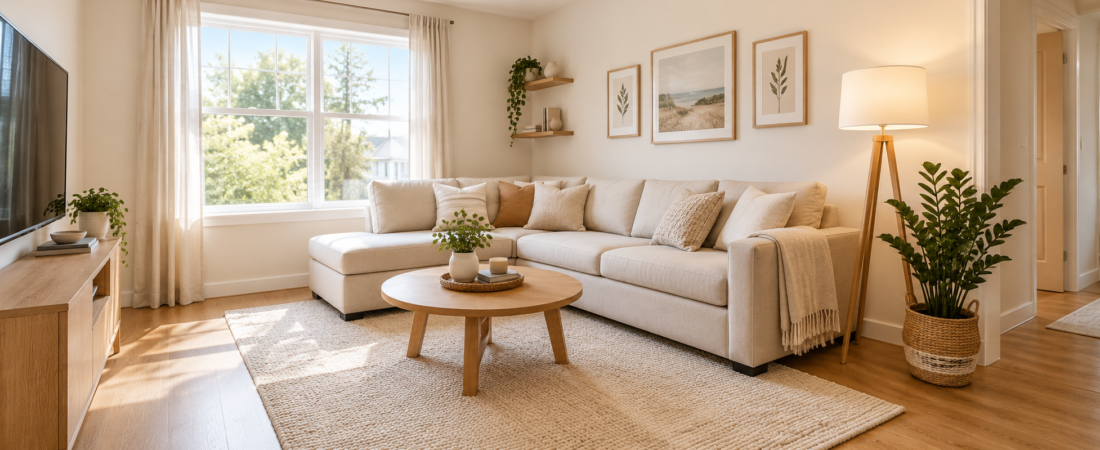
small living room ideas with a sectional sofa, including smart layouts, space-saving furniture, light colors, and cozy decor tips. A small living room can be comfortable, inviting, and stylish, even when you have a large piece of furniture to work around. The trick is finding the right balance between seating, walking space, and decor. With the right layout, a sectional sofa can actually make a compact room feel more organized by providing plenty of seating in one place.
The best small living room ideas with a sectional sofa focus on smart furniture placement, light colors, compact coffee tables, and simple decorations. Instead of filling every corner, you can create a room that feels open while still giving everyone a comfortable place to relax.
Whether you’re decorating a small apartment, updating a narrow living room, or working with an awkward layout, these practical ideas will help you make the most of your space without sacrificing comfort.
1. Choose a Compact L-Shaped Sectional Sofa

A compact L-shaped sectional is one of the easiest ways to add comfortable seating to a small living room. Its shape allows you to place the sofa against two walls or tuck it neatly into a corner, leaving more of the central floor area open. Choose a design with slim arms and a relatively low back to avoid making the room feel crowded.
Before buying, measure the full width and depth of the sofa, including its chaise. Leave enough room to walk around it and access nearby doors. A smaller sectional with a simple design often works better than a bulky model with oversized cushions and thick armrests.
2. Place the Sectional in a Corner

A corner placement is a practical choice when every square foot matters. Instead of allowing the sofa to float in the middle of the room, position it along two walls to keep the main walking area clear. This arrangement can make a small living room look more structured and give you a natural place to arrange the coffee table and rug.
However, don’t force the sofa into a corner if it blocks a window, radiator, or doorway. The goal is to improve movement, not simply push furniture against the walls. If your room has an unusual shape, test a couple of arrangements before settling on one.
3. Use Light Colors to Make the Room Feel Bigger

Light colors can help a small living room feel brighter and more spacious. A cream, ivory, beige, or soft gray sectional works especially well with warm white walls, pale flooring, and simple window treatments. These shades reflect available light and create a calm background that doesn’t visually overwhelm the room.
You don’t need to make everything white. Add warmth through wooden furniture, textured cushions, a woven rug, or a muted green throw. Keeping the larger surfaces light while introducing a few contrasting accents creates depth without making the space feel busy.
4. Pick a Sectional With a Reversible Chaise
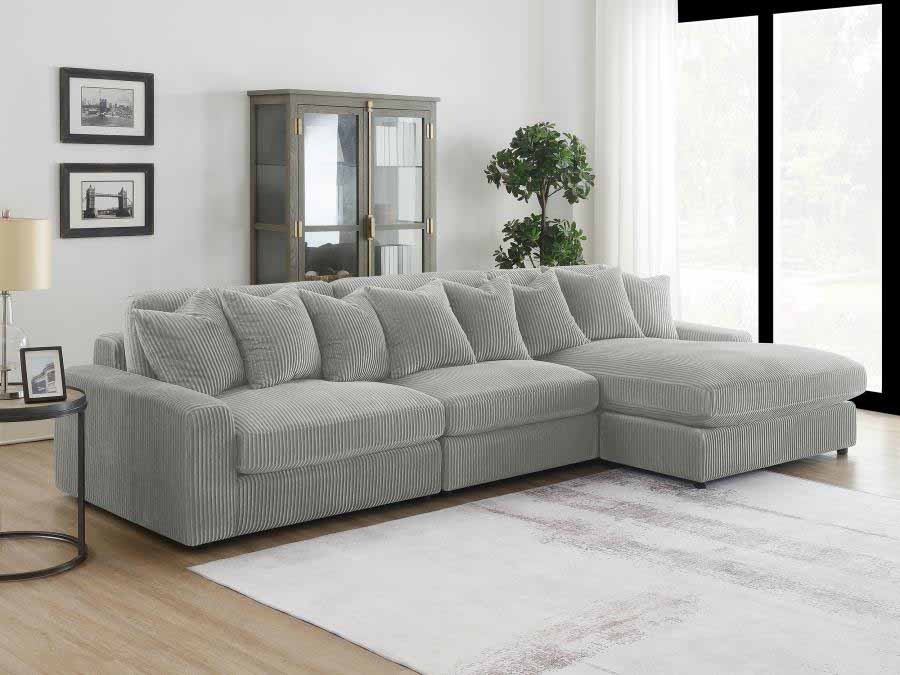
A reversible chaise sectional gives you more flexibility than a fixed design because the extended seating section can usually be switched from one side to the other. This is especially useful if you’re renting, rearranging furniture, or moving into a new home where the layout may be different.
Before purchasing, check how the chaise can be reconfigured. Some models have movable components, while others require the cushions or frame to be assembled differently. Choose a design that fits your room’s current layout and doesn’t block the natural route between the entrance, windows, and other furniture.
5. Add a Round Coffee Table

A round coffee table is a smart alternative to a large rectangular one when space is limited. Its curved edges make it easier to move around, particularly when the sectional has a chaise that extends into the room. A small table also provides a useful surface for drinks, books, and everyday essentials without dominating the seating area.
Choose a table with a slim base or open legs to maintain a lighter appearance. If you need more storage, consider a nesting table set that can be separated when guests arrive and tucked together when you need more floor space.
6. Use a Rug to Define the Seating Area

An appropriately sized rug helps connect the sectional, coffee table, and any nearby accent chair into one cohesive seating area. Without this visual connection, furniture can look scattered, even in a carefully arranged room. A light, low-pile rug is often practical because it is easy to move around and doesn’t add too much visual weight.
Avoid choosing a rug that is so small it looks disconnected from the sofa. Ideally, the front legs of the sectional should sit on the rug, provided the room dimensions allow it. Keep the pattern subtle if you already have colorful cushions or prominent artwork.
7. Choose a Sectional With Hidden Storage

Storage furniture can make a small living room easier to maintain because it gives everyday items a dedicated place. Some sectionals include lift-up chaise compartments or storage beneath the seats, which can hold spare blankets, cushions, magazines, and other belongings that would otherwise end up on display.
This option is particularly helpful in studio apartments and homes without much closet space. Look for a sofa that opens easily and has enough room for the items you actually use. Hidden storage works best when it supports a simple organizing system rather than becoming a place where everything gets forgotten.
8. Keep the Walls Simple and Bright

A small living room doesn’t need a wall full of decorations to feel finished. One large piece of artwork above the sectional can create a clear focal point without making the room look crowded. You can also use two or three coordinated prints if you prefer a gallery-style arrangement.
Choose artwork that complements the sofa and the rest of the room. Soft landscapes, abstract designs, and understated botanical prints can work well with neutral furniture. Keep the surrounding wall relatively uncluttered so the artwork stands out and the room retains a calm appearance.
9. Add a Slim Side Table Instead of Extra Furniture

When a sectional already provides plenty of seating, you may not need additional bulky furniture. A narrow side table beside the armrest can hold a lamp, phone, or cup without taking up much floor space. Look for a design with a small footprint and a stable base that fits comfortably beside the sofa.
If the space is particularly tight, a C-shaped table that slides partly beneath the sofa can be useful. It provides a convenient surface when needed and can be moved out of the way afterward. This small change can improve everyday comfort without adding another large piece of furniture.
10. Use Vertical Space for Storage and Decor

When floor space is limited, look upward. Tall bookcases, wall-mounted shelves, and floating cabinets can provide storage without taking up as much room as wide furniture. They are useful for displaying books, small plants, framed photos, and a few decorative objects while keeping the main seating area clear.
The key is to avoid filling every available shelf. Arrange items with some breathing room and keep heavier objects on sturdy, properly installed shelves. If you have children or pets, secure tall furniture to the wall and place fragile decorations out of reach.
11. Hang Curtains Higher to Create the Illusion of Height

Curtains can change the way a small living room feels without requiring any major renovation. Hanging the curtain rod a few inches below the ceiling and allowing the curtains to reach the floor can make the walls appear taller. Light, breathable fabrics such as linen or cotton blends also allow natural light to filter into the room while maintaining privacy. Choose curtains in a shade close to your wall color for a subtle, continuous look, or introduce a soft contrast if you want the windows to stand out. Avoid heavy, dark curtains that cover too much of the window, especially when natural light is limited.
12. Create an Open Layout With a Wall-Mounted TV

A wall-mounted television can free up valuable floor space in a small living room. Instead of using a large entertainment unit, install the TV at a comfortable viewing height and pair it with a narrow floating console for essential electronics. Position the sectional opposite the screen while keeping enough room for comfortable movement between the seating area and the rest of the home. Hide loose cables with suitable cable-management products to maintain a tidy appearance. If you need additional storage, choose a slim console with closed compartments rather than open shelving that can quickly become cluttered.
13. Add One Accent Chair Without Overcrowding the Room

A sectional may provide most of your seating, but one compact accent chair can make the room more useful when friends or family visit. Choose a lightweight chair with narrow arms, an open base, or a simple silhouette so it doesn’t compete visually with the sofa. Place it near a window or at the open end of the sectional, making sure it doesn’t interrupt the main walking route. If your living room is extremely small, a movable pouf or upholstered stool may be a better choice because it can serve as extra seating and be tucked away when not in use.
14. Use Mirrors to Reflect Natural Light

A well-placed mirror can make a small living room feel brighter by reflecting daylight and parts of the surrounding space. Consider hanging a large round mirror above a narrow console or placing a tall mirror on a wall where it can reflect a window. This works particularly well in apartments with limited natural light. Choose a frame that matches your furniture, whether that’s light oak, black metal, or a simple neutral finish. A mirror won’t physically enlarge the room, but it can create a greater sense of openness when positioned thoughtfully.
15. Keep Accessories Minimal but Personal

Decorating a small living room is about choosing accessories that make the space feel personal without filling every surface. A few textured cushions, a soft throw blanket, a small plant, and one attractive vase can add warmth without overwhelming the sectional. Try to repeat two or three colors throughout the room so the accessories feel connected rather than random. You can also display family photographs or meaningful objects, but leave some empty space on shelves and tables. A room often looks more thoughtfully designed when every item has a purpose and the furniture remains easy to use.
How to Arrange a Sectional Sofa in a Small Living Room
The best layout depends on your room’s shape, the location of doors and windows, and which activities matter most to you. Start by measuring the room and the sectional, then identify the main walking paths before deciding where the furniture should go. In many homes, placing an L-shaped sectional against a long wall or into a corner creates the most usable floor space. Keep the coffee table close enough to reach comfortably, but leave room to move around it.
For a narrow living room, position the sectional along the longer wall and avoid adding oversized chairs or deep cabinets opposite it. In a square room, a corner arrangement often works well because it leaves the center open. In an open-plan apartment, the back of the sectional can help distinguish the living area from the dining space without the need for a partition.
As a practical starting point, aim for roughly 18 inches between the sofa and coffee table, adjusting as needed for your furniture and mobility needs. Keep main walkways as clear as possible; around 30–36 inches is a useful target where the layout allows it. These are guidelines rather than strict rules, so comfort and safe movement should come first.
How to Choose the Right Sectional for a Small Space
The right sectional should fit the room without making everyday activities difficult. Before buying, consider the sofa’s total dimensions, chaise direction, seat depth, armrest width, and the space needed to bring it through your doorway. A compact L-shaped sofa is often a practical choice, while a modular design may be better if you want the freedom to rearrange individual sections.
Fabric and color matter, too. Light upholstery can make the room feel airy, but the best choice also depends on how you use the sofa. If you have children, pets, or frequent guests, look for durable fabric that is easy to clean and maintain. Performance upholstery, removable covers, and tightly woven fabrics may be worth considering.
Finally, think about what you need the sofa to do. If you regularly host guests, prioritize comfortable seating and a layout that accommodates visitors. If your living room doubles as a reading space or home office, a chaise or modular configuration may offer more flexibility than a traditional sofa.
Common Mistakes to Avoid When Decorating a Small Living Room With a Sectional
One of the most common mistakes is buying a sectional before measuring the room. A sofa that looks compact in a showroom can feel enormous at home, especially when its chaise extends into a walkway. Another mistake is choosing too many large furniture pieces, such as a bulky coffee table, oversized accent chair, and deep entertainment cabinet alongside the sectional.
Dark colors aren’t automatically wrong for small rooms, but using them everywhere can make a space feel visually heavy when natural light is limited. Similarly, too many decorative objects, busy patterns, and mismatched furniture can make the room feel cluttered. Instead, choose a clear focal point, keep the palette coordinated, and prioritize furniture that serves a useful purpose.
Remember that pushing every piece of furniture against a wall isn’t always the answer. The best arrangement is the one that allows people to sit comfortably, move around safely, and use the room without constantly shifting things out of the way.
Conclusion
Small living room ideas with a sectional sofa don’t have to involve expensive furniture or complicated renovations. A compact sofa, thoughtful placement, light colors, and a few well-chosen accessories can make a noticeable difference. Start with the layout, protect your walking space, and add storage or decor only where it improves the room.
Most importantly, design the space around your everyday life. A small living room should still be a place where you can stretch out, enjoy a movie, welcome guests, and relax at the end of the day. With the right choices, your sectional can become the centerpiece of a comfortable and inviting home.
Frequently Asked Questions
1. Is a sectional sofa a good idea for a small living room?
Yes, a sectional sofa can work well in a small living room because it provides multiple seats in one piece of furniture. A compact L-shaped design can fit into a corner and preserve useful floor space, provided its dimensions suit the room.
2. What type of sectional is best for a small living room?
A compact L-shaped sectional with slim arms, a simple frame, and a reversible chaise is often a practical option. Choose the size and configuration based on your room’s dimensions, doorways, and walking paths.
3. What color sectional makes a small living room look bigger?
Cream, beige, ivory, and light gray are popular choices because they create a bright, airy appearance. Pairing a light-colored sofa with similar wall colors and natural textures can make the room feel more open.
4. Should a sectional sofa be placed against the wall?
Placing a sectional against a wall is often useful in a small room because it can free up central floor space. However, the best placement depends on the room’s shape, windows, doors, and the direction of movement through the space.
5. What coffee table works best with a small sectional?
A small round or oval coffee table is often a good choice because its curved edges make it easier to navigate around. Nesting tables and compact tables with storage are also useful when flexibility is important.
Read also: Decoradhouse Garden Tips by DecoratorAdvice Easy Ideas