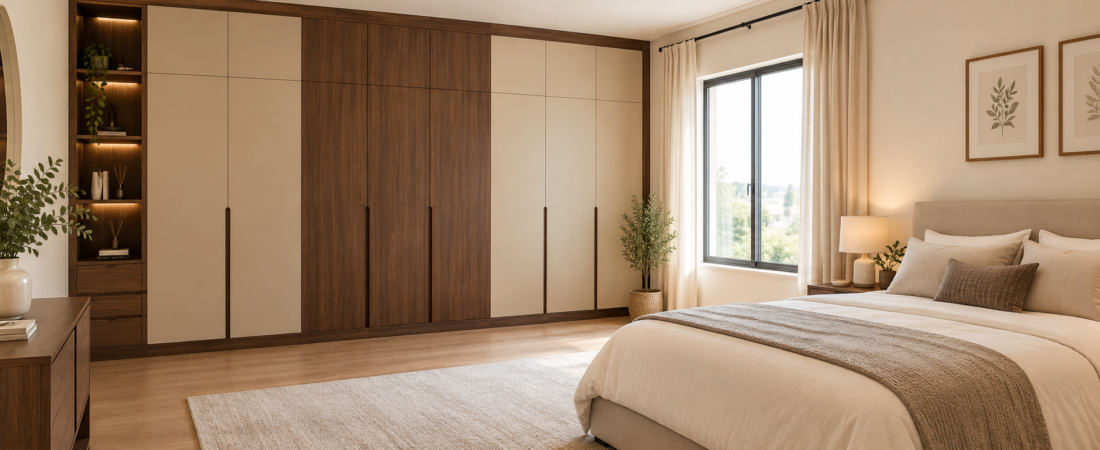
10 Best dual color wardrobe laminate color combinations, from beige and walnut to sage green and oak, for a stylish, modern bedroom. Choosing the right dual color wardrobe laminate color combinations can completely change the look of your bedroom. A simple wardrobe can become a beautiful design feature when two shades work together naturally. Whether you prefer warm wood finishes, soft neutrals, modern grey tones, or a touch of color, the right combination helps create a balanced and attractive space. The key is to choose laminates that complement your bed, wall paint, flooring, and lighting instead of selecting colors in isolation. Here are 10 stylish wardrobe laminate combinations, along with practical tips to help you find the right look for your home.
1. Beige and Walnut Brown Wardrobe Laminate
Beige and walnut brown make an excellent combination for anyone who wants a warm, elegant bedroom. Beige keeps the wardrobe looking light and open, while walnut brown adds depth through its rich wood-like appearance. You can use beige on the larger wardrobe panels and walnut on the central doors, side panels, or a decorative section. This pairing works especially well with cream walls, wooden beds, and warm lighting, creating a comfortable bedroom that feels stylish without looking overly decorated.
2. White and Light Oak Wardrobe Laminate
White and light oak are among the most versatile dual-color wardrobe laminate color combinations for modern homes. White creates a clean appearance, while light oak introduces a natural texture that prevents the design from feeling plain. This pairing is particularly useful in smaller bedrooms because the lighter surfaces help maintain an open, airy atmosphere. Consider using matte white laminate for the main doors and oak-finish laminate for one or two vertical panels. Pair the wardrobe with light flooring, simple handles, and neutral bedding for a fresh, uncluttered look.
3. Grey and Oak Wood Wardrobe Laminate
Grey and oak wood create a balanced combination that feels contemporary without becoming too cold. The grey laminate adds a smooth, modern finish, while oak brings warmth and texture into the bedroom. You can choose light grey for a softer appearance or medium grey for more contrast, depending on your room’s natural light. This combination works well with white walls, grey upholstered beds, and black or brushed-metal handles. For a practical everyday design, use grey across most of the wardrobe and reserve oak for a central section or a pair of contrasting doors.
4. Sage Green and Natural Wood Wardrobe Laminate
Sage green and natural wood are excellent choices for homeowners who want something different from traditional white, brown, or grey wardrobes. Sage green has a soft, muted appearance that brings color into the room without making the furniture feel overwhelming. Natural wood balances the green with warmth, making the overall design feel relaxed and inviting. A sage green wardrobe with oak or light walnut panels looks especially attractive alongside cream bedding, off-white walls, and simple wooden furniture. Choose a matte finish if you prefer a subtle, contemporary appearance rather than a glossy statement piece.
5. Charcoal Grey and Walnut Brown Wardrobe Laminate
Charcoal grey and walnut brown create a bold, sophisticated wardrobe design that suits modern and luxury-inspired bedrooms. The deep grey provides a strong visual contrast, while walnut adds the rich appearance of natural wood. This combination looks particularly effective on floor-to-ceiling wardrobes with clean lines and discreet handles. However, both shades can make a small room feel darker if used excessively, so balance them with pale walls, lighter bedding, and good lighting. For a more practical arrangement, use charcoal on the main doors and walnut on selected panels instead of covering the entire wardrobe in dark colors.
6. Cream and Taupe Wardrobe Laminate
Cream and taupe offer a soft, coordinated look for bedrooms where comfort and simplicity matter more than dramatic contrast. Cream provides a light background, while taupe introduces a slightly deeper beige-grey tone that adds definition without creating a sharp visual break. This pairing works beautifully with upholstered headboards, beige curtains, warm lighting, and stone-colored flooring. You can use cream for the larger wardrobe surfaces and taupe for narrow side panels or the middle section. If you want a bedroom that feels calm and refined for years, this combination is a dependable choice that does not rely on short-lived color trends.
7. Navy Blue and Warm White Wardrobe Laminate
Navy blue and warm white are ideal for creating a wardrobe with more personality while keeping the bedroom bright. Navy adds depth and a confident pop of color, whereas warm white softens the contrast and prevents the design from feeling too heavy. This combination suits contemporary bedrooms, especially when the bed, curtains, or decorative accessories include small touches of blue. Try navy on two central wardrobe doors with warm white on the surrounding panels, or reverse the arrangement if you want a lighter overall appearance. Simple black or metallic handles can complete the look without competing with the two laminate shades.
8. Black and Wood-Finish Wardrobe Laminate
Black and wood-finish laminates create a striking appearance that works well in modern bedrooms with clean furniture lines. Matte black looks especially effective alongside medium or dark walnut, while lighter oak can make the pairing feel less dramatic. The contrast gives the wardrobe a strong architectural presence, making it a useful choice when you want the furniture to stand out. To keep the room comfortable rather than overly dark, use warm-white walls, soft lighting, and lighter textiles. A practical approach is to reserve black for selected doors or outer panels and use the wood finish to introduce warmth across the remaining surfaces.
9. Lavender and White Wardrobe Laminate
Lavender and white offer a gentle alternative to conventional neutral wardrobe designs. The pale purple shade introduces a little color, while white keeps the overall appearance fresh and light. This combination can work well in contemporary bedrooms, guest rooms, or spaces where you want a softer decorative style. Choose muted lavender rather than an overly bright purple if you want the wardrobe to remain easy to coordinate with other furniture. White panels, minimal handles, and pale grey or cream bedding help create a balanced look. Before choosing the laminate, compare a physical sample with your wall paint because lavender can appear cooler or warmer under different lighting conditions.
10. Ivory and Terracotta Wardrobe Laminate
Ivory and terracotta create a warm, earthy combination that feels distinctive without being too bold. Ivory provides a soft neutral base, while terracotta adds a muted reddish-brown tone inspired by natural clay. The pairing works especially well with beige walls, wooden furniture, woven textures, and warm lighting. For a balanced wardrobe design, keep ivory across the larger surfaces and use terracotta on selected doors or a vertical accent panel. If your bedroom already contains colorful curtains or patterned bedding, choose a subdued terracotta shade to avoid visual clutter. This combination is a good option for anyone who wants a modern bedroom with a little more character.
How to Choose the Best Dual Color Wardrobe Laminate Combination
The right combination should suit both your personal taste and the room itself. Before buying laminate, look at the wall paint, flooring, bed frame, and amount of natural light in your bedroom. If the room is small, lighter combinations such as white and oak or cream and taupe can help maintain a spacious feel. In a larger, well-lit room, charcoal and walnut or navy and white can create a stronger visual statement. It is also worth checking laminate samples in the actual bedroom because colors may look different under daylight, warm LED bulbs, and cool artificial lighting.
Match the Wardrobe With Your Bedroom Furniture
Your wardrobe does not need to match every piece of furniture exactly, but the colors should feel connected. If your bed has a walnut frame, for example, a beige-and-walnut wardrobe can repeat that wood tone and create a coordinated look. With a white or cream upholstered bed, you have more freedom to choose sage green, grey, navy, or another accent shade. Pay attention to the wood undertones, too: a reddish walnut finish may not blend naturally with a very pale, yellow-toned oak. Matching undertones often creates a more harmonious result than choosing two colors that are individually attractive but visually unrelated.
Choose Matte or Glossy Laminate Finishes
Matte laminates generally offer a soft, understated appearance and are useful for creating contemporary bedroom interiors. Glossy laminates reflect more light and can make the wardrobe look brighter, but they may also show fingerprints, smudges, and surface marks more clearly. Textured wood finishes can add visual interest without requiring a third color. Your choice should depend on the look you want, the amount of maintenance you are comfortable with, and the quality of the specific product. Always check the manufacturer’s cleaning instructions and durability specifications before purchasing.
Use the Two Colors in the Right Proportion
Even an excellent color combination can look unbalanced if both shades compete equally for attention. A practical starting point is to use one color across roughly two-thirds of the visible wardrobe and the second across the remaining third. This is only a design guideline, not a strict rule; symmetrical door layouts may work better with equal proportions. For example, a predominantly cream wardrobe with a few walnut panels can feel calmer than a design divided into too many alternating strips. Decide which color should dominate before finalizing the panel layout, and keep the arrangement consistent across the wardrobe.
Consider Wardrobe Size and Door Style
The same laminate combination can look different on sliding doors and hinged doors. Sliding wardrobes often benefit from larger, uninterrupted panels that allow each color to remain visible without too many divisions. Hinged wardrobes provide more opportunities for symmetrical color arrangements, such as two white doors in the center with wood-finish doors at the sides. For a floor-to-ceiling wardrobe, vertical color blocks can emphasize height, while horizontal divisions can introduce a wider visual effect. The final layout should also account for handles, mirrors, drawers, and any open shelving so the two laminate shades remain the main design feature.
Common Mistakes to Avoid When Choosing Wardrobe Laminates
One common mistake is choosing two shades that look attractive in a showroom but clash with the existing bedroom finishes. Another is using too many contrasting colors, textures, and decorative lines on the same wardrobe. Dark laminates can also dominate a small bedroom when there is limited natural light, while very glossy surfaces may require more frequent cleaning than expected. Avoid selecting a laminate based only on a digital picture, since screens and lighting can change how a color appears. Instead, compare physical samples, check the finish from different angles, and ask the supplier about scratch resistance, cleaning requirements, and suitability for your intended use.
Conclusion
The best dual color wardrobe laminate color combinations bring together appearance, practicality, and the overall style of your bedroom. Beige and walnut offer warmth, white and oak keep the room bright, and sage green with natural wood introduces a softer, nature-inspired look. If you prefer a stronger design, charcoal and walnut or navy and white can add contrast without sacrificing balance. Take time to compare samples and consider your existing furniture before making a decision. A carefully chosen two-color wardrobe can complement the bedroom for years without requiring a complete interior makeover.
FAQs
1. Which dual color combination is best for a wardrobe?
Beige and walnut, white and oak, and cream and taupe are versatile options for many bedrooms. The best choice depends on your wall color, flooring, furniture, and preferred interior style.
2. Which laminate colors make a small bedroom look bigger?
White, cream, beige, and light oak are popular choices because they help maintain a bright, open appearance. Pairing light shades with simple wardrobe panels can also keep the room from feeling visually crowded.
3. Is matte or glossy laminate better for wardrobes?
Matte laminate is ideal for a soft, modern appearance, while glossy laminate reflects more light. Both can work well, so consider maintenance, lighting, and the overall bedroom design before choosing.
4. Which wardrobe laminate combination looks luxurious?
Charcoal grey and walnut, cream and taupe, and beige and walnut can create an elegant, premium appearance. The quality of the finish, panel alignment, hardware, and installation also affects the final result.
5. Can I combine two wood-finish laminates on one wardrobe?
Yes, you can combine two wood finishes, but choose shades with compatible undertones and enough contrast to distinguish them. For example, light oak and walnut can create an attractive balance between light and dark wood.
Read also: Decoradtech Smart Home Ideas by DecoratorAdvice For Modern Living