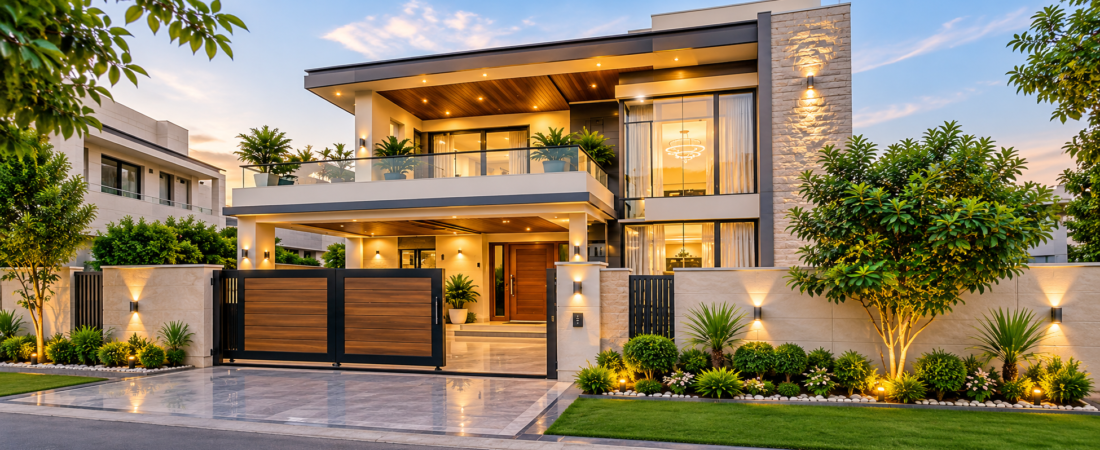
The best exterior wall materials for residential construction include brick, concrete blocks, autoclaved aerated concrete (AAC), natural stone, stucco, fiber cement siding, insulated concrete forms (ICF), and wood siding. Each material offers different levels of durability, thermal performance, moisture resistance, appearance, and maintenance requirements.
For conventional residential buildings, brick and concrete blocks remain practical choices. AAC blocks are worth considering when reducing heat transfer and structural weight is important, while insulated concrete forms are suitable for projects that prioritize continuous insulation.
The right choice depends on the complete wall system rather than the material alone. Proper installation, insulation, waterproofing, drainage, and structural design all influence how well an exterior wall performs.
1. Brick: A Traditional and Durable Exterior Wall Material
Brick has remained a popular construction material for generations, and there are good reasons behind its continued use. Manufactured from clay and fired at high temperatures, bricks offer a solid masonry solution that works with many residential architectural styles.
One of the biggest advantages of brick is its durability. Properly selected and installed bricks can withstand years of normal weather exposure without requiring frequent repairs. They also provide useful thermal mass, meaning they can absorb and release heat gradually.
Brick walls can help reduce outside noise and provide excellent fire resistance. Their appearance is another advantage because homeowners can choose from different colors, textures, patterns, and finishes.
However, brick construction has some limitations. Masonry work requires skilled labor, and the overall cost can increase depending on brick quality, transportation, mortar, and finishing requirements. Brick can also absorb moisture, so suitable damp-proofing and exterior detailing are essential.
For homeowners who want a traditional appearance and a dependable masonry wall, brick remains a strong option. It is particularly useful when the material is locally available and experienced bricklayers are easy to find.
2. Concrete Blocks: A Practical Choice for Modern House Construction
Concrete blocks are widely used in residential construction because they offer a combination of strength, availability, and practical installation. They are manufactured using cement, aggregates, and water, with different sizes and internal configurations available for specific building applications.
Unlike smaller bricks, concrete blocks cover a larger wall area with fewer individual units. This can help speed up construction and reduce the number of masonry joints. Depending on their design and strength, they can be used in load-bearing or non-load-bearing wall systems.
Another benefit is their resistance to fire and many forms of weather exposure. Properly constructed concrete block walls can also provide good sound reduction, making them useful for homes in busy neighborhoods.
The main disadvantage is thermal performance. Standard concrete blocks can transfer heat relatively easily, particularly when they are solid or lack insulation. This may affect indoor comfort in warmer regions.
A suitable solution is to combine concrete block construction with exterior insulation, appropriate plaster, and moisture protection. This creates a more complete wall system instead of relying on the blocks alone.
3. AAC Blocks: Lightweight Walls with Better Thermal Insulation
Autoclaved aerated concrete, commonly known as AAC, is a lightweight building material designed to make wall construction easier while improving thermal performance. It is manufactured using cement, lime, sand, water, and an expanding agent that creates tiny air pockets throughout the material.
These air pockets give AAC blocks their lightweight structure and help slow heat transfer. This makes them attractive for residential projects where indoor temperature control is important.
AAC blocks are also easier to cut and shape than many conventional masonry materials. Workers can use them for different wall layouts, openings, and service installations. Their lower weight can reduce the dead load placed on a building’s structural system.
There are some considerations before choosing AAC. These blocks require compatible thin-bed adhesive or mortar, correct installation methods, and suitable exterior finishes. Because their surface and moisture behavior differ from traditional bricks, ordinary construction practices should not automatically be applied without checking manufacturer recommendations.
AAC is particularly worth considering for modern houses in hot climates where reducing heat gain can improve indoor comfort. It should still be combined with proper waterproofing, roof insulation, ventilation, and suitable windows.
4. Natural Stone: A Premium Option for Exterior Walls
Natural stone is one of the most visually distinctive materials used in residential exterior construction. Granite, limestone, sandstone, and slate each offer different colors, textures, and surface patterns that can give a house a timeless appearance.
Stone is valued for its durability and resistance to fire. Some varieties can withstand decades of environmental exposure when properly selected and maintained. It also creates a natural architectural finish that works particularly well with contemporary, rustic, and traditional house designs.
However, natural stone is not always an economical choice. Purchasing, transporting, cutting, and installing stone can increase the construction budget. Its weight is another important factor, especially when it is used on upper floors or as exterior cladding.
Homeowners should also understand the difference between structural stone masonry and decorative stone cladding. Structural stone forms part of the wall itself, while cladding is attached to a separately designed supporting wall.
For a balanced design, stone can be used on entrance walls, columns, boundary features, or selected exterior sections rather than covering the entire house.
5. Stucco: A Clean and Attractive Exterior Wall Finish
Stucco is a cement-based exterior finish used to create smooth or textured surfaces over suitable masonry, concrete, and other approved wall systems. It is popular in Mediterranean, contemporary, and traditional residential architecture because it creates a clean and consistent appearance.
One of its main advantages is design flexibility. Homeowners can select different textures, colors, and surface patterns to match their preferred architectural style. Stucco also provides a protective finishing layer when correctly applied over a properly prepared wall.
It is generally more affordable than premium natural stone finishes, although the final price depends on the surface preparation, material quality, labor, and finishing method.
The important thing to remember is that stucco is a finish, not a complete structural wall material. Its performance depends heavily on the substrate, reinforcement, control joints, curing, and moisture management.
Poor application can result in cracking, discoloration, or water penetration. Therefore, professional installation and appropriate drainage details are important for long-term performance.
6. Fiber Cement Siding: Modern Exterior Protection and Style
Fiber cement siding is a manufactured exterior cladding material made using cement, cellulose fibers, sand, and water. It is designed to provide the appearance of traditional timber siding or decorative panels while offering resistance to several common exterior problems.
It comes in different styles, including horizontal boards, vertical panels, and textured finishes. This flexibility makes it suitable for contemporary homes, coastal-inspired architecture, and residential renovations.
One of its biggest advantages is resistance to termites and wood rot. Fiber cement products also offer good fire performance, although the complete wall assembly and product specifications should always be checked.
Unlike natural wood, fiber cement does not require the same level of protection against insects and biological decay. However, it still needs proper installation, joint treatment, flashing, and occasional maintenance.
Its weight and cutting requirements can make installation more demanding than lightweight siding products. The material is also generally used as cladding rather than as the main load-bearing wall.
For homeowners looking for a modern exterior appearance with relatively manageable maintenance, fiber cement is worth considering.
7. Insulated Concrete Forms (ICF): Strong Walls with Built-In Insulation
Insulated Concrete Forms, commonly called ICF, are a modern wall construction system that combines reinforced concrete with continuous insulation. The system uses hollow foam blocks or panels that are assembled, reinforced with steel, and filled with concrete. Once the concrete hardens, the insulation remains attached to both sides of the wall.
One major advantage of ICF is its combination of structural strength and thermal performance. The concrete core provides strength, while the surrounding insulation helps reduce heat transfer. These walls can also provide good sound reduction and fire resistance when the complete assembly is properly designed.
The initial cost can be higher than conventional masonry construction, and installation requires experienced contractors. Electrical wiring, plumbing routes, and openings also need careful planning because the wall system is different from ordinary brickwork.
ICF is a suitable option for homeowners planning energy-efficient houses, particularly when long-term comfort and reduced heating or cooling requirements are important.
8. Wood Siding: A Natural and Attractive Exterior Finish
Wood siding gives a house a warm, natural appearance that is difficult to reproduce with manufactured materials. Cedar, pine, and other suitable timber products are commonly used for exterior cladding, with different finishes available to complement modern, rustic, and traditional architecture.
Its biggest advantage is visual appeal. Wood can make a residential property feel welcoming and distinctive, especially when combined with stone, brick, or other exterior materials. Individual boards can also be replaced when damaged, making certain repairs relatively straightforward.
However, wood requires more attention than many masonry products. Moisture can cause swelling, rot, and deterioration, while termites and other insects can damage untreated timber. Prolonged sunlight may also cause fading and surface changes.
Regular inspection, protective coatings, proper ventilation, and suitable installation details help extend its service life. Wood siding is best suited to homeowners who appreciate its natural appearance and are prepared to maintain it.
9. Engineered Exterior Panels: A Modern Cladding Solution
Engineered exterior panels are manufactured products designed to create clean, consistent finishes on residential building facades. Depending on the product, they may be made from high-pressure laminates, metal composites, porcelain, or other specially developed materials.
These panels are popular in modern architecture because they offer different colors, textures, sizes, and surface finishes. They can also create attractive geometric patterns without requiring traditional masonry finishes.
Their performance depends on the specific panel material and installation system. Some products offer excellent weather resistance, while others need additional protection against corrosion, moisture, or UV exposure.
Proper fixing systems, expansion gaps, drainage, and fire-safety specifications should be considered before installation. Engineered panels are generally used as exterior cladding rather than as structural walls.
For homeowners who want a contemporary facade with a neat and consistent appearance, architectural panels can be an interesting alternative.
Comparison of the Best Exterior Wall Materials
Choosing between different materials can be difficult when every option has its own strengths. The following comparison provides a general overview of their common applications and performance characteristics.
| Wall material | Main advantage | Main limitation | Typical application |
|---|---|---|---|
| Brick | Durability and thermal mass | Can be labor-intensive | Traditional houses |
| Concrete blocks | Strength and availability | Needs additional insulation in many climates | Conventional construction |
| AAC blocks | Lightweight and insulating | Requires suitable installation | Energy-conscious homes |
| Natural stone | Appearance and durability | High material and labor costs | Premium facades |
| Stucco | Attractive surface finish | Can crack if poorly applied | Exterior finishing |
| Fiber cement | Design flexibility | Requires correct fixing and sealing | Modern cladding |
| ICF | Strength and insulation | Higher initial cost | High-performance homes |
| Wood siding | Natural appearance | Regular maintenance | Decorative cladding |
| Engineered panels | Contemporary finishes | Product-specific installation requirements | Modern facades |
The comparison is general rather than a guarantee of performance. Actual results depend on material quality, wall thickness, installation, climate, insulation, and maintenance.
Factors to Consider Before Choosing Exterior Wall Materials
Selecting a wall material should never be based on appearance alone. A house needs an exterior wall system that performs well throughout the year and remains suitable for the building’s location and design.
1. Climate and Weather Conditions
Local weather has a direct influence on exterior wall performance. Houses in hot regions need materials and wall assemblies that help control heat transfer, while buildings in rainy or humid environments require effective moisture protection and drainage.
Coastal properties also need special attention because salt exposure can affect metal components, fixings, and certain building materials. Choosing products designed for the local environment can prevent unnecessary maintenance later.
2. Construction Budget
The initial price of a building material is only one part of the total expense. Homeowners should also consider transportation, labor, installation, plastering, insulation, waterproofing, and finishing costs.
For example, a lightweight block may cost more per unit than a conventional brick, but faster installation or reduced structural weight may affect the overall project budget. Comparing complete wall-system costs provides a more realistic picture.
3. Thermal Insulation and Energy Efficiency
Exterior walls influence how much outdoor heat enters a house. This becomes particularly important in regions where air conditioning is used for extended periods.
AAC blocks, insulated concrete forms, and properly insulated masonry assemblies can help improve indoor temperature stability. However, wall insulation should be considered alongside roof insulation, windows, shading, and ventilation.
4. Structural Strength and Safety
The wall material must match the structural requirements of the building. Some walls carry the weight of floors and roofs, while others simply divide spaces or provide exterior enclosure.
A structural engineer should determine the appropriate materials, reinforcement, thickness, and connections. This is particularly important for multi-story homes and buildings in earthquake-prone areas.
5. Moisture Resistance and Waterproofing
Moisture is one of the most common reasons exterior walls deteriorate. Water can enter through cracks, poorly sealed openings, damaged finishes, and incorrectly installed joints.
Suitable waterproofing, damp-proof courses, flashing, drainage details, and exterior coatings help protect the wall system. Even durable materials can experience problems when moisture management is ignored.
6. Appearance and Architectural Design
The exterior wall material has a major influence on the overall character of a house. Brick creates a traditional appearance, natural stone adds texture, and fiber cement or engineered panels can give a property a more contemporary look.
Homeowners should consider how the selected material will work with the roof, windows, doors, landscaping, and surrounding architecture. Combining two complementary materials can also create an attractive facade without increasing costs unnecessarily.
7. Maintenance and Long-Term Performance
Some exterior materials need regular painting, sealing, or surface treatment, while others require relatively little attention. The maintenance schedule should be considered before construction begins.
For example, natural wood needs more regular protection against moisture and insects than conventional masonry. Understanding these requirements helps homeowners avoid unexpected maintenance expenses.
Best Exterior Wall Materials for Hot and Humid Climates
In hot and humid regions, choosing the right exterior wall system becomes especially important. High temperatures, humidity, heavy rainfall, and seasonal weather changes can affect both the building’s comfort and the durability of its exterior.
For homes in places such as Karachi, homeowners should consider AAC blocks, properly insulated concrete blocks, and conventional brick walls with suitable exterior finishes. These options can work well when combined with effective moisture protection and good ventilation.
It is also important to remember that thick walls are not automatically better insulated. The material’s thermal properties, insulation layer, wall design, and construction quality all influence the final result.
Which Exterior Wall Material Offers the Best Value?
There is no single material that offers the best value for every residential project. Concrete blocks and locally available bricks are often practical for conventional construction, while AAC blocks may offer additional benefits where thermal insulation and reduced structural weight are priorities.
Natural stone and architectural panels are better suited to projects where exterior appearance is a major consideration. ICF systems may justify their higher initial investment in buildings designed around energy efficiency and long-term indoor comfort.
The smartest approach is to compare the complete installation cost, expected maintenance, and performance rather than choosing the cheapest material available.
Common Mistakes to Avoid When Selecting Exterior Wall Materials
Even high-quality building materials can perform poorly when construction decisions are rushed. One common mistake is choosing materials based entirely on appearance without considering their suitability for the local climate.
Another problem is ignoring waterproofing, insulation, and proper wall connections. Homeowners sometimes spend heavily on decorative finishes while overlooking the basic construction details that protect the building.
Using unqualified contractors, purchasing inconsistent materials, and failing to follow manufacturer installation instructions can also lead to cracks, leakage, and premature deterioration. Planning these details before construction begins can save considerable time and money.
Conclusion
Choosing the best exterior wall materials for residential construction requires more than comparing prices or looking at attractive house designs. The right material should provide suitable strength, weather protection, thermal performance, and long-term value.
Brick and concrete blocks remain dependable options for conventional houses, while AAC blocks offer advantages for lightweight and energy-conscious construction. Natural stone, fiber cement, stucco, and engineered panels provide additional choices for homeowners interested in different exterior styles.
Before making a final decision, consider your local climate, construction budget, building design, and maintenance expectations. Most importantly, consult qualified construction professionals to ensure that the selected wall system meets structural and building-code requirements.
A well-designed exterior wall does more than improve the appearance of a house. It helps create a comfortable, protected, and durable place to live.
Frequently Asked Questions
1. What is the best exterior wall material for residential construction?
Brick, concrete blocks, and AAC blocks are popular choices for residential construction. The best option depends on the building’s structural requirements, local climate, budget, and insulation needs.
2. Which exterior wall material is best for hot climates?
AAC blocks and insulated concrete wall systems are useful options for hot climates because they help reduce heat transfer. Properly insulated masonry walls can also provide good thermal performance.
3. Are brick walls better than concrete block walls?
Both materials offer useful advantages. Brick provides traditional aesthetics and thermal mass, while concrete blocks can cover larger wall areas and offer practical construction benefits.
4. Which exterior wall material requires the least maintenance?
Properly constructed brick, concrete, and natural stone generally require relatively little routine maintenance. However, their long-term performance depends on installation quality and moisture protection.
5. Are AAC blocks suitable for residential houses?
Yes. AAC blocks are suitable for many residential applications because they are lightweight, easy to work with, and offer good thermal insulation. They require appropriate mortar, structural detailing, and exterior protection.