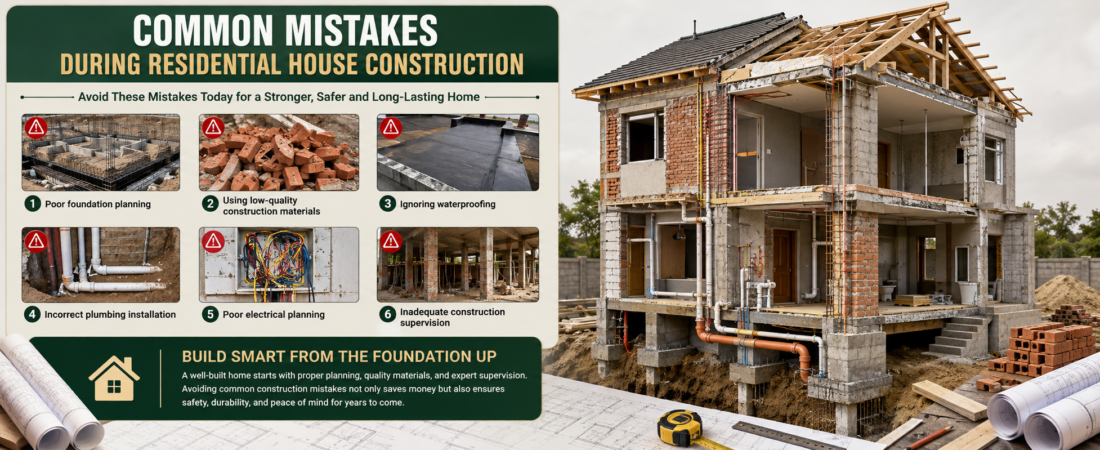
Common mistakes during residential house construction can increase costs and cause damage. Learn what to avoid when building your dream home. Proper planning provides a clear direction for the entire construction project. Before any excavation or foundation work begins, homeowners need to understand their budget, building requirements, architectural design, structural needs, and expected timeline. Without a proper plan, important decisions are often made during construction, which can cause design changes, material waste, and additional expenses.
A good construction plan also helps different professionals work together. Architects, structural engineers, electricians, plumbers, and contractors need accurate information to complete their responsibilities. When everyone follows coordinated drawings and specifications, the chances of costly mistakes become much lower.
15 Common Mistakes During Residential House Construction
Understanding potential construction problems before they happen can save homeowners considerable time and money. Here are some of the most important mistakes to avoid when building a residential property.
1. Starting Construction Without Proper Planning
One of the biggest mistakes homeowners make is starting construction without a detailed plan. They may have a general idea of how the house should look, but they have not finalized the room layout, structural design, electrical points, plumbing arrangements, or finishing requirements. As construction progresses, they begin requesting changes that disrupt the original schedule and increase costs.
A better approach is to finalize architectural and engineering drawings before beginning work. Every important detail should be discussed with the relevant professionals so that the construction team understands exactly what needs to be done.
2. Ignoring Soil Testing and Site Conditions
The condition of the soil plays an important role in determining how a building should be constructed. Some plots have strong soil that can support certain foundation designs, while others may contain loose soil, excessive moisture, or other conditions that require special engineering attention.
Ignoring soil conditions can result in foundation settlement, cracks, and structural problems. Homeowners should arrange a suitable geotechnical investigation when required and have a qualified structural engineer determine the appropriate foundation design based on the site conditions and building requirements.
3. Choosing the Cheapest Contractor
Saving money is understandable, especially when construction expenses are already high. However, selecting a contractor simply because they offer the lowest price can create serious problems. An unusually low quotation may involve poor-quality materials, inexperienced workers, incomplete services, or hidden charges that appear later.
Before hiring anyone, homeowners should review previous projects, discuss construction experience, check references, and compare detailed quotations. A written agreement should clearly explain the scope of work, payment schedule, material specifications, responsibilities, and project timeline.
4. Using Low-Quality Construction Materials
Construction materials directly affect the durability, safety, and performance of a house. Using substandard cement, unsuitable steel, poor-quality bricks, or low-grade electrical and plumbing products may reduce initial expenses, but it can create long-term problems.
Homeowners should pay attention to material specifications rather than purchasing products based only on their price. Materials should meet applicable building standards and be suitable for their intended use. A qualified professional can also help verify material quality before it reaches the construction site.
5. Making Foundation Construction Mistakes
The foundation supports the entire structure, so errors at this stage can have serious consequences. Incorrect foundation dimensions, insufficient reinforcement, unsuitable concrete, or poor ground preparation can affect the stability of the building.
Foundation work should always follow approved structural drawings and engineering specifications. Reinforcement placement, excavation depth, concrete quality, and site preparation should be checked before concrete is poured. Once the foundation is covered, identifying and correcting hidden problems becomes much more difficult.
6. Poor Waterproofing and Drainage Planning
Water leakage is one of the most frustrating problems homeowners face after moving into a new house. Roofs, bathrooms, balconies, kitchens, and foundations are particularly vulnerable when waterproofing is not properly planned.
Some homeowners focus heavily on interior decoration but overlook water protection during construction. Waterproofing systems should be selected for the specific location, installed according to manufacturer instructions, and tested before protective layers or tiles are added. Proper drainage slopes and rainwater outlets are equally important.
7. Ignoring Electrical Planning
Electrical mistakes can make a home inconvenient and potentially unsafe. Poorly positioned sockets, insufficient lighting points, overloaded circuits, and inadequate planning for appliances can create problems that are difficult to fix after walls and ceilings are finished.
Homeowners should discuss their daily electrical needs with a qualified electrician before construction reaches the wiring stage. The electrical layout should account for air conditioners, refrigerators, kitchen appliances, lighting, internet connections, and other equipment. Appropriate circuit protection and earthing should also follow local electrical requirements.
8. Making Plumbing Layout Errors
Plumbing systems are usually hidden behind walls, floors, and ceilings. This makes installation mistakes particularly inconvenient because repairs may require breaking tiles or removing sections of finished surfaces.
Incorrect pipe positioning, poor connections, inadequate drainage slopes, and unsuitable pipe materials can cause leaks, blockages, and unpleasant odors. A professional plumber should follow coordinated plumbing drawings and test water supply and drainage systems before the walls and floors are permanently finished.
9. Not Paying Attention to Ventilation and Natural Light
A beautiful house can still feel uncomfortable if its rooms receive little natural light or have poor ventilation. Some homeowners focus entirely on the exterior appearance and forget how the building will feel during everyday use.
Windows, doors, ventilation openings, and room orientations should be planned according to the property layout and local climate. In warmer regions, suitable shading, cross-ventilation, and thoughtful window placement can help reduce indoor heat and improve comfort without relying entirely on air conditioning.
10. Making Changes During Construction
Changing the house design after construction has started is another common source of unnecessary expenses. A homeowner may decide to move a bathroom, enlarge a bedroom, change the staircase, or add another opening after the original work has already been completed.
Some changes are possible, but they can affect structural elements, plumbing routes, electrical wiring, and project scheduling. It is better to finalize important design decisions before construction begins. Any necessary changes should be reviewed by the relevant architect or engineer before workers make adjustments.
11. Poor Budget Planning
Many homeowners calculate construction expenses based only on the estimated cost of bricks, cement, steel, labor, and other major materials. They forget additional expenses such as approvals, transportation, equipment, utility connections, waterproofing, finishing, and unexpected site conditions.
This can create financial pressure halfway through the project. A realistic budget should include all major construction stages and a contingency allowance for unexpected costs. Homeowners should also keep track of payments and expenses throughout the project instead of relying on rough estimates.
12. Inadequate Supervision of Construction Work
Even a good contractor and experienced workers need proper supervision. Without regular inspections, small mistakes may go unnoticed until they become expensive problems. For example, incorrect reinforcement placement or poorly installed plumbing pipes may remain hidden once concrete and finishing materials are added.
Homeowners should arrange regular site inspections through a qualified construction professional. Important stages such as foundation preparation, reinforcement installation, concrete pouring, waterproofing, and electrical and plumbing testing should receive particular attention.
13. Ignoring Roof Design and Heat Protection
The roof is constantly exposed to sunlight, rain, temperature changes, and environmental conditions. Poor roof construction can contribute to water leakage, excessive indoor heat, and premature material deterioration.
Homeowners should consider suitable roof insulation, waterproofing, drainage outlets, and surface finishes according to the local climate. Roof slopes should allow rainwater to flow toward appropriate drainage points rather than collecting in low areas.
14. Rushing the Finishing Work
After months of construction, homeowners naturally want to complete their houses and move in. However, rushing the finishing stage can result in uneven flooring, poorly installed tiles, damaged paintwork, misaligned doors, and incomplete fittings.
Finishing work requires patience and careful inspection. Before accepting the completed work, homeowners should check tile alignment, wall surfaces, paint quality, door and window operation, plumbing fixtures, electrical fittings, and other visible details. Small defects are usually easier to correct before furniture and household belongings are moved inside.
15. Not Following Local Building Regulations
Ignoring building regulations can create legal and financial problems. Residential construction may require approved drawings, building permits, setback compliance, height restrictions, structural safety requirements, and other permissions depending on the location.
Homeowners should check the applicable rules with their local development authority or building control department before beginning construction. Working with qualified professionals who understand local requirements can help prevent approval problems, penalties, and complications when selling or modifying the property.
Common Residential Construction Mistakes and Their Possible Consequences
Different construction mistakes can affect different parts of a house. Understanding their potential consequences helps homeowners identify which areas need closer attention.
| Construction mistake | Possible consequence |
|---|---|
| Poor foundation design | Settlement and structural damage |
| Low-quality materials | Reduced durability |
| Inadequate waterproofing | Dampness and water leakage |
| Poor electrical planning | Safety and functionality issues |
| Plumbing installation errors | Leaks and drainage problems |
| Weak budget planning | Unexpected expenses |
| Poor ventilation | Indoor discomfort and moisture |
| Inadequate supervision | Workmanship defects |
How to Avoid Costly Mistakes During House Construction
Avoiding construction mistakes requires more than simply hiring workers and purchasing materials. Homeowners need a clear process that covers planning, professional guidance, quality control, and regular inspections.
Hire Qualified Architects and Structural Engineers
Professional guidance is important from the beginning of a residential construction project. An architect helps develop a practical layout, while a structural engineer designs the building’s structural system according to applicable standards and site conditions.
Their involvement can prevent design conflicts and help ensure that the building meets safety requirements. Homeowners should not rely on unverified drawings or informal construction advice for important structural decisions.
Prepare a Detailed Construction Agreement
A written construction agreement protects both the homeowner and contractor. It should explain the project scope, material quality, labor responsibilities, payment terms, deadlines, and procedures for handling changes.
Clear documentation also makes it easier to resolve disagreements. Verbal promises can be misunderstood, so important decisions should always be recorded in writing.
Inspect Every Major Construction Stage
Regular inspections help identify problems before they become hidden behind concrete, plaster, tiles, or paint. Homeowners should arrange professional checks at important stages instead of waiting until the house is almost complete.
Particular attention should be given to foundations, reinforcement, concrete work, waterproofing, plumbing, and electrical installations. Inspection records and photographs can also provide useful documentation of construction progress.
Choose Materials According to Quality and Purpose
Not every expensive material is automatically suitable for every construction project. The right choice depends on its intended application, technical specifications, durability, and compatibility with other materials.
Homeowners should compare product specifications and consult experienced professionals before purchasing important construction supplies. Keeping purchase records and checking delivered materials against the agreed specifications can also reduce the risk of substitutions.
Keep a Realistic Construction Schedule
A realistic timeline allows workers to complete each stage properly. Some activities require specific curing periods, drying times, inspections, or coordination with other trades.
Trying to complete everything too quickly can compromise workmanship. Homeowners should discuss realistic deadlines with their contractor and avoid rushing essential construction processes simply to finish earlier.
What Should Homeowners Check Before Moving Into a Newly Constructed House?
Completing construction does not automatically mean a house is ready for occupation. A final inspection helps identify unfinished work, functional problems, and defects that may need attention.
Homeowners should check that all doors and windows open and close correctly, water supply and drainage systems function properly, and electrical outlets, switches, and protective devices have been inspected. Roofs, bathrooms, balconies, and other waterproofed areas should also be checked for signs of leakage.
Walls, floors, ceilings, stairs, railings, kitchen fittings, and bathroom fixtures deserve attention as well. Any outstanding defects should be documented and discussed with the contractor before final handover.
Where possible, homeowners should also collect approved drawings, relevant inspection records, product warranties, equipment manuals, and details of installed plumbing and electrical systems. These documents can be useful for future maintenance and renovation work.
Why Quality Matters More Than Short-Term Savings
A house is not something most people build every year. It is often a long-term investment where families spend decades living, working, and creating memories. Saving a little money during construction may seem attractive, but cutting corners in important areas can create problems that remain for years.
For example, choosing proper waterproofing materials may increase the initial cost slightly, but it can help prevent expensive moisture damage. Similarly, investing in professional structural design can reduce the risk of serious construction defects.
This does not mean homeowners need the most expensive materials or luxurious finishes. The goal is to spend wisely, prioritize safety, and avoid unnecessary compromises where quality matters most.
Conclusion
Understanding the common mistakes during residential house construction is an important part of building a safe, comfortable, and durable home. Problems such as poor planning, weak foundations, unsuitable materials, plumbing errors, inadequate waterproofing, and insufficient supervision can increase expenses and create long-term maintenance difficulties.
The best way to avoid these problems is to make informed decisions before construction begins and maintain proper quality control throughout the project. Work with qualified professionals, follow approved drawings, inspect important construction stages, and never rush essential work to save a few days.
A well-built home is not simply about attractive walls, stylish flooring, or an impressive exterior. It is about the quality of the structure, the reliability of its systems, and the comfort it provides to the people living inside.
Frequently Asked Questions (FAQs)
1. What are the most common mistakes during residential house construction?
The most common mistakes include poor planning, choosing inexperienced contractors, using low-quality materials, ignoring soil conditions, making foundation errors, and neglecting waterproofing and drainage.
2. Why is foundation quality important when building a house?
The foundation transfers the building’s loads safely to the ground. Poor foundation design or construction can contribute to settlement, cracks, and structural damage.
3. How can homeowners avoid construction cost overruns?
Homeowners can reduce unexpected expenses by preparing a realistic budget, comparing contractor quotations, finalizing designs early, selecting suitable materials, and monitoring construction progress.
4. What happens if waterproofing is ignored during construction?
Inadequate waterproofing can allow moisture to enter roofs, bathrooms, balconies, and walls. This may cause dampness, peeling paint, damaged finishes, and deterioration of building materials.
5. Why is construction supervision necessary?
Regular supervision helps ensure that workers follow approved drawings, use appropriate materials, and complete important construction activities correctly. It also helps identify defects before they become difficult to repair.
Read also: Latest Decoration Trends Mintpaldecor Ideas for Stylish Modern Homes