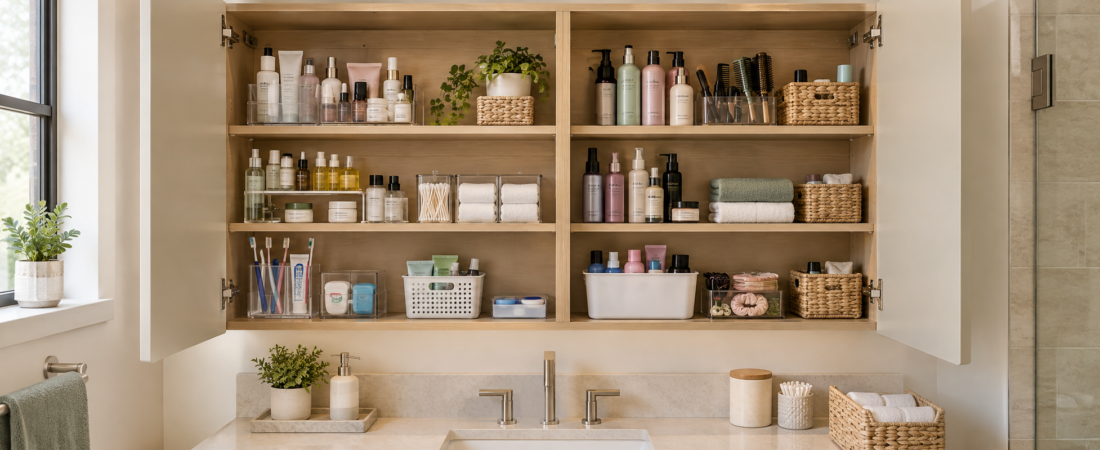
How to Organize Bathroom Cabinet with simple storage ideas, smart sorting tips, and easy ways to keep toiletries neat and accessible. The easiest way to organize a bathroom cabinet is to start with a completely empty cabinet. Take everything out, clean the shelves, and sort your belongings into simple categories such as skincare, hair care, dental products, medicines, cleaning supplies, and everyday toiletries. Throw away expired products, empty containers, and things you no longer use. Once everything is sorted, put frequently used items toward the front and less-used products toward the back or on higher shelves. This simple system makes the cabinet easier to maintain because every item has a logical home.
Why Bathroom Cabinets Get Cluttered So Easily
Bathroom cabinets tend to become cluttered because they hold many small products that are used regularly. Toothpaste, creams, cosmetics, razors, hair products, medicines, cotton pads, and cleaning supplies can quickly become mixed together. Deep shelves can make the problem worse because smaller items disappear behind taller bottles. The goal is not simply to fit more things inside the cabinet. A good organization system should make products visible, accessible, and easy to put away after use.
Start by Emptying the Entire Cabinet
Before buying storage containers or rearranging shelves, remove everything from the cabinet. This gives you a clear view of what you actually own and prevents you from organizing products you should have discarded months ago. Place everything on a clean counter or towel so you can see it at once. While the cabinet is empty, wipe down the shelves and corners with an appropriate bathroom cleaner and allow the area to dry before putting anything back.
Sort Products Into Simple Categories
Once everything is out, group similar products together instead of organizing them one item at a time. You might have one group for skincare, another for dental care, another for hair products, and another for extra toiletries. Keeping categories broad makes the system easier to maintain. If you create too many tiny categories, putting things away can become more work than simply leaving them on the counter.
Check Expiration Dates and Product Condition
Bathroom cabinets often contain products that have been forgotten for months or even years. Check expiration dates where applicable and look for changes in smell, color, texture, packaging, or condition. Medicines deserve particular attention because expired or improperly stored medication may not be safe or effective. If you are unsure how to dispose of a medicine, follow the disposal instructions on its packaging or use an appropriate local medication take-back or disposal service.
Keep Everyday Items Easy to Reach
Think about what you use every morning and evening. Toothpaste, face wash, moisturizer, deodorant, or other daily essentials should be stored where you can reach them without moving several other products first. Keeping everyday items at the front or around eye level makes the cabinet more convenient and helps prevent clutter from spreading onto the bathroom counter.
Use Small Bins to Group Similar Items
Small storage bins can make a big difference inside a bathroom cabinet. Instead of allowing individual products to spread across a shelf, place related items together in one container. For example, one bin can hold hair accessories while another contains skincare products. Choose containers that are easy to lift so you can pull out a whole category when needed rather than digging through the back of the cabinet.
Try Clear Organizers for Better Visibility
Clear organizers are useful when you want to see what you have without opening several containers. They work especially well for smaller bathroom products such as makeup, skincare bottles, dental supplies, and travel-size toiletries. When everything is visible at a glance, you are less likely to forget about products sitting at the back of the cabinet.
Make Better Use of Vertical Space
Many bathroom cabinets have more vertical space than people realize. If a shelf has several inches of unused space above shorter products, consider using a small shelf riser or stackable organizer. This creates another level and allows you to store more without simply piling products on top of each other. Vertical storage is particularly helpful in cabinets with tall shelves and limited width.
Use Shelf Risers for Short Products
Shelf risers can bring smaller containers closer to eye level so they are easier to see and reach. Instead of placing several short bottles in front of one tall bottle and forgetting about them, arrange them on different levels. This works well for skincare products, cosmetics, jars, and other small containers that can easily disappear behind larger bottles.
Organize the Cabinet by Frequency of Use
A useful bathroom cabinet should reflect your daily routine. Products you use every day should have the easiest access, while occasional items can be placed farther back. Extra shampoo, backup toothpaste, guest toiletries, and seasonal products do not need prime cabinet space. This simple approach reduces unnecessary movement and makes the cabinet feel less crowded.
Create a Dedicated Skincare Section
Skincare products can quickly take over a bathroom cabinet because they often come in different shapes and sizes. Keep cleansers, moisturizers, sunscreen, serums, and other products together rather than scattering them across different shelves. If you follow a morning and evening routine, arrange products in the order you normally use them. This small change can make your routine faster and help you avoid forgetting products.
Keep Hair-Care Products Together
Shampoo, conditioner, styling products, brushes, combs, and hair accessories can be grouped into one section. If your cabinet is near the sink, consider keeping only the products you actually use there and storing backups elsewhere. This prevents extra bottles from taking up valuable space while keeping your regular hair-care routine convenient.
Organize Dental Products Separately
Dental-care products are easier to manage when they have their own small area. Toothpaste, floss, replacement toothbrushes, mouthwash, and other supplies can be kept together so you can quickly find what you need. If several family members share the cabinet, individual containers or clearly separated sections can make the space easier for everyone to use.
Be Careful When Storing Medicines
A bathroom may seem like an obvious place to store medicines, but heat and humidity can affect some medications. Always follow the storage instructions on the medicine label or packaging. If a product says it should be stored in a cool, dry place, another location may be more appropriate than a humid bathroom cabinet. Medicines should also be kept safely away from children and anyone who could accidentally take them.
Use the Back of Cabinet Doors
If your cabinet design allows it, the inside of the door can provide useful extra storage. Slim adhesive organizers or door-mounted storage can hold lightweight items such as hair ties, brushes, cotton pads, or other small accessories. Avoid placing anything too heavy on the door, and make sure the added organizer does not prevent the cabinet from closing properly.
Store Backups Together
Extra toiletries should have their own designated area rather than being mixed with everyday products. Keep backup shampoo, soap, toothpaste, skincare products, and similar supplies together so you know what you already have before shopping. This can also help reduce waste because you are less likely to open several replacement products at the same time.
Keep Cleaning Supplies Separate
Bathroom cleaning products should ideally have their own storage area and should not be mixed casually with personal-care items. Keep cleaning chemicals in their original labeled containers and follow the safety instructions on their packaging. Never combine different cleaning chemicals, and store potentially hazardous products safely away from children and pets.
Use Labels When They Actually Help
Labels are helpful when several containers look alike or when multiple people use the bathroom. Simple labels such as “Skincare,” “Hair,” “Dental,” “First Aid,” or “Backups” can make the system obvious. You do not need to label every individual product. The purpose is to make categories clear, not to turn your bathroom cabinet into a filing system.
Make the Most of a Small Bathroom Cabinet
Small cabinets require more careful prioritization than large ones. Keep only the products you use regularly in the easiest-to-reach areas and move backups or occasional items elsewhere. Narrow bins, stackable organizers, and vertical shelf risers can help you use the available space without overcrowding it. If something is rarely used and takes up a large amount of space, consider whether it really needs to live in the cabinet.
How to Organize a Deep Bathroom Cabinet
Deep cabinets can be frustrating because products at the back are easy to forget. One useful approach is to use pull-out bins or handled containers that allow you to bring an entire group forward at once. Keep frequently used products toward the front and less-used items farther back. Avoid creating multiple layers of loose bottles because you will eventually have to remove everything just to reach one item.
Organize Under the Bathroom Sink
The space under a bathroom sink is often awkward because of plumbing pipes, but it can still be organized effectively. Use containers that fit around the plumbing and group cleaning supplies, extra toiletries, or household bathroom items into separate sections. Avoid storing products where a leaking pipe could damage them, and check the area occasionally for moisture or water damage.
Don’t Overfill the Cabinet
One of the biggest mistakes people make when organizing a bathroom cabinet is trying to fit absolutely everything inside. A cabinet works better when there is some empty space around the products. If shelves are packed tightly, removing one bottle can cause several others to fall over. Leaving a little breathing room makes the cabinet easier to use and gives you space to put new essentials away.
Create a Simple Maintenance Routine
Organizing the cabinet once is helpful, but maintaining it is what keeps the system working. Whenever you finish a product, throw away the empty container instead of putting it back. When you buy a replacement, place it with the appropriate category rather than leaving it on the counter. A quick five-minute tidy every few weeks can prevent the cabinet from returning to its original cluttered state.
Common Bathroom Cabinet Organization Mistakes
A common mistake is buying lots of organizers before deciding what actually needs to be stored. Another is putting rarely used products in the most convenient spaces while everyday essentials get pushed to the back. Keeping expired products, mixing medicines with cosmetics, overloading shelves, and ignoring humidity can also create problems. The best organization system is simple enough that you can maintain it without constantly rearranging everything.
A Simple Bathroom Cabinet Setup That Works
For most homes, a practical setup can be divided into three levels. Keep daily essentials on the easiest-to-reach shelf, grouped into small containers by category. Use another area for less frequently used personal-care products and keep backups together in a separate bin. Reserve the least convenient spaces for occasional items, while keeping medicines and cleaning products stored according to their specific safety requirements.
What Should You Keep in a Bathroom Cabinet?
A bathroom cabinet is best used for products that make sense for the space and your daily routine. Everyday toiletries, skincare products, dental-care supplies, hair-care items, grooming products, and appropriate bathroom accessories can usually be organized there. However, not every product belongs in a bathroom cabinet. Always consider the manufacturer’s storage instructions, especially for medicines and products that can be affected by heat or moisture.
Conclusion
Learning How to Organize Bathroom Cabinet is really about making your daily routine easier. You do not need expensive containers or a perfectly styled cabinet. Start by removing everything, getting rid of what you no longer need, grouping similar products, and giving your everyday essentials the easiest access. Once every category has a clear place, the cabinet becomes much easier to maintain. The best system is one that feels natural enough to keep using long after the initial cleanup is finished.
FAQs
How do I organize a bathroom cabinet with limited space?
Use vertical space with shelf risers, choose narrow containers, and keep only frequently used products in the cabinet. Store backups and rarely used items somewhere else when possible.
What should go in the front of a bathroom cabinet?
Keep products you use every day toward the front. Items such as toothpaste, skincare, deodorant, or other daily toiletries should be easy to reach without moving several other products.
Should medicines be stored in a bathroom cabinet?
Not always. Some medicines can be affected by heat and humidity, so always follow the storage instructions on the packaging. Keep medicines safely away from children.
How do I organize a deep bathroom cabinet?
Use pull-out bins or handled containers to prevent products from getting lost at the back. Place frequently used items toward the front and occasional products farther back.
What is the best way to organize bathroom toiletries?
Group toiletries by category, such as skincare, hair care, dental care, and grooming. Use small bins or clear organizers to keep each category together and easy to see.
Read also: Luxury Master Bedroom Interior Design Ideas