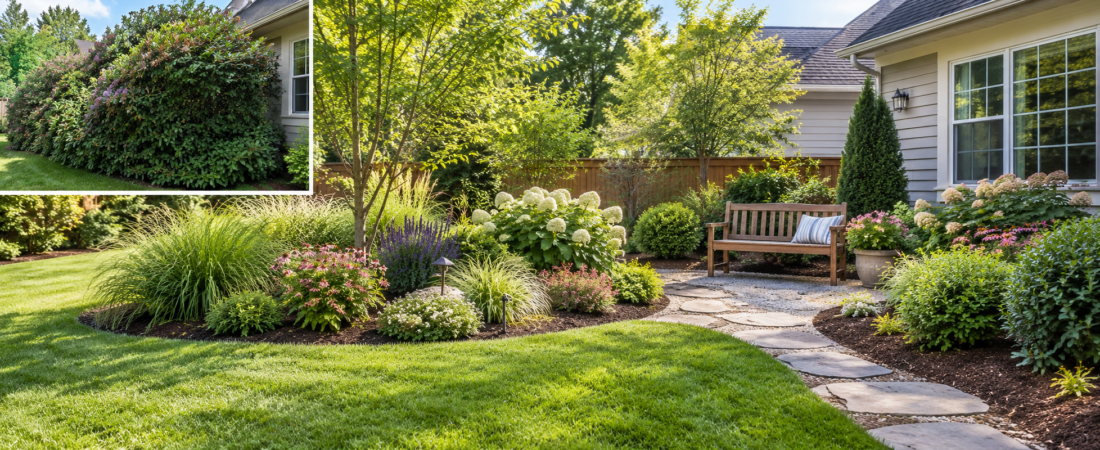
how Home Garden Rhododendron Removal Transformation your home garden with practical ideas for planting, lawn, paths, seating, and low-maintenance landscaping. A home garden rhododendron removal transformation can make a surprisingly big difference to an outdoor space. Large rhododendrons can become dense, overgrown, and difficult to manage, especially when they have been growing in the same spot for many years. Removing one can open up valuable space for new plants, lawn, pathways, seating areas, or a completely different garden design. The key is not simply taking the shrub out, but deciding what should replace it so the garden feels intentional, attractive, and easier to maintain.
What Is a Rhododendron Removal Transformation?
A rhododendron removal transformation is the process of taking out an established rhododendron and redesigning the area around it. The transformation can be as simple as clearing the ground and planting smaller shrubs, or as dramatic as creating a new flower bed, lawn area, patio, or garden feature. The best approach depends on the size of the shrub, the condition of the soil, available sunlight, and how you want to use the space afterward.
Why Remove an Overgrown Rhododendron?
Rhododendrons can be beautiful plants, but an established shrub may eventually become too large for its location. Thick branches can block light, crowd nearby plants, cover paths, and make maintenance difficult. When a rhododendron has outgrown its space or no longer suits the garden design, removal can give the entire area a fresh start.
How Rhododendron Removal Changes a Garden
The biggest change is often the sense of space. Once a large shrub disappears, areas that previously felt dark or enclosed can become noticeably more open. More sunlight may reach the ground, surrounding plants become easier to see, and previously hidden features such as walls, fences, windows, or garden paths can become visible again.
Planning Your Home Garden Transformation
Before removing the rhododendron, look at the garden as a whole rather than focusing only on the empty space. Consider where sunlight falls throughout the day, how water moves through the area, what plants are already growing nearby, and whether you want a low-maintenance garden or something that requires regular attention. A few minutes of planning can prevent the newly cleared space from becoming another difficult area to manage.
Check the Size and Condition of the Rhododendron
A small rhododendron may be manageable with basic gardening equipment, while a mature shrub with a thick trunk and extensive root system can be a much bigger project. Large plants may also be close to fences, buildings, utility lines, or other structures. If removal involves substantial cutting, heavy lifting, stump grinding, or difficult access, professional help can make the job safer and more controlled.
Remove the Rhododendron Carefully
The removal process usually involves cutting back the branches, reducing the main stems, exposing the base, and dealing with the root system. The exact method depends on the shrub’s size and location. Simply cutting the plant at ground level may not be enough if you want to completely reclaim the space, because remaining roots or a large stump can interfere with future planting.
What to Do With the Stump and Roots
Once the main shrub has been removed, the remaining stump deserves attention. A small stump may be dug out, while a larger one may require specialist equipment such as a stump grinder. Removing as much of the root material as practical can make replanting easier, but it is also important to avoid unnecessary disturbance to surrounding plants and structures.
Improve the Soil After Removal
Large established shrubs can influence the soil around them for years. After removal, clear away excess woody material and inspect the soil before planting anything new. Adding suitable organic matter or compost can help improve soil structure, but the right amendment depends on the existing soil and the plants you plan to grow. Avoid automatically changing the soil without understanding what your replacement plants need.
Choosing What to Plant After Rhododendron Removal
This is where the transformation becomes exciting. The empty space can become almost anything you want. You might create a mixed planting bed with flowering perennials, use compact evergreen shrubs for year-round structure, introduce ornamental grasses for movement, or leave part of the area open for a lawn or seating space. Choose plants based on sunlight, soil conditions, mature size, and maintenance requirements rather than appearance alone.
Create a Low-Maintenance Planting Bed
If you want less gardening work, consider a simple combination of hardy shrubs, ground covers, and a few seasonal flowering plants. Grouping plants with similar watering and sunlight requirements makes ongoing care easier. Mulch can also help the planting area look finished while reducing exposed soil and helping retain moisture.
Turn the Space Into a Flower Garden
Removing a large rhododendron can create an excellent opportunity for a new flower border. You could combine plants with different flowering periods so the garden changes throughout the year rather than looking attractive for only a few weeks. Adding different heights, textures, and leaf shapes can also make the planting look fuller without relying on dozens of different species.
Add a Garden Seating Area
If the cleared space is relatively level and receives pleasant sunlight, consider turning it into a small seating area. A bench, two garden chairs, or a compact patio can give the garden a practical purpose. This works particularly well when the old rhododendron previously occupied a central or prominent part of the garden.
Use Lawn to Create an Open Look
For gardens that feel crowded, replacing the shrub with lawn can create a cleaner and more spacious appearance. A small patch of grass can visually connect different parts of the garden and provide an open area for children, pets, or casual outdoor activities. Make sure the location receives enough light for healthy grass before choosing this option.
Add a Garden Path
Another option is to use the newly available space to improve movement through the garden. A simple stepping-stone path, gravel walkway, or paved route can connect the house with a shed, seating area, flower bed, or another part of the yard. This can make the garden feel more deliberately designed rather than simply planted around existing features.
Consider a Layered Garden Design
A successful transformation does not need to rely on one large replacement plant. Instead, use layers. A taller evergreen or small tree can provide structure, medium-sized shrubs can fill the middle level, and low-growing plants can cover the foreground. This approach creates depth while avoiding another situation where one plant dominates the entire garden.
Make Use of Natural Light
One of the most valuable benefits of removing an overgrown rhododendron can be improved access to sunlight. Before selecting replacement plants, watch how the light changes during the morning and afternoon. A previously shaded corner may now support plants that need more sun, while areas that remain shaded can be planted with suitable shade-tolerant varieties.
Don’t Forget Garden Privacy
If the rhododendron was providing privacy, removing it may expose windows, neighboring properties, or garden boundaries. Plan for this before completing the transformation. A fence, trellis, hedge, or carefully selected evergreen plants can restore privacy without recreating the heavy, crowded appearance of the original shrub.
Use Mulch to Finish the Transformation
Fresh mulch can make a newly redesigned garden bed look finished almost immediately. It helps define the planting area and can reduce the amount of exposed soil. Choose a mulch that suits the appearance of your garden and use it appropriately around plants without piling it directly against stems or trunks.
A Simple Before-and-After Transformation
Imagine a garden corner dominated by a large rhododendron with tangled lower branches and very little visible ground. After removal, the area is cleared, the soil is prepared, and a curved planting bed is introduced. Smaller evergreen shrubs provide structure, flowering plants add seasonal color, and a narrow path runs alongside the bed. The result is not simply an empty space where a shrub used to be; it becomes a useful part of the garden.
Common Mistakes to Avoid
One common mistake is removing a large shrub without deciding what happens next. An empty patch can quickly become untidy if it is left unmanaged. Another mistake is choosing replacement plants based only on their appearance at the garden center. Always consider their mature size, sunlight requirements, watering needs, and growth habits. Planting another oversized shrub in the same location can eventually recreate the original problem.
Should You Remove the Rhododendron Yourself?
Whether you should handle the job yourself depends largely on the plant’s size and location. Small shrubs may be suitable for an experienced gardener with appropriate tools, while mature rhododendrons can be physically demanding to remove. If branches are large, access is difficult, the plant is close to structures, or the root system is extensive, a qualified professional can reduce the risk of injury or property damage.
How Long Does a Garden Transformation Take?
The removal itself can take anywhere from a few hours to several days depending on the size of the rhododendron and the complexity of the site. The redesign may take longer because soil preparation, planting, hardscaping, and new lawn installation each require different amounts of work. Remember that the finished garden will continue changing as new plants establish and mature.
How to Make the New Garden Look Established
A newly planted garden can initially look sparse, but that does not mean it has failed. Use a mixture of plant sizes and textures to create immediate visual interest while allowing smaller plants room to grow. Repeating a few key plants throughout the bed can also create a more cohesive appearance without making the garden feel overly formal.
Is Rhododendron Removal Worth It?
For homeowners who feel that an established rhododendron has taken over an important part of the garden, removal can create an opportunity for a completely different outdoor space. The value of the transformation depends on what replaces the shrub. Simply clearing the area may provide temporary improvement, while thoughtful planting, landscaping, or a functional feature can make the space useful for years.
Conclusion
A home garden rhododendron removal transformation is really about giving an overgrown space a second life. Removing the shrub is only the first step. The most successful results come from looking at light, soil, privacy, maintenance, and how you want to use the garden before deciding what comes next. Whether you create a colorful flower bed, an open lawn, a seating corner, or a simple low-maintenance landscape, the cleared space can become one of the most useful parts of your garden.
FAQs
Can removing a rhododendron improve a garden?
Yes. Removing an oversized rhododendron can open up space, improve visibility, allow more light to reach the ground, and create room for new landscaping ideas. The result depends on the condition of the site and how the cleared area is redesigned.
What can I plant after removing a rhododendron?
You can choose from flowering plants, smaller shrubs, ground covers, ornamental grasses, or other plants suited to the site’s sunlight and soil conditions. The best choice depends on the conditions after removal.
Should rhododendron roots be removed?
Removing the main stump and as much of the major root system as practical can make future landscaping easier. However, the amount of root removal needed depends on the size of the plant and what you plan to do with the area.
Can I replace a rhododendron with grass?
Yes, provided the location receives enough sunlight and has suitable soil and drainage. A lawn can be a good choice when the goal is to make a crowded garden feel more open.
How do I make the area look good immediately after removal?
A defined planting bed, fresh mulch, carefully selected plants, edging, or a small path can give the cleared area an instant sense of structure while the new plants establish.
Read also: 10 Best Exterior Paint Colors For a Brick House With Black Windows