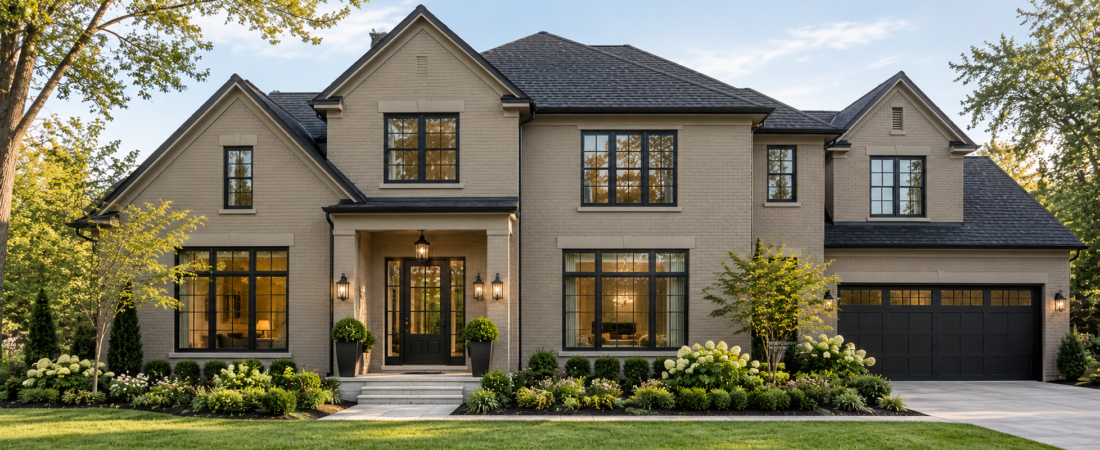
The best exterior paint colors for a brick house with black windows are generally warm white, creamy beige, greige, taupe, soft gray, sage green, muted olive, and charcoal. These colors complement the dark window frames while allowing the brick to remain an important part of the exterior. Warm neutrals are particularly versatile because they can make a traditional brick home feel fresh without making it look overly modern. If you want a stronger contrast, deeper shades such as charcoal or muted navy can create a more dramatic appearance. Before choosing one, look at the undertones in your brick because a paint color that works beautifully with warm red brick may look very different beside cool gray or brown brick.
1. Warm White for a Clean and Timeless Exterior
Warm white is one of the easiest colors to pair with black windows because it creates a crisp contrast without feeling too stark. Unlike bright, pure white, warmer whites contain subtle beige, cream, or gray undertones that help them blend with the natural colors found in brick. This combination can make the exterior feel brighter and more welcoming while giving black windows a clean architectural outline. Warm white is especially attractive on homes with red or brown brick because it balances the richness of the masonry rather than competing with it. For a classic look, pair warm white siding with black window frames, a natural wood or black front door, and simple landscaping.
2. Greige for a Modern but Comfortable Look
Greige is another excellent option when you want your brick house to feel updated without losing its traditional character. As the name suggests, greige sits between gray and beige, giving you the cool sophistication of gray with some of the warmth of beige. It works particularly well with black windows because the darker frames create definition against the softer exterior color. Greige can also connect different materials on the house, including brick, stone, wood, siding, and concrete. If your home has mixed-color brick, a medium or light greige can help bring those different tones together and create a more cohesive exterior.
3. Creamy Beige for a Warm and Welcoming Home
Creamy beige is a great choice for homeowners who want their exterior to feel warm, relaxed, and inviting. It works naturally with traditional brick because both colors have warm undertones. Black windows add contrast and prevent the beige from looking too soft or dated. This combination is especially effective on colonial, farmhouse, transitional, and traditional-style homes. A creamy beige exterior can also look beautiful with a dark brown, black, or natural wood front door. If your brick has noticeable tan, brown, or orange tones, testing a few beige samples beside the brick can help you find a shade that feels intentional rather than mismatched.
4. Light Taupe for a Sophisticated Neutral
Light taupe offers a slightly richer alternative to beige while remaining subtle enough for a residential exterior. It usually contains a mixture of gray, brown, and beige undertones, which allows it to work with many different brick colors. With black windows, taupe can create a sophisticated appearance that feels both traditional and contemporary. This is a particularly useful choice when your brick contains several neutral shades and you want the painted areas to support rather than overpower the masonry. Taupe siding, black windows, a dark roof, and simple greenery can create a polished exterior without relying on overly dramatic colors.
5. Soft Gray for a Fresh Contemporary Style
Soft gray can give a brick house a cleaner and more contemporary appearance, especially when combined with black window frames. The key is choosing a gray with the right undertone. A gray with subtle warmth can work beautifully with red, brown, or tan brick, while a very blue-gray may clash with warmer masonry. Soft gray is also useful when you want the black windows to stand out without using an extremely light exterior color. Add a black or deep charcoal front door for a coordinated appearance, or introduce natural wood through the front door or porch details to keep the exterior from feeling too cold.
6. Sage Green for a Natural Exterior
Sage green is a beautiful option if you want something more distinctive than a neutral but still easy to live with. Its muted quality allows it to complement brick without becoming the main attraction. Black windows provide a strong contrast that makes the green look more intentional and architectural. Sage is particularly appealing on homes surrounded by mature trees, shrubs, gardens, or other natural landscaping. It can also work well with both traditional and farmhouse-inspired architecture. If your brick has warm red or brown undertones, choose a sage with a slightly warm or earthy base rather than a very blue green.
7. Muted Olive for More Character
Muted olive offers a deeper and earthier alternative to sage green. It can give a brick home more personality while still maintaining a sophisticated appearance. The combination of olive, brick, and black windows has a natural quality because all three elements contain earthy, grounded tones. This color can be especially attractive on older brick homes where a bright modern color might feel out of place. Because olive is stronger than a neutral, consider using it thoughtfully and keeping the trim relatively simple. A natural wood door, black hardware, and understated landscaping can complete the look without making the exterior feel too busy.
8. Charcoal Gray for a Bold Modern Exterior
Charcoal gray creates a dramatic exterior when paired with black windows, but it needs to be used carefully. Because both colors are dark, the brick becomes particularly important to the overall balance of the home. Charcoal can work beautifully when the brick is light, medium-toned, or used as a contrasting feature. It can also create a striking look on contemporary homes with clean architectural lines. If your entire house is already dominated by dark brick and a dark roof, however, a lighter exterior paint may provide better visual balance. Use charcoal when you want the exterior to feel confident, modern, and architectural.
9. Soft Cream for a Traditional Brick Home
Soft cream is slightly warmer and gentler than many standard whites, making it an excellent choice for traditional homes. Against black windows, cream creates enough contrast to highlight the window frames while still maintaining a comfortable, classic appearance. It can also soften the visual heaviness of dark roofing materials or black exterior details. This color is particularly useful when the brick contains warm reds, oranges, tans, or browns. Adding natural stone, wood accents, or traditional landscaping can make the entire exterior feel cohesive and established rather than newly painted.
10. Muted Navy for a Dramatic Accent
Muted navy can work surprisingly well with brick and black windows when used as an exterior accent or on selected siding areas. Navy has enough depth to complement black without simply blending into it, especially when the shade has a slightly softened or gray undertone. It can look particularly attractive on a front gable, upper siding, porch area, or another architectural section of the home. Because navy is visually strong, it is usually better suited to homes where the brick remains visible and provides warmth. Pairing it with warm white or cream trim can keep the overall exterior balanced.
How Brick Color Should Influence Your Paint Choice
The color of your brick should be the starting point when selecting exterior paint. Red brick generally works well with warm white, cream, beige, greige, sage, and muted green. Brown brick can pair beautifully with taupe, warm white, beige, olive, and softer gray shades. Tan or light brick often gives you more flexibility, including charcoal and deeper accent colors. Mixed brick requires a little more attention because it may contain several undertones. Instead of matching the paint to just one brick color, look for a shade that connects with the overall combination. This simple approach can prevent the exterior from looking visually disconnected.
Should Exterior Trim Match the Paint or the Brick?
Exterior trim does not always need to match the main painted areas, and using a slightly different shade can add depth to the design. With black windows, many homeowners choose warm white or cream trim because it creates a clear frame around the dark windows. Another option is to use the same color family as the siding but choose a lighter or darker version for subtle contrast. If the brick itself is the main feature, keeping the trim simple can help the masonry remain visually important. The best approach depends on the home’s architecture, but consistency matters more than having every element in exactly the same color.
What Front Door Colors Work With Black Windows and Brick?
A front door is an easy place to introduce personality without repainting the entire exterior. Black is an obvious choice because it connects directly with the windows and other dark hardware. Natural wood can add warmth to a neutral exterior and looks particularly attractive with brick. Deep green, muted navy, burgundy, and charcoal can also work depending on the brick and surrounding colors. If the house already has several strong colors, a simple black or natural wood door may create a more balanced result. Think of the front door as a finishing detail rather than another major competing color.
How Roof Color Affects Your Exterior Paint
The roof is one of the largest visual elements of a home, so it should be considered before choosing exterior paint. Black or charcoal roofs can work with almost all of the colors discussed above, including warm white, greige, taupe, sage, and soft gray. Brown roofs generally pair better with warm neutrals and earthy greens than with very cool grays. If your roof is strongly colored, look for an exterior paint that shares a subtle undertone with it. The goal is not necessarily to match the roof exactly but to make sure the paint, brick, windows, and roof feel like they belong to the same design.
How to Choose the Right Paint Color in Different Lighting
Exterior paint can look dramatically different depending on sunlight, shade, weather, and the direction your house faces. A color that looks warm in the afternoon may appear cooler in the morning or under cloudy skies. This is why small paint samples are much more useful than choosing a color from a screen or tiny color card. Paint large sample areas near the brick and windows, then look at them at different times of day. Give yourself a few days before making the final decision. Seeing the color in real outdoor lighting can reveal undertones that are easy to miss inside a store.
Common Mistakes to Avoid When Painting a Brick House
One common mistake is choosing a paint color before considering the brick’s undertones. Another is relying entirely on online photographs because screens can change how colors appear. It is also easy to choose a color that looks attractive by itself but feels too strong once it covers a large exterior surface. Painting every exterior element the same shade can make a house look flat, while using too many contrasting colors can make it feel visually busy. With black windows, the exterior already has a strong design element, so a controlled color palette usually produces a more balanced result.
Best Color Combinations at a Glance
For a classic exterior, warm white with red brick and black windows is a dependable combination that feels bright and timeless. For something more contemporary, greige with black windows and natural brick creates a balanced transition between traditional and modern styles. Sage green with warm brick gives the house an earthy appearance, while creamy beige creates a softer and more welcoming look. If you prefer something dramatic, charcoal can create a strong modern statement when balanced with lighter brick and appropriate trim. These combinations are starting points rather than strict rules, because the exact result depends on your home’s brick, roof, landscaping, and architectural style.
Conclusion
The best exterior paint colors for a brick house with black windows are the ones that work with the home’s existing materials instead of trying to hide them. Warm white, greige, creamy beige, taupe, soft gray, sage green, olive, and charcoal all offer different ways to create a polished exterior. Before committing to a color, study your brick carefully, consider the roof and landscaping, and test large samples in natural light. Black windows already provide a strong modern detail, so you do not necessarily need an adventurous paint color to make the house stand out. Often, a thoughtfully chosen neutral is enough to make the brick, windows, and architecture look their best.
FAQs
What is the most popular exterior color for a brick house with black windows?
Warm white and greige are popular choices because they provide contrast against black windows while working naturally with many brick colors. Both can create a clean exterior without overpowering the texture and character of the brick.
What color siding looks best with red brick and black windows?
Warm white, creamy beige, greige, taupe, and muted sage are strong options for red brick and black windows. The best choice depends on whether the red brick has warm orange, brown, or cooler undertones.
Can you use gray with brick and black windows?
Yes, gray can work very well with brick and black windows. Choose a soft or warm gray if your brick has red, brown, or tan undertones. Very cool blue-gray shades may create an unwanted contrast with warm brick.
Is white a good exterior color with black windows?
Yes. Warm white is particularly effective because it creates a clean contrast with black windows while maintaining a softer appearance than stark, pure white. It is also versatile across traditional, transitional, and modern homes.
What trim color works best with black windows?
Warm white, cream, soft beige, and sometimes the main exterior color can work well with black windows. The right trim depends on the brick and siding, but simple, consistent trim usually creates the most cohesive appearance.
Read also: Curtains for Sliding Glass Door With Vertical Blinds