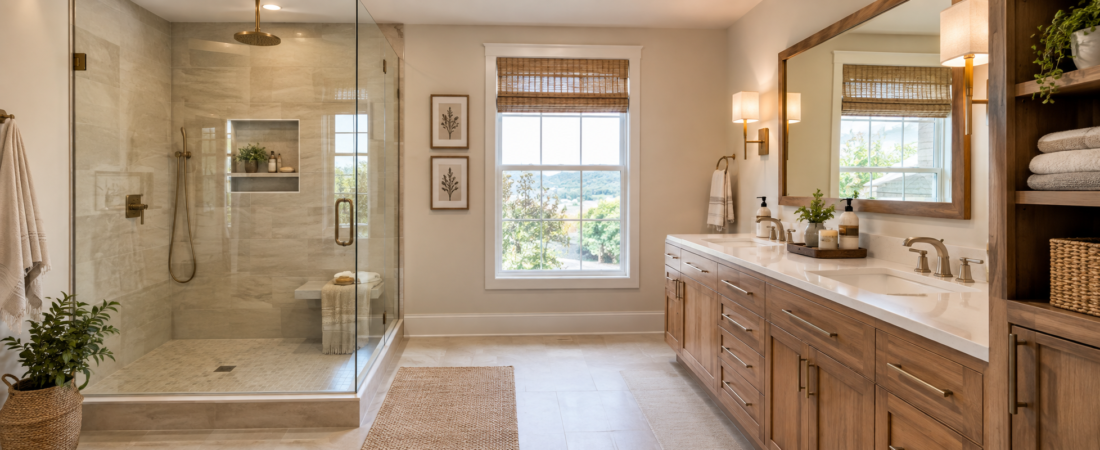
Bathroom remodeling in Knoxville TN can be as simple as updating a vanity, lighting, and fixtures or as extensive as replacing the shower, flooring, plumbing, and layout. The size of the project affects your budget, timeline, materials, and permit requirements, so it’s important to plan the scope before work begins.
How Much Does a Bathroom Remodel Cost in Knoxville?
The cost of a bathroom remodel depends heavily on the size of the room, materials, labor, plumbing changes, and overall scope. Local project listings demonstrate a very broad range: for example, Houzz currently shows Knoxville-area remodelers with typical job-cost ranges ranging from smaller projects to major renovations, including one local firm’s listed range of $25,000–$75,000. Rather than relying on a single average figure, it is more useful to divide your project into priorities and get detailed estimates based on your actual bathroom.
What Affects the Remodeling Budget?
The biggest cost factors usually include the shower or tub, tile, vanity and countertop, plumbing changes, electrical work, flooring, labor, fixtures, ventilation, demolition, and unexpected repairs behind existing walls. Moving a toilet, sink, or shower can be particularly significant because the remodel may require changes to existing plumbing rather than simply replacing visible fixtures.
Popular Bathroom Remodeling Ideas for Knoxville Homes
A bathroom does not have to follow the latest trend to look good. Many homeowners are choosing designs that feel comfortable today but will still look appropriate several years from now. Neutral tile, natural-looking materials, simple vanities, warm lighting, large mirrors, practical storage, and understated hardware can create a bathroom that feels current without becoming dated quickly.
Walk-In Showers
Replacing a traditional tub with a walk-in shower can make the room feel more open and easier to use. Frameless or minimally framed glass can visually expand the space, while a built-in niche provides a convenient place for shampoo and toiletries. For homeowners thinking about long-term accessibility, features such as a low-threshold entry, handheld showerhead, grab-bar reinforcement, and comfortable seating can also be considered during the planning stage.
Freestanding and Built-In Vanities
The vanity often becomes one of the main visual features in a bathroom. A wall-mounted vanity can create a lighter appearance and expose more floor area, while a traditional floor-mounted cabinet provides substantial storage. The right choice depends on the room’s size, plumbing arrangement, storage needs, and overall design.
Better Bathroom Lighting
Good bathroom lighting is about more than appearance. A combination of general lighting, mirror lighting, and shower-area lighting can make the room much easier to use. If the existing electrical system needs alteration, that work should be included in the remodeling plan rather than treated as an afterthought.
Small Bathroom Remodeling Ideas
A small bathroom can still feel spacious when the layout is carefully planned. Light-colored surfaces, a large mirror, glass shower panels, recessed storage, compact fixtures, and a vanity with useful drawers can make a noticeable difference. Instead of filling every available wall with cabinets, focus on storage that serves a specific purpose. A recessed shower niche or medicine cabinet, for example, can provide storage without taking up much usable floor space.
Choosing the Right Bathroom Materials
Bathrooms experience moisture, temperature changes, cleaning products, and daily wear, so appearance should not be the only consideration when choosing materials. Porcelain or ceramic tile can work well for many bathroom surfaces, while quartz and other low-maintenance countertop materials are popular choices for vanities. Flooring should provide appropriate traction and tolerate regular exposure to water. The best material is not necessarily the most expensive one; it is the one that suits the room, budget, maintenance expectations, and style.
Bathroom Ventilation Matters
Ventilation is one of the less glamorous parts of a remodel, but it deserves attention. Showers and baths introduce a substantial amount of moisture into the room. A properly planned exhaust fan can help manage humidity and reduce the conditions that contribute to moisture-related problems. If the existing ventilation system is noisy, ineffective, or poorly positioned, a bathroom renovation is a good opportunity to address it.
Should You Change the Bathroom Layout?
Keeping the existing layout can sometimes reduce remodeling complexity because the new fixtures can use existing plumbing locations. However, that does not mean you should automatically preserve a poor layout. If the toilet blocks a door, the vanity is too small, the shower is cramped, or there is not enough usable storage, changing the arrangement may make the finished bathroom significantly more functional.
The decision should come down to what the existing space does well and what repeatedly frustrates you. A small change in layout can sometimes make a bigger difference than spending more money on decorative finishes.
Bathroom Remodeling Permits in Knoxville TN
Permits are an important part of planning a significant renovation. The City of Knoxville states that residential alterations can require permits, and its current permit system includes separate categories for residential alteration/repair as well as plumbing, electrical, and mechanical work. The city’s residential permit guidance also explains that work involving regulated building, electrical, gas, mechanical, or plumbing systems generally requires a permit unless an applicable exemption applies.
Before work begins, ask your contractor exactly which permits apply to your project and who will obtain them. Do not assume that every bathroom update has the same requirements. The permit situation can change depending on what is being altered.
Working With a Knoxville Bathroom Remodeling Contractor
Choosing a contractor is about more than finding the lowest estimate. Look for someone who can clearly explain the scope of work, materials, project schedule, payment structure, permits, and warranty information. Ask to see examples of comparable bathroom projects and request a written estimate that separates major components of the job.
There are many professionals serving the Knoxville area. Houzz currently lists 177 bathroom remodeling professionals serving Knoxville and surrounding areas, illustrating how much choice homeowners have when comparing contractors. That makes it even more important to compare the actual scope of each proposal rather than simply comparing total prices.
Questions to Ask Before Hiring a Remodeler
Ask whether the contractor handles demolition, plumbing, electrical work, tile installation, waterproofing, permits, inspections, and final cleanup. Find out who will actually perform the work and whether subcontractors will be involved. It is also worth asking how changes are handled if you discover an unexpected plumbing or structural issue after demolition. Clear answers before the project begins can prevent uncomfortable surprises later.
How to Plan Your Bathroom Remodel
Start by writing down everything that bothers you about the current bathroom. Maybe the shower is too small, storage is inadequate, lighting is poor, or the flooring is difficult to maintain. Once those problems are clear, decide which improvements are essential and which are simply nice to have. This helps keep the renovation focused when you start looking at tile, fixtures, vanities, and other finishes.
Next, establish a realistic budget and leave some room for unexpected work. Older bathrooms can hide issues behind walls, under flooring, or around plumbing connections. A contractor can give you a much more useful estimate after seeing the existing space and understanding the intended scope.
Think About Daily Use, Not Just Appearance
A beautiful bathroom can still be frustrating if it does not work well. Consider where towels will go, where toiletries will be stored, whether the mirror has enough lighting, whether the shower has enough elbow room, and whether cleaning will be easy. These small details become much more important after the novelty of a new bathroom wears off.
For example, a slightly larger vanity with drawers may be more useful than an elaborate decorative cabinet. Likewise, a well-positioned shower niche may provide more everyday value than an expensive accent wall.
Making a Bathroom More Accessible
Accessibility does not have to make a bathroom look institutional. Many practical features can be incorporated into a modern design. A curbless or low-threshold shower, handheld showerhead, wider clearances, strategically positioned grab bars, slip-resistant flooring, and comfortable controls can improve usability for people of different ages and abilities.
If accessibility is part of the project, discuss it during the design stage. It is easier to plan structural support and appropriate clearances before walls and finishes are installed.
Energy and Water Efficiency
A remodel is also an opportunity to consider efficiency. Water-saving fixtures can reduce water use, while efficient lighting can lower electricity consumption. Good ventilation can help manage bathroom humidity, and durable materials can reduce the need for frequent replacement.
The goal does not have to be creating a highly technical bathroom. Simple choices, made during a planned renovation, can improve everyday performance without changing the room’s overall appearance.
Common Bathroom Remodeling Mistakes
One common mistake is focusing heavily on finishes before solving the layout. Beautiful tile cannot fix a bathroom that has poor storage or an awkward shower entrance. Another mistake is choosing fixtures based only on appearance without checking dimensions, plumbing compatibility, or maintenance requirements.
It is also risky to treat waterproofing as an area where costs can be cut. Shower construction involves layers that need to work together properly. If something goes wrong behind the finished tile, repairs can become much more expensive than doing the installation correctly in the first place.
How Long Does a Bathroom Remodel Take?
There is no single timeline for every bathroom remodel. A straightforward cosmetic update can be considerably faster than a renovation involving demolition, plumbing relocation, electrical changes, custom cabinetry, extensive tile work, and inspections. Material availability can also affect scheduling.
Your contractor should provide a project schedule that identifies major stages such as demolition, rough plumbing and electrical work, inspections where applicable, waterproofing, tile installation, fixture installation, and final completion.
A Practical Bathroom Remodeling Checklist
Before construction starts, make sure you have decided on the layout, major fixtures, vanity, countertop, shower or tub, flooring, wall finishes, lighting, mirrors, hardware, storage, and paint colors. Confirm who is responsible for permits and inspections, and make sure the written agreement clearly describes the work.
It is also smart to order important materials early when possible. A missing vanity, shower door, or specialty tile can hold up otherwise completed work.
Conclusion
A successful bathroom remodeling Knoxville TN project is not simply about making an old bathroom look new. It is about creating a space that fits your home, your routines, your budget, and your long-term needs. Start with the problems you want to solve, choose materials that make sense for daily use, and work with a contractor who explains the process clearly.
For projects inside Knoxville city limits, check the current requirements with the City of Knoxville before construction begins. The city maintains current construction-code and permit information, and its permitting guidance distinguishes residential alterations from repair and other types of work.
A little planning at the beginning can save a lot of frustration later—and it can turn an ordinary bathroom into one of the most useful spaces in the home.
FAQs
1. How much does bathroom remodeling cost in Knoxville TN?
Bathroom remodeling costs vary according to room size, materials, labor, plumbing changes, electrical work, and the level of renovation. A contractor should provide a project-specific estimate rather than relying on a generic local average.
2. Do I need a permit for bathroom remodeling in Knoxville?
Some bathroom remodeling work requires permits, particularly when regulated building, plumbing, electrical, mechanical, or structural work is involved. The City of Knoxville provides separate residential alteration, plumbing, electrical, and mechanical permit categories.
3. Is it cheaper to keep the existing bathroom layout?
Often, keeping plumbing fixtures in their existing locations can reduce the complexity of a remodel. However, changing the layout may be worthwhile if the current arrangement creates major usability problems.
4. What bathroom upgrades add the most everyday value?
Practical improvements such as better storage, improved lighting, a comfortable shower, quality ventilation, durable flooring, and an efficient vanity can make a bathroom significantly easier to use every day.
5. How do I choose a bathroom remodeling contractor in Knoxville?
Compare several detailed proposals and look at relevant past projects. Ask about permits, subcontractors, warranties, payment schedules, project timelines, and how unexpected work will be handled.
Read also: Upgrades Home Decoradtech Smart Ways to Improve Your House