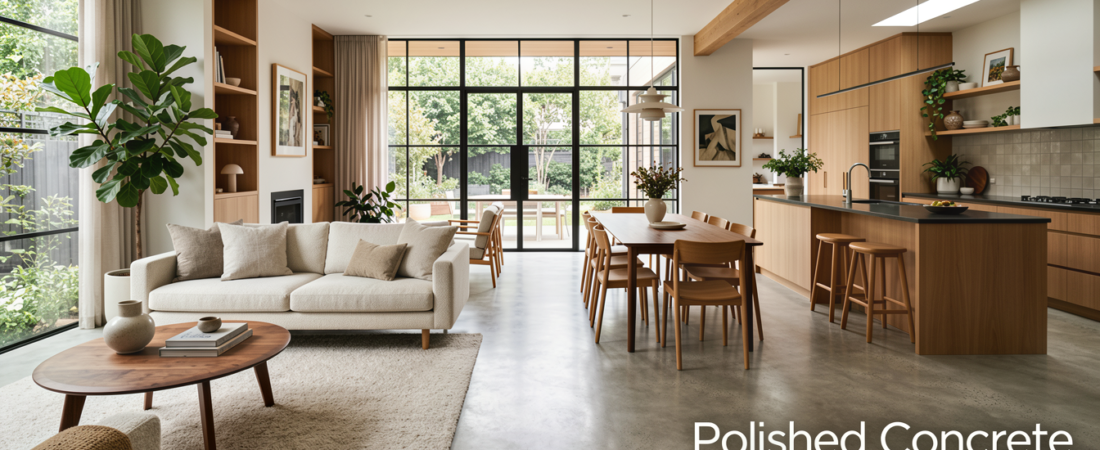
Polished concrete floors in house interiors have become a popular choice for homeowners who want something modern, durable, and easy to maintain. Once associated mainly with warehouses, workshops, and commercial buildings, polished concrete now appears in living rooms, kitchens, hallways, dining spaces, and open-plan homes. The appeal is easy to understand: the surface has a clean architectural look, reflects natural light, and can work with everything from minimalist furniture to warm wood and textured fabrics.
But good-looking flooring is only part of the decision. Concrete can feel hard underfoot, existing slabs may need preparation, and the final appearance depends heavily on the quality of the installation. Before choosing it for your home, it helps to understand how polished concrete works, where it performs well, what it costs, and what everyday living on it is actually like.
What Are Polished Concrete Floors?
Polished concrete is a concrete surface that has been mechanically ground, refined, and polished until it develops a smooth, dense, often reflective finish. Unlike simply painting or coating a concrete floor, polishing works directly with the concrete surface and can reveal the aggregate, creating a distinctive appearance.
The final result can range from a subtle satin finish to a highly reflective surface. The level of shine, exposed aggregate, color, and overall character can be adjusted during the process, which is one reason polished concrete can suit very different home styles.
Are Polished Concrete Floors Good for a House?
Yes, polished concrete can be an excellent flooring option for a house when the existing slab and installation conditions are suitable. It is particularly useful in open-plan areas because the continuous surface can make rooms feel larger and visually connected.
It is also durable and relatively easy to clean. However, it is not automatically the right choice for every room or every homeowner. Comfort, insulation, moisture, cracking, and the condition of the existing concrete should all be considered before installation.
Why Homeowners Choose Polished Concrete
One of the biggest attractions is the combination of appearance and practicality. A polished floor can provide the visual simplicity of a modern material without requiring a separate floor covering such as tile or laminate.
A Modern and Timeless Appearance
Polished concrete has a distinctive character that can make a room feel contemporary without relying on complicated patterns or decorative finishes. Its natural variations, subtle color changes, and exposed aggregate can also prevent the floor from looking completely uniform.
The style works especially well with wood, leather, linen, stone, metal, and other natural materials. Adding a large rug or soft furnishings can also balance the harder appearance of the floor.
Excellent Durability
A properly installed and maintained polished concrete floor can withstand substantial everyday use. This makes it attractive for busy areas such as kitchens, entrances, dining rooms, and open-plan living spaces.
Unlike some softer flooring materials, polished concrete is not easily damaged by ordinary foot traffic. However, durability does not mean it is impossible to scratch, stain, chip, or crack.
Easy Everyday Cleaning
Another practical advantage is the relatively simple cleaning routine. Dust and loose dirt can usually be removed with sweeping, vacuuming, or dry mopping, while suitable damp cleaning can deal with everyday marks.
Because there are no grout lines between individual tiles, there are fewer joints where dirt can collect. This can be especially convenient in large open areas.
Works Well With Underfloor Heating
Concrete has good thermal mass, meaning it can absorb and retain heat. When correctly designed with an appropriate underfloor heating system, concrete flooring can become a comfortable part of an energy-efficient heating strategy.
The flooring system needs to be planned as a whole, though. Underfloor heating should not simply be added without considering the slab, insulation, joints, moisture, and finish.
Where Can You Use Polished Concrete in a House?
Polished concrete can be used throughout many parts of a home, but some spaces are particularly well suited to it.
Living Rooms
A polished concrete living room can create a clean foundation for furniture and decorative features. Because the floor is visually continuous, it can work especially well in large open-plan layouts.
Soft furnishings are useful here because they introduce warmth and texture against the hard flooring surface.
Kitchens and Dining Areas
Kitchens are another natural application because polished concrete is easy to clean and does not have grout lines. Food spills can be dealt with relatively quickly when the surface has been properly finished and maintained.
A polished floor can also connect the kitchen and dining area visually, creating a cohesive appearance.
Hallways and Entryways
Entryways receive a lot of traffic, so durability is important. Polished concrete can handle frequent use while maintaining a clean architectural appearance.
However, grit and sand should not be allowed to accumulate because abrasive particles can contribute to surface wear over time.
Bathrooms
Concrete can be used in bathrooms, but this application requires careful planning. Waterproofing, drainage, slip resistance, moisture movement, and the appropriate finish all matter.
A bathroom floor should not simply be polished because it looks attractive in photographs. The installation needs to be suitable for a wet environment.
Bedrooms
Polished concrete can also work in bedrooms, especially in modern or minimalist interiors. The main concern is comfort. Concrete feels harder and often cooler than carpet or timber, so rugs and appropriate heating can make a significant difference.
Polished Concrete vs. Regular Concrete
These terms are sometimes used interchangeably, but they are not quite the same thing. Regular concrete is primarily a structural or basic flooring material, while polished concrete has undergone additional mechanical grinding and refinement to improve its appearance and surface characteristics.
A normal concrete slab may look dull, rough, or inconsistent. Polishing can transform that surface into something much smoother and more visually refined.
Polished Concrete vs. Concrete Overlay
A concrete overlay is a separate cement-based material applied over an existing surface. It can sometimes be useful when the original floor is unsuitable for direct polishing or when a different decorative appearance is desired.
Directly polishing an existing slab and installing a decorative overlay are therefore two different approaches. A professional should assess the floor before deciding which method makes sense.
The Main Advantages of Polished Concrete Floors
Polished concrete offers several practical benefits that explain its growing popularity in residential design.
Long-Term Durability
When properly installed, polished concrete can provide a hard-wearing surface capable of handling years of everyday household activity.
Low Maintenance
Routine care is generally straightforward. Regular dust removal and appropriate damp cleaning can help keep the surface looking good without complicated maintenance.
Minimalist Appearance
The uninterrupted surface is particularly effective in contemporary, industrial, Scandinavian, and minimalist interiors.
Light-Reflective Surface
Depending on the finish, polished concrete can reflect natural and artificial light. In the right room, this can help create a brighter and more open feeling.
Design Flexibility
Concrete does not have to look plain gray. Pigments, stains, aggregates, finishes, and different polishing levels can produce a wide range of visual effects.
The Disadvantages You Should Consider
Polished concrete is not perfect, and understanding its drawbacks is just as important as knowing its benefits.
It Can Feel Hard Underfoot
There is no getting around this one. Concrete is hard. Standing on it for long periods can feel less comfortable than standing on cork, vinyl, timber, or other softer flooring materials.
Rugs and cushioned mats can help, particularly in kitchens and living spaces.
It Can Feel Cold
Concrete can feel cool underfoot, particularly during colder weather. This is one reason underfloor heating can be an attractive addition where practical.
The actual thermal performance also depends on the building’s insulation, climate, slab construction, and heating system.
Cracks Can Occur
Concrete naturally moves and can develop cracks. Existing structural movement, poor installation, moisture problems, temperature changes, and inadequate joint planning can all influence cracking.
A polished finish does not guarantee a completely crack-free floor.
Repairs May Be Visible
If a polished concrete surface becomes significantly damaged, repairing it so that the patch perfectly matches the surrounding area can be difficult.
Minor variations may become part of the floor’s character, but homeowners expecting a completely uniform surface should understand this beforehand.
How Much Do Polished Concrete Floors Cost?
The cost of polished concrete flooring varies considerably depending on the condition of the existing floor, the size of the project, labor rates, required preparation, desired finish, and whether a new slab or overlay is needed.
A straightforward project involving a suitable existing concrete slab may cost considerably less than a project requiring extensive repairs or a completely new floor system.
The polishing level also affects the price. More grinding stages, decorative treatments, staining, exposed aggregate, and higher levels of sheen can increase labor and material costs. For an accurate figure, homeowners should obtain local quotes based on an inspection rather than relying on a generic price per square foot.
What Is the Installation Process?
The installation process depends on the condition of the concrete and the desired result, but it generally begins with preparing and assessing the surface.
Inspecting the Existing Slab
The contractor first needs to determine whether the concrete is suitable for polishing. Cracks, stains, uneven areas, previous coatings, moisture problems, and surface damage can all affect the final result.
Grinding the Concrete
Diamond grinding equipment is used to remove imperfections and gradually expose the desired amount of aggregate. Several stages may be required to achieve the appropriate surface.
Filling Cracks and Voids
Visible cracks and small surface imperfections may be repaired during preparation. These repairs can remain slightly visible after polishing, depending on the condition of the slab and the chosen finish.
Honing and Polishing
The surface is progressively refined using increasingly fine abrasives. This creates the smoothness and level of sheen associated with polished concrete.
Applying Protection
A suitable protective treatment may be used to help improve resistance to staining and everyday wear. The exact products and maintenance requirements depend on the system selected by the contractor.
How Do You Maintain Polished Concrete Floors?
Maintenance is relatively simple, but polished concrete still benefits from regular care. Sweep or vacuum the surface regularly to remove abrasive dirt, then use a suitable cleaning solution when damp mopping is needed.
Avoid using harsh products unless they are specifically recommended for the flooring system. Spills should also be cleaned rather than left sitting on the surface for extended periods, particularly when dealing with substances that can stain or chemically affect the finish.
Furniture can be fitted with appropriate protective pads to reduce scratching and surface damage.
How Do You Make Concrete Floors Feel Warmer?
If you love the appearance of concrete but worry that it will make your home feel cold, the surrounding design can make a surprisingly big difference. Large rugs, timber furniture, warm textiles, curtains, upholstered seating, and natural materials can soften the overall atmosphere.
Underfloor heating can also be considered where the building and flooring system are designed for it. Good insulation matters as well, because a beautiful floor will not compensate for poor thermal performance elsewhere in the building.
Can You Change the Color of Polished Concrete?
Yes, concrete floors can be colored using different techniques depending on the project. Integral pigments, stains, dyes, and other decorative treatments can produce different effects.
Gray remains popular because it emphasizes the natural character of concrete, but warmer tones can work well in residential interiors. The final color can vary depending on the original concrete, aggregate, application method, and lighting.
For that reason, samples should be viewed before committing to a particular color.
Is Polished Concrete Slippery?
A highly polished surface can become more slippery when wet, although the actual slip resistance depends on the finish, texture, contamination, and environmental conditions.
This is particularly important in bathrooms, entrances, kitchens, and outdoor areas where water may be present. A flooring professional can recommend a finish appropriate for the specific location rather than simply choosing the highest possible shine.
Is Polished Concrete Environmentally Friendly?
The environmental impact depends on the entire flooring system rather than simply the word “concrete.” If an existing concrete slab can be polished instead of being removed and replaced, that can reduce the need for additional flooring materials.
There is also no need for a separate layer of carpet, tile, or some other finish in a basic polished-concrete installation. However, concrete production itself has a significant environmental footprint, so it would be misleading to describe every polished concrete floor as inherently sustainable.
The most sensible approach is to consider the existing slab, longevity, material requirements, maintenance, and the building’s overall design.
How to Choose the Right Finish
The right finish depends on the style and function of the room. A lower sheen can create a softer, more understated appearance, while a higher sheen produces a stronger reflective effect.
You should also decide how much aggregate you want visible. Minimal exposure gives a more uniform appearance, while deeper grinding can reveal stones and create a more distinctive pattern.
Samples are especially valuable because photographs rarely show exactly how a polished floor will look under the lighting conditions inside your own house.
Design Ideas for a Polished Concrete Home
Polished concrete becomes much more interesting when it is combined with contrasting materials. Pairing it with warm timber cabinetry can prevent a kitchen from feeling overly industrial.
In living rooms, textured rugs and upholstered furniture can soften the hard surface. In minimalist homes, the uninterrupted floor can be allowed to remain the main visual foundation, with simple furniture and carefully chosen lighting doing most of the decorative work.
Plants, natural fabrics, wood, stone, and warm-colored accessories can also create balance without hiding the character of the concrete.
Is Polished Concrete Worth It for a House?
For homeowners who appreciate modern design, durability, easy cleaning, and a continuous flooring surface, polished concrete can be a practical long-term option. It is particularly compelling when an existing concrete slab is already available and can be successfully polished.
The decision becomes less straightforward when comfort, warmth, or a softer appearance is a top priority. In those situations, timber, engineered wood, vinyl, tile, or other flooring options may deserve consideration.
The important thing is not to choose polished concrete simply because it looks impressive in an interior photograph. Look at the condition of your floor, the way your household uses each room, the local climate, maintenance expectations, and the finish you actually want.
Conclusion
Polished concrete floors in house interiors offer a combination of durability, simplicity, and distinctive visual character that few other flooring materials can quite replicate. They can make an open-plan home feel connected, provide a clean backdrop for furniture, and reduce the maintenance associated with some traditional flooring systems.
At the same time, concrete is hard, can feel cool, and may show natural cracking or variations. Those characteristics are not necessarily flaws, but they should be part of the decision from the beginning.
If the material suits your lifestyle and the existing slab is appropriate, polished concrete can become more than just a flooring choice. It can provide the visual foundation for the entire interior.
FAQs About Polished Concrete Floors in House
Are polished concrete floors good for homes?
Yes. Polished concrete can be a durable, low-maintenance flooring option for homes, particularly in living rooms, kitchens, dining areas, and open-plan spaces. The suitability depends on the slab condition, installation quality, moisture conditions, and the homeowner’s preferences for comfort and appearance.
Do polished concrete floors crack?
They can. Concrete naturally moves, and cracking can occur because of structural movement, shrinkage, temperature changes, moisture, or other factors. Proper preparation and joint planning can help manage the risk, but polishing does not guarantee a crack-free surface.
Are polished concrete floors expensive?
The cost varies by project. Existing slabs that require little preparation can be less expensive than floors requiring major repairs, overlays, or new concrete. The chosen finish, polishing level, decorative treatments, labor, and floor condition also influence the final price.
Are polished concrete floors hard to maintain?
Generally, no. Routine maintenance usually involves removing dust and dirt and periodically damp cleaning the surface with suitable products. Following the manufacturer’s or installer’s maintenance recommendations is important for protecting the finish.
Can you have underfloor heating under polished concrete?
Yes, polished concrete can be used with suitable underfloor heating systems when the floor is designed and installed correctly. The heating system, insulation, slab, joints, and finishing process should be considered together.
Read also: Kitchen Upgrading Advice Mintpalment Ideas for a Better Spaces