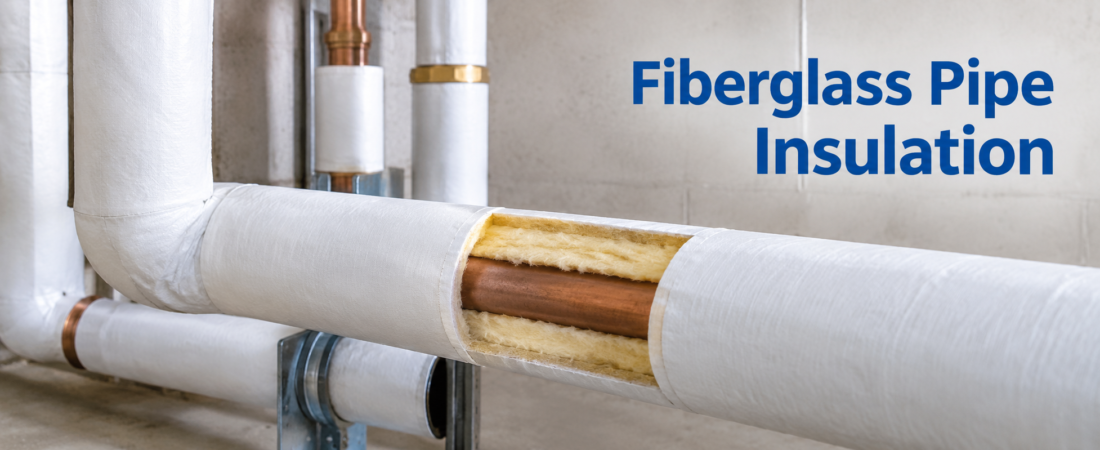
Fiberglass pipe insulation is a simple but important part of many plumbing, heating, cooling, and HVAC systems. It helps slow heat transfer through pipes, allowing hot or cold fluids to maintain their temperature for longer. It can also help control condensation on properly insulated cold-water and chilled-water pipes.
If you have ever touched an uninsulated hot-water pipe and felt how quickly it transfers heat, you have already seen why pipe insulation matters. Without insulation, valuable heat can escape into surrounding spaces. With cold pipes, unwanted heat can move into the pipe while moisture can collect on the outside surface.
The good news is that fiberglass pipe insulation is relatively straightforward to understand. The right product, thickness, and installation method can make a noticeable difference in how efficiently a piping system performs.
What Is Fiberglass Pipe Insulation?
Fiberglass pipe insulation is a preformed insulating material made from fine glass fibers that surround a pipe and slow the movement of heat. It is commonly manufactured in tubular sections designed to fit specific pipe sizes. Many products also include a protective facing or jacket that provides a finished surface and can help manage moisture depending on the application.
The fiberglass fibers create many small pockets of air, and this structure makes it more difficult for heat to travel through the insulation. The result is a thermal barrier between the pipe and the surrounding environment.
How Does Fiberglass Pipe Insulation Work?
The basic principle is thermal resistance. When a pipe carries hot water, steam, or another heated fluid, heat naturally moves toward the cooler surrounding environment. Fiberglass insulation adds resistance to that movement, helping the fluid remain warmer for longer.
The same idea applies to cold piping, although moisture control becomes especially important. Insulation can slow the transfer of heat from the surrounding air into the cold pipe. When the system is properly designed and the insulation includes an appropriate vapor-retarder system, it can also help prevent moisture from reaching the insulation and causing problems.
Why Is Pipe Insulation Important?
Pipe insulation matters because pipes do not operate in isolation. Their temperature affects the surrounding space, energy use, equipment performance, and sometimes occupant comfort. An uninsulated hot-water line can release considerable heat into a mechanical room or wall cavity, while a cold pipe can attract condensation when its surface temperature falls below the surrounding air’s dew point.
Adding insulation creates a buffer between the pipe and its surroundings. That small change can help a system maintain more consistent temperatures and reduce unnecessary heat transfer.
Main Uses of Fiberglass Pipe Insulation
Fiberglass insulation is used in many types of piping systems because it can be manufactured for different temperatures and applications. Common examples include domestic hot-water piping, heating systems, HVAC piping, steam-related applications, and certain industrial process lines.
In commercial buildings, it is often seen on mechanical-room piping and longer distribution lines. In residential settings, it may be used around accessible hot-water pipes or other piping where the selected product is appropriate for the operating conditions.
Fiberglass Pipe Insulation for Hot Water Pipes
Hot-water pipes are one of the most familiar applications for pipe insulation. When hot water travels through an uninsulated pipe, some of its heat moves into the surrounding air. This can make the water lose temperature before it reaches its destination.
Insulation slows that process. The pipe can retain more of its heat, which may improve comfort and reduce the amount of reheating needed by the system. The actual energy savings depend on factors such as pipe length, water temperature, insulation thickness, ambient conditions, and how often the system is used.
Fiberglass Insulation for Cold Pipes
Cold-water and chilled-water pipes present a different challenge. The goal is not simply to keep the fluid cold. The insulation also needs to manage moisture.
When a cold pipe comes into contact with warm, humid air, condensation can form on the pipe surface. Over time, that moisture can damage nearby materials and create conditions that are difficult to manage.
For these applications, the insulation system needs an appropriate vapor retarder and properly sealed joints. Simply placing fiberglass around a cold pipe without considering moisture control may not provide the expected result.
Benefits of Fiberglass Pipe Insulation
One major advantage is its ability to reduce unwanted heat transfer. It can help hot fluids stay hot and cold fluids stay cold, depending on the application and product selection. Fiberglass can also be useful in systems where temperature resistance is an important consideration.
Another benefit is that preformed pipe sections can provide a relatively clean installation on straight runs. When correctly sized and fitted, they create consistent insulation coverage around the pipe.
Fiberglass is also widely used in commercial and industrial environments, which means there is substantial industry experience with the material and its different applications.
Does Fiberglass Pipe Insulation Save Energy?
It can. The purpose of insulation is to reduce heat moving between the pipe and surrounding environment, so less energy may be needed to maintain the desired fluid temperature.
However, insulation should not be viewed as an automatic energy-saving guarantee. The result depends on the entire system. Pipe size, insulation thickness, operating temperature, ambient conditions, pipe length, and installation quality all influence performance.
A poorly fitted installation with large gaps can undermine the benefits of an otherwise suitable insulation product.
What Thickness of Fiberglass Pipe Insulation Do You Need?
There is no single insulation thickness that works for every pipe. The appropriate thickness depends on the pipe diameter, operating temperature, location, energy requirements, moisture conditions, and applicable building or mechanical requirements.
For that reason, it is better to follow the insulation manufacturer’s recommendations and applicable local requirements rather than choosing thickness based only on appearance. A thicker product is not automatically better for every situation, and the correct specification should be based on the actual application.
How to Install Fiberglass Pipe Insulation
Installing preformed fiberglass pipe insulation generally starts with measuring the pipe and selecting a section designed for its diameter. The insulation is then opened along its longitudinal slit and positioned around the pipe.
Once it is in place, the longitudinal seam and section joints are secured using the method recommended for that particular product. On cold piping, special attention should be given to sealing because breaks in the vapor-retarder system can allow moisture to reach the insulation.
The installation should also account for elbows, valves, fittings, hangers, and other areas where standard straight sections do not provide complete coverage. These details may seem small, but they can have a meaningful effect on the finished system.
Tools Needed for Installation
The tools depend on the specific product and installation conditions, but a typical job may require a measuring tape, appropriate insulation knife, cutting surface, fastening materials, and approved sealing materials. Personal protective equipment should also be used according to the manufacturer’s safety instructions.
The important point is to use tools and accessories that are compatible with the insulation system. Improvised materials may damage the facing or create gaps that reduce performance.
Can You Install Fiberglass Pipe Insulation Yourself?
Simple straight sections can sometimes be handled by an experienced DIY homeowner, especially when working with accessible plumbing and a product designed for that application. However, more complicated systems can require professional knowledge.
Steam lines, high-temperature piping, chilled-water systems, commercial HVAC installations, and areas with complicated fittings should be approached carefully. The wrong insulation product or installation method can create safety, moisture, or performance problems.
If you are unsure about the pipe temperature or the correct insulation specification, checking the manufacturer’s documentation or consulting a qualified professional is a sensible step.
Fiberglass Pipe Insulation and Condensation
Condensation deserves special attention because insulation alone does not automatically solve the problem. Condensation occurs when a surface becomes cold enough for moisture in the surrounding air to turn into liquid water.
For cold piping, the insulation needs to maintain an appropriate surface temperature and limit moisture movement into the insulation. This is why the vapor-retarder jacket, seams, joints, and penetrations need to remain intact.
If the outer jacket is damaged, moisture can potentially enter the insulation system. Repairs should therefore be made using materials and methods recommended for the particular product.
Fiberglass vs. Foam Pipe Insulation
Fiberglass and foam are both used for pipe insulation, but they suit different applications. Fiberglass is commonly selected for applications where its temperature capabilities and established use in HVAC and mechanical systems are useful.
Foam products are often popular for residential plumbing because they are lightweight, easy to cut, and convenient for certain lower-temperature applications. Elastomeric foam, for example, is commonly used where flexibility and moisture resistance are important.
The better material depends on the actual pipe rather than simply choosing the product that looks easiest to install.
Is Fiberglass Pipe Insulation Safe?
Fiberglass insulation should be handled with care during installation because loose fibers can irritate the skin, eyes, and respiratory system. Cutting and handling the material can release fibers, so installers should follow the manufacturer’s safety recommendations and use appropriate protective equipment.
Once properly installed and enclosed by its intended facing or jacket, the situation is different from handling exposed insulation during installation. Always check the product’s safety documentation for specific handling requirements.
Common Fiberglass Pipe Insulation Mistakes
One common mistake is choosing insulation based only on pipe diameter while ignoring operating temperature and environmental conditions. Another is leaving gaps at joints, fittings, or difficult sections of the pipe.
Cold piping creates another common problem when installers fail to maintain the vapor-retarder system. Even a small opening can become a path for moisture if conditions are right.
It is also easy to overlook damaged insulation after installation. Insulation works best as a continuous system, so damaged or missing sections should not simply be ignored.
How Long Does Fiberglass Pipe Insulation Last?
The service life can vary considerably depending on the product, installation environment, moisture exposure, mechanical damage, temperature, and maintenance. Fiberglass itself can remain useful for many years when it is properly selected and protected.
The outer facing or jacket may need attention sooner if it becomes damaged or exposed to harsh conditions. Regular inspection is particularly useful in mechanical rooms, basements, crawl spaces, and other areas where insulation can be disturbed.
How to Choose the Right Product
Start by identifying exactly what the pipe carries and its normal operating temperature. Next, determine the pipe diameter and the environmental conditions around it. For cold piping, consider moisture and vapor-retarder requirements as well.
The manufacturer’s technical information should then be used to select the appropriate product and thickness. If the project is subject to building codes, energy requirements, or commercial specifications, those requirements should also be considered before installation.
Conclusion
Fiberglass pipe insulation may look like a small detail in a plumbing or HVAC system, but it plays an important role in controlling heat transfer. A properly selected and installed system can help hot pipes retain heat, reduce heat gain on cold pipes, and manage condensation when the appropriate vapor-retarder system is used.
The key is not simply buying fiberglass and putting it around a pipe. Pipe diameter, operating temperature, insulation thickness, moisture conditions, fittings, seams, and the surrounding environment all matter. When those details are handled correctly, insulation becomes a practical way to help a piping system operate more efficiently and consistently.
Frequently Asked Questions
Is fiberglass pipe insulation good?
Yes, fiberglass pipe insulation can be an effective option for reducing heat transfer around many hot, cold, HVAC, heating, and industrial pipes. Its suitability depends on the pipe temperature, environment, required thickness, and specific product rating.
What is fiberglass pipe insulation used for?
It is primarily used to reduce unwanted heat transfer through piping. It can help hot-water and heating pipes retain heat and can help cold piping resist heat gain and condensation when installed with a suitable vapor-retarder system.
Is fiberglass better than foam pipe insulation?
Neither material is universally better. Fiberglass can be well suited to certain higher-temperature and commercial mechanical applications, while foam products are often convenient for residential plumbing and other applications. The pipe’s temperature and environmental conditions should guide the choice.
Can fiberglass insulation touch hot water pipes?
Fiberglass pipe insulation products are designed for particular operating temperature ranges, so a product rated for the application can be installed around hot-water piping. Always check the manufacturer’s temperature rating rather than assuming every fiberglass product is suitable for every hot pipe.
Does fiberglass pipe insulation prevent condensation?
It can help prevent condensation on cold pipes when the insulation thickness, surface temperature, and vapor-retarder system are properly selected and installed. Gaps or damaged vapor barriers can allow moisture to reach the insulation and reduce its effectiveness.