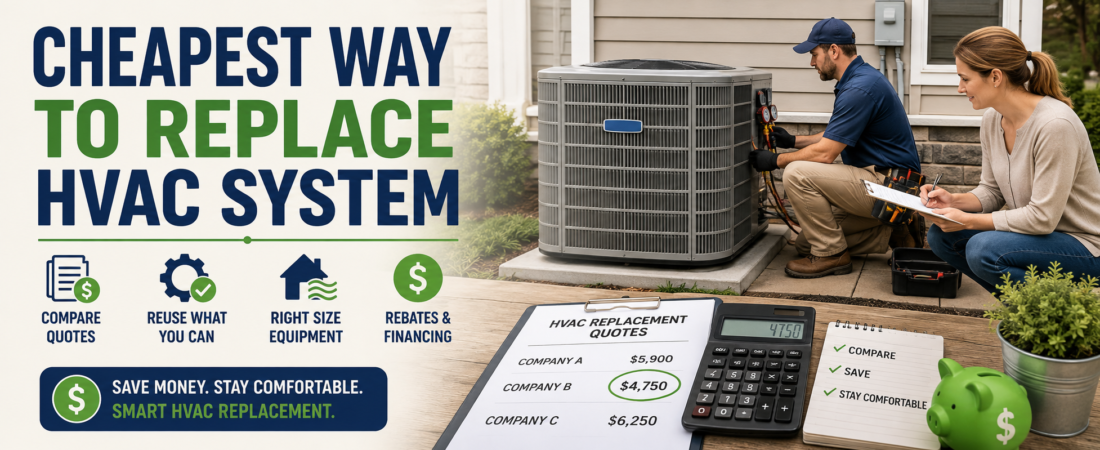
The cheapest way to replace hvac system system is usually to get several local contractor quotes, keep usable ductwork and other compatible components, select properly sized mid-range equipment, and look for rebates or seasonal discounts. The biggest savings often come from installation and equipment comparisons rather than simply choosing the cheapest unit available.
Before replacing anything, ask the contractor to inspect the existing system. Sometimes the entire HVAC system does not need to be replaced. In other situations, replacing only one major component may not be the best long-term decision because older components may be incompatible with newer equipment.
Start With a Professional HVAC Inspection
Before spending money on a new system, find out exactly what has failed. A professional HVAC inspection can reveal whether the problem is the compressor, blower motor, heat exchanger, refrigerant system, electrical components, thermostat, ductwork, or another part.
This step may seem unnecessary when you already know the system is old, but it can prevent an expensive mistake. If a relatively inexpensive repair can safely extend the life of the equipment for another season or two, you may have more time to save for a proper replacement.
Get Multiple HVAC Replacement Quotes
One of the simplest ways to lower HVAC replacement costs is to compare several contractors. Prices can differ considerably even when contractors are recommending similar equipment.
Try to obtain at least three detailed estimates. Each quote should clearly explain the equipment being installed, efficiency rating, labor, permits, removal of the old system, warranty coverage, thermostat, duct modifications, and any other charges.
A cheap quote is not automatically a good quote. If one contractor leaves important installation work out of the estimate, the final bill may end up being much higher.
Keep Your Existing Ductwork If Possible
Ductwork can represent a significant part of an HVAC replacement project. If your existing ducts are properly sized, reasonably clean, well sealed, and structurally sound, reusing them can save money.
However, don’t assume that old ductwork should always stay. Leaking, damaged, poorly insulated, or incorrectly sized ducts can reduce system performance and increase energy waste.
Ask the contractor to inspect the duct system before deciding. If most of it is in good condition, you may only need targeted repairs rather than a complete replacement.
Choose the Right HVAC System Size
Buying a larger HVAC system does not necessarily mean better cooling or heating. In fact, an oversized system can create its own problems. An air conditioner that is too large may cool the house quickly without running long enough to remove humidity properly.
A properly sized system is usually more comfortable and efficient. Ask the contractor how the equipment size was determined rather than accepting a recommendation based only on the size of your existing unit.
A professional load calculation can provide a much better starting point than simply replacing an old system with another unit of the same capacity.
Consider a Mid-Range Efficiency Model
The most efficient HVAC system on the market may look attractive, but the highest-efficiency option is not always the cheapest choice overall. Premium equipment generally has a higher purchase and installation cost.
For homeowners focused on keeping replacement costs manageable, a reliable mid-range model can offer a sensible balance between purchase price and energy performance. The right choice depends on local climate, electricity and fuel prices, how long you plan to stay in the home, and how frequently the system operates.
Instead of asking only, “What is the cheapest unit?” ask, “Which system gives me the best value over its expected life?”
Repair or Replace: Which Is Cheaper?
Sometimes the cheapest HVAC replacement is actually no replacement at all. If your system is relatively young and has a single failed component, repairing it could make more financial sense.
On the other hand, repeated repairs on an aging system can quickly become frustrating and expensive. If the equipment requires frequent service, struggles to maintain comfortable temperatures, or has a major component failure, replacement may provide better long-term value.
Consider both the immediate repair cost and the likelihood of future failures before making the decision.
Replace the HVAC System During the Off-Season
Timing can influence HVAC replacement prices. Many homeowners wait until their air conditioner fails during the hottest part of summer or their furnace stops working during a winter cold spell.
That creates urgency, and urgency makes comparison shopping much harder. If your system is approaching the end of its expected life, consider getting quotes before it fails completely.
During slower periods, contractors may have more scheduling flexibility and sometimes offer seasonal promotions. Even when there is no special discount, having time to compare estimates can help you avoid an expensive emergency installation.
Ask About HVAC Rebates
Rebates can make a noticeable difference in the final cost of a replacement. Depending on where you live, incentives may be available through utility companies, manufacturers, local programs, or government initiatives.
The eligibility requirements can vary based on equipment type, efficiency, installation method, and other factors. Some programs require specific qualifying equipment or professional installation.
Always check current programs before signing a contract. A rebate that applies to one model may not apply to another, so confirm the details rather than assuming every new HVAC system qualifies.
Don’t Ignore Installation Quality
It is tempting to save money by choosing the contractor with the lowest labor price. This can backfire if the installation is poorly performed.
Incorrect refrigerant charge, improper airflow, bad electrical connections, poorly sealed ducts, incorrect drainage, or improper equipment sizing can cause performance problems and shorten equipment life.
A slightly higher installation price may be worth paying when the contractor has strong credentials, clear warranty terms, good reviews, and a history of professional work. Saving money today is not useful if the system needs expensive corrections a few months later.
Can You Replace an HVAC System Yourself?
For most homeowners, replacing a complete HVAC system is not a practical DIY project. Modern HVAC installations can involve electrical work, refrigerants, gas connections, combustion equipment, ventilation, condensate drainage, and local permitting requirements.
Some simple tasks, such as replacing an air filter or installing certain thermostats, may be suitable for homeowners. A complete system replacement is different.
If you want the lowest possible total cost, focus on getting competitive professional installation rather than attempting complicated work without the required training or equipment.
Should You Replace the Thermostat Too?
A thermostat may not need replacement simply because you’re installing a new HVAC system. However, an older thermostat may not support the features or control methods of newer equipment.
A programmable or smart thermostat can provide better scheduling and control, depending on your system and preferences. But don’t automatically pay for an expensive thermostat you don’t need.
Ask whether the existing thermostat is compatible with the proposed HVAC equipment. If it is, keeping it may be another small way to reduce the replacement bill.
Consider a Heat Pump
If you’re replacing both heating and cooling equipment, it may be worth comparing a heat pump with a traditional furnace-and-air-conditioner setup. A heat pump can provide heating and cooling from one system.
Whether it is the cheapest option depends heavily on your climate, energy prices, existing infrastructure, available incentives, and the specific equipment being considered.
A heat pump can be particularly attractive when rebates or other incentives reduce the initial purchase price. However, compare the complete installed cost rather than assuming it will automatically be cheaper.
Don’t Automatically Replace Good Components
An HVAC replacement does not always mean every part of the system needs to be new. Depending on the configuration, certain components may remain usable.
For example, good ductwork can often remain in place. Some thermostats may be compatible with new equipment. Other components may be reusable depending on their condition and manufacturer requirements.
The key is compatibility. Never keep an old component simply to save money if doing so compromises system performance, safety, warranty coverage, or efficiency.
Ask for an Itemized HVAC Quote
A detailed quote makes it much easier to compare contractors. Instead of accepting a single total price, ask for the equipment cost, installation labor, removal and disposal fees, permits, accessories, thermostat, duct modifications, startup procedures, and warranty information.
This can reveal why one quote is significantly higher or lower than another. One contractor may include services that another contractor has excluded.
An itemized estimate also reduces the chance of unpleasant surprises once installation begins.
Watch Out for Extremely Cheap HVAC Quotes
There is a difference between a competitive HVAC price and an unrealistically low price. If one contractor is thousands of dollars cheaper than everyone else, investigate why.
The quote may exclude important work or specify lower-quality equipment. It could also indicate that the contractor is cutting corners on installation.
Ask exactly what is included before accepting the lowest offer. The goal should be the lowest reasonable total cost, not simply the lowest number printed at the bottom of a quote.
How Much Can HVAC Replacement Cost?
HVAC replacement costs vary widely because every home and system is different. The final price depends on equipment type, system size, efficiency, labor rates, ductwork, electrical requirements, permits, accessibility, location, and additional modifications.
A basic replacement can cost significantly less than a complex installation involving new ductwork, electrical upgrades, structural changes, or multiple pieces of equipment.
For that reason, online average prices should be treated as rough planning figures rather than guaranteed prices. A local written estimate is much more useful when you’re preparing an actual replacement budget.
Ways to Lower HVAC Installation Costs
The most effective strategy is to reduce unnecessary work rather than cutting corners on essential installation. Reusing good ductwork, comparing contractors, choosing appropriately sized equipment, scheduling ahead, checking rebates, and negotiating the installation package can all help.
You can also ask whether the contractor offers different equipment tiers. A basic, mid-range, and premium option can give you a clearer understanding of what you’re actually paying for.
Sometimes the middle option provides the best balance between price, comfort, warranty, and efficiency.
Is Financing a Cheap Way to Replace HVAC?
Financing can make an HVAC replacement easier to afford, but it does not necessarily make the system cheaper. Interest, fees, and promotional terms can increase the total amount you pay.
If financing is necessary, compare the total repayment amount rather than focusing only on the monthly payment. A low monthly payment can still result in a high overall cost.
Also check whether the contractor’s financing program is tied to a particular equipment package. Paying cash or using another financing option may sometimes result in a lower overall price.
What Should You Avoid When Replacing an HVAC System?
Avoid choosing equipment based only on the lowest sticker price. Avoid skipping professional sizing, ignoring ductwork problems, and accepting vague installation contracts.
You should also be cautious about unnecessary upgrades. A contractor may recommend expensive accessories that sound appealing but provide little value for your particular home.
Ask a simple question: “What problem does this upgrade solve?” If there is no clear benefit, you may be better off keeping your replacement budget focused on essential work.
A Simple Strategy for the Cheapest HVAC Replacement
The smartest approach is to start planning before your existing system completely fails. Have the equipment inspected, research reasonable replacement options, and collect several quotes.
Then compare the proposals line by line. Look at equipment efficiency, system capacity, warranties, labor, ductwork, permits, and included services.
Once you understand the differences, you can negotiate from an informed position. That’s much better than making a rushed decision on the hottest or coldest day of the year.
The Cheapest HVAC System Is Not Always the Cheapest in the Long Run
An inexpensive HVAC system may have a low purchase price but higher operating or maintenance costs. A slightly more expensive system can sometimes provide better efficiency, comfort, reliability, or warranty protection.
Think about how long you expect to live in the property. Someone planning to move within a few years may prioritize upfront cost, while a homeowner expecting to stay for a decade or longer may benefit more from efficiency and durability.
The right decision depends on your circumstances, not simply the price tag.
Conclusion
Finding the cheapest way to replace HVAC system is really about finding the best value. Start by determining whether replacement is genuinely necessary, then compare several professional contractors and request detailed estimates.
Reuse components that are safe and compatible, choose a properly sized system, investigate rebates, and avoid paying for upgrades you don’t need. At the same time, don’t sacrifice installation quality just to save a few hundred dollars.
A good HVAC replacement should leave you with a system that keeps your home comfortable without creating another expensive headache. The cheapest quote may not win that race. The smarter choice is the one that gives you dependable performance at the lowest reasonable total cost.
FAQs About the cheapest way to replace hvac system System
1. What is the cheapest way to replace hvac system system?
The cheapest approach is usually to compare multiple contractors, reuse good ductwork and compatible components, select appropriately sized equipment, and apply available rebates. Avoiding unnecessary upgrades can also reduce the final price.
2. Is it cheaper to replace an HVAC system in winter or summer?
Replacement timing depends on your local market and contractor demand. Planning during a slower season can sometimes provide better scheduling and pricing opportunities than replacing equipment during extreme weather when contractors are extremely busy.
3. Can I save money by keeping my existing ductwork?
Yes. If your ductwork is properly sized, sealed, insulated where necessary, and in good condition, keeping it can reduce replacement costs. Have a professional inspect it before deciding.
4. Should I repair or replace my old HVAC system?
Repairing may be cheaper when the system is relatively young and has a minor problem. Replacement may make more sense when the equipment is old, inefficient, unreliable, or facing a major component failure.
5. Is the cheapest HVAC unit the best choice?
Not necessarily. A very inexpensive unit may have higher operating costs or fewer features. A reliable mid-range system can sometimes provide a better balance of upfront cost, efficiency, comfort, and long-term value.