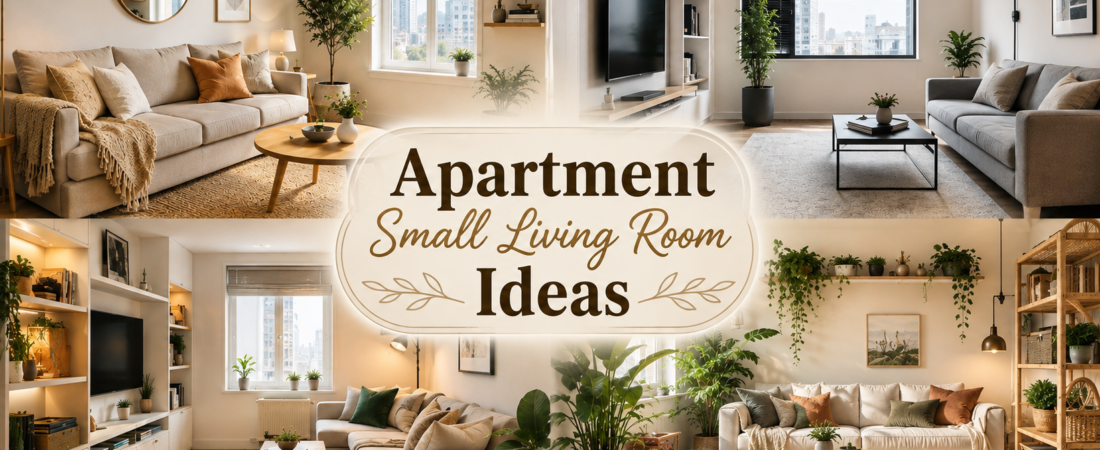
Apartment Small Living Room Ideas can make a small space feel bigger, brighter, and more comfortable. When space is limited, every piece of furniture matters. The right layout, smart storage, light colors, and simple decor can turn a cramped living room into a cozy and stylish space without making it feel crowded.
Why Small Living Rooms Can Be Tricky
Small living rooms often have more than one job to do. They may be used for relaxing after work, watching television, entertaining friends, reading, working from home, or even eating when the apartment does not have a separate dining area. That is where thoughtful planning becomes important. Instead of simply buying attractive furniture and hoping everything fits, think about how you actually use the room. Once you understand the room’s purpose, choosing the right pieces becomes much easier.
1. Choose a Sofa That Fits the Room
The sofa usually becomes the largest visual element in a living room, so getting its size right can make a huge difference. For a compact apartment, consider a loveseat, apartment-sized sofa, or slim-profile sectional instead of an oversized couch with deep cushions. Before buying anything, measure the wall where the sofa will sit and check the doorway, hallway, elevator, and stairway dimensions too. There is nothing worse than finding your dream sofa only to discover that it cannot make the trip through the apartment entrance. A sofa with raised legs can also make the floor underneath visible, which creates a lighter and more open appearance.
Don’t Push Every Piece Against the Wall
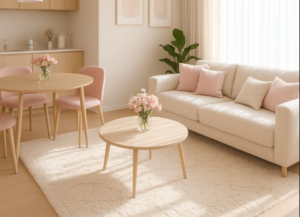
It is tempting to push all furniture against the walls when a room is small, but that does not always create the best result. Sometimes leaving a few inches between furniture and the wall gives the room a more intentional appearance. The important thing is to maintain a comfortable walking path. You want people to move naturally through the room without having to squeeze between the sofa and coffee table.
Consider a Small Sectional
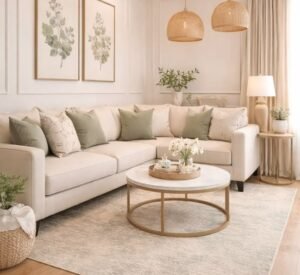
A compact sectional can work surprisingly well in an apartment. It gives you plenty of seating without requiring several separate chairs and sofas. Choose a simple design that matches the scale of the room rather than a bulky sectional with oversized arms. If the sectional has a chaise, make sure it does not interfere with the main walkway or block access to another part of the apartment.
2. Use Light Colors to Open Up the Space
Color has a powerful effect on how we experience a room. Light shades such as warm white, cream, beige, pale gray, soft taupe, and muted pastels can make a small living room feel brighter and more open because they reflect more available light. This does not mean your apartment needs to look completely white. You can bring personality through artwork, cushions, curtains, rugs, plants, and small decorative pieces. A neutral foundation simply gives you more freedom to add color without making the room feel visually heavy.
Create Contrast Without Overdoing It
A completely neutral room can sometimes feel flat, so a little contrast helps. Try combining a light sofa with darker cushions, a natural wood coffee table, or a black floor lamp. The idea is to create small visual anchors rather than covering the room in strong colors. When several large pieces have intense patterns or dark finishes, the space can quickly feel smaller.
Think About the Ceiling
Don’t forget the fifth wall. A lighter ceiling can help create a greater sense of height, particularly when the walls are also relatively light. Floor-to-ceiling curtains can have a similar effect because they draw the eye upward. Mounting the curtain rod slightly above the window frame can make the windows appear taller and give the entire room a more spacious feel.
3. Pick Furniture That Does More Than One Job
One of the smartest approaches to a small apartment is choosing furniture that performs multiple functions. An ottoman can work as a footrest, extra seating, and a coffee table when paired with a tray. A storage bench can provide seating while hiding blankets and other belongings. A lift-top coffee table can even provide a temporary work surface when you need to use your living room as a home office. These small decisions can save valuable floor space and reduce the amount of furniture you need.
Try Nesting Tables
Nesting tables are especially useful when space is tight. You can separate them when guests arrive and slide them together when you need more open floor space. They are also easier to move than a large coffee table, which makes them practical for people who frequently change their furniture arrangement.
Choose Movable Pieces
Furniture does not always need to stay in one position. Lightweight chairs, small stools, poufs, and side tables can be moved when necessary. This flexibility is useful when you are entertaining guests or simply want to create more open space for cleaning. In a small room, furniture that adapts to your routine is often more useful than furniture that only looks good.
4. Take Advantage of Vertical Storage
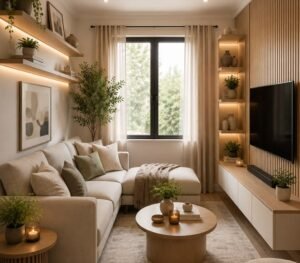
When floor space is limited, look upward. Walls offer valuable storage opportunities that are easy to overlook. Floating shelves, tall bookcases, wall-mounted cabinets, and narrow shelving units can give you places to display books, plants, photographs, and decorative objects without taking up much floor area. A tall storage unit can also draw attention upward, making the ceiling appear higher. Just remember that open shelving works best when it is kept reasonably organized.
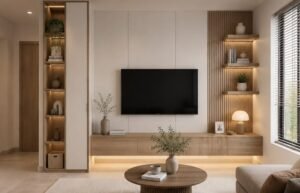
Use Floating Shelves Carefully
Floating shelves can add storage without making the room feel as heavy as a large cabinet. Use them for items you actually enjoy seeing, such as books, framed photos, small plants, or a few favorite decorations. Avoid filling every inch of shelf space. Empty space is useful too because it prevents the wall from becoming visually overwhelming.
Try Narrow Storage Furniture
A narrow cabinet or vertical bookcase can be much more practical than a wide storage unit. Look for furniture that uses height rather than width. This is particularly helpful in apartments where every additional inch of floor space affects how easily you can move around.
5. Add a Large Mirror
A mirror is one of the simplest tricks for making a small living room feel more open. When positioned thoughtfully, it reflects light and gives the eye another visual layer to explore. A large mirror placed opposite or near a window can bounce natural light around the room during the day. You can use a tall rectangular mirror to emphasize height or a large round mirror to soften a room filled with straight lines. The mirror should reflect something pleasant rather than a cluttered corner, because it will effectively double whatever it faces.
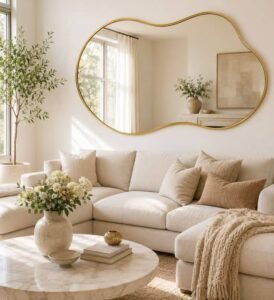
Choose One Strong Mirror
You do not need to cover your walls with mirrors. One well-sized mirror can have a stronger effect than several tiny decorative mirrors scattered around the room. A large framed mirror can also become a design feature rather than simply serving a practical purpose.
Reflect Natural Light
Pay attention to what your mirror reflects before installing it. If it faces a window, it can help spread daylight throughout the room. If it faces a dark hallway or a messy storage area, however, the effect may be less attractive. Placement matters just as much as size.
6. Improve the Layout Before Buying More Decor
Sometimes the problem is not that a small living room needs more furniture; it needs a better arrangement. Start by identifying the main focal point, such as a television, fireplace, artwork, or window. Then arrange the sofa and chairs around that point while keeping clear pathways. Leave enough space between the seating and coffee table for comfortable movement. If the room connects directly to a kitchen or bedroom, avoid blocking that transition. A good layout can make the same furniture feel completely different.
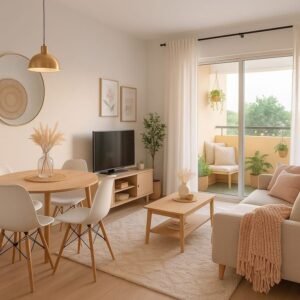
Create a Clear Walking Path
A clear walkway can make a compact room feel significantly larger. Try to avoid placing tables, stools, plants, or decorative baskets directly in the path between frequently used areas. You do not need a huge amount of open floor, but you do need enough room to move naturally without constantly navigating around furniture.
Don’t Buy Furniture Before Measuring
This sounds obvious, yet it is one of the most common small-space mistakes. Measure the room and create a rough floor plan before shopping. You can even mark the dimensions of a potential sofa or table on the floor with painter’s tape. This simple trick gives you a much better sense of how much space the furniture will actually occupy.
7. Keep the Decor Simple but Personal
A small living room does not have to be completely minimalist. In fact, a few personal details can make it feel much warmer. The goal is to avoid visual clutter rather than remove personality. Choose a favorite piece of artwork, a comfortable rug, a couple of textured cushions, a plant, or a meaningful decorative object. Instead of displaying everything you own, rotate accessories occasionally. This keeps the room interesting while preventing shelves and tables from becoming overloaded.
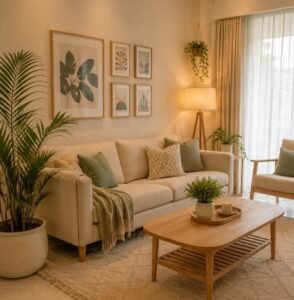
Use Plants for Warmth
A small plant can bring life into an apartment without requiring much space. If floor space is limited, consider a small plant on a shelf, side table, or windowsill. Hanging planters can also introduce greenery without occupying valuable furniture or floor space. Choose plants according to the natural light available in your apartment rather than buying something simply because it looks attractive.
Add Texture Instead of Too Much Stuff
Texture can make a room feel cozy without filling it with unnecessary objects. A woven rug, linen curtains, knitted throw, wooden furniture, or textured cushions can create depth while keeping the overall design calm. This approach works particularly well when your walls and larger furniture pieces are neutral.
Lighting Can Transform a Small Living Room
Good lighting can make a compact living room feel dramatically better, especially after sunset. Instead of depending entirely on one ceiling light, combine different sources such as a floor lamp, table lamp, wall light, or small accent light. Multiple light sources create layers and allow you to adjust the atmosphere depending on what you are doing. Warm, comfortable lighting can make a small room feel inviting rather than cramped.
Use Floor Lamps Strategically
A slim floor lamp can provide useful lighting without requiring a large table. Place it beside the sofa or in an otherwise unused corner. Choose a design with a small footprint so it does not interfere with your walking path.
Don’t Ignore Natural Light
During the day, make the most of whatever natural light your apartment receives. Keep windows relatively clear and choose curtains that can be fully opened. Heavy furniture placed directly in front of windows can make a room feel darker and more enclosed, so keep that area as open as practical.
How to Make a Small Living Room Look Bigger
The easiest way to make a small living room appear larger is to reduce visual obstacles. Keep the floor relatively clear, use appropriately sized furniture, introduce reflective surfaces, and avoid too many competing patterns. Light colors can help, but they are not the only solution. Furniture with visible legs, transparent or glass elements, vertical storage, and properly positioned lighting can all contribute to a more open appearance. Most importantly, leave some breathing room between your belongings.
How to Make a Small Apartment Living Room Feel Cozy
Making a room look bigger is only half the job. You still want it to feel like somewhere you actually enjoy spending time. Soft textiles, warm lighting, comfortable seating, personal artwork, and natural materials can add that sense of comfort. A small rug can visually define the seating area, while cushions and throws make the sofa more inviting. The best small living rooms balance openness with warmth rather than trying to look as empty as possible.
Common Small Living Room Mistakes to Avoid
One of the biggest mistakes is choosing furniture based only on appearance. A beautiful oversized sofa can dominate a compact room, while too many small pieces can make the space look messy. Another common mistake is using every wall and surface for storage or decoration. Small rooms benefit from empty space. Poor lighting, oversized rugs, blocked windows, and furniture that interrupts walking paths can also make a room feel tighter than it really is. Before adding another item, ask whether the room genuinely needs it.
Budget-Friendly Ways to Refresh a Small Living Room
You do not need a major renovation to change the feel of an apartment living room. Rearranging existing furniture may be enough to improve the layout. You can also replace cushion covers, add a new throw, move artwork, introduce a plant, or change the lighting. Painting one or more walls in a lighter shade can create a noticeable difference too. Even decluttering can feel like a design upgrade because it gives the furniture and architectural features more room to stand out.
Apartment Small Living Room Ideas for Renters
Renting an apartment does not mean you have to live with a space that feels unfinished. Removable hooks, freestanding shelves, rugs, lamps, mirrors, curtains, and furniture can add personality without making permanent changes. If your lease allows painting, a fresh wall color can help, but there are plenty of temporary options if painting is not permitted. The focus should be on improvements that can move with you when it is time to leave.
How to Choose the Right Rug for a Small Living Room
The right rug can make the seating area feel organized and intentional. A rug that is too small may make the furniture arrangement look disconnected, while an appropriately sized rug can visually bring the sofa, chairs, and coffee table together. You do not necessarily need a rug that covers the entire floor. What matters is creating a clear visual zone around the main seating area. Neutral patterns are particularly easy to work with when the room already contains several decorative elements.
How to Decorate a Small Living Room Without Making It Cluttered
Start with the essentials and add decorative pieces slowly. Instead of buying several accessories at once, choose items that have meaning or genuinely improve the room. Keep frequently used surfaces relatively clear and give everyday belongings a dedicated storage location. Closed storage is especially useful for items that you do not want on display. When everything has a place, maintaining a tidy room becomes much easier.
The Best Approach Is to Work With Your Space
There is no single formula for decorating an apartment living room. A narrow room requires a different approach from a square room, and a dark room has different needs from one with large sunny windows. Rather than copying a picture from a magazine exactly, look at what makes the example work and adapt those principles to your own home. Maybe you need vertical storage, a smaller sofa, better lighting, or simply less furniture. The best design is the one that fits the way you actually live.
Conclusion
The best Apartment Small Living Room Ideas are not about making your home look like a showroom. They are about creating a room that works for your everyday life while making the most of the space available. Start with the basics: choose furniture that fits, keep the layout comfortable, use vertical space, bring in light, and control clutter. From there, add personality through artwork, plants, textiles, and objects you genuinely enjoy. A small apartment can still have a big sense of style. In many cases, a little planning is all it takes to turn a cramped living room into a space that feels comfortable, practical, and completely your own.
Frequently Asked Questions
What are the best apartment small living room ideas?
The most useful ideas include choosing appropriately sized furniture, using light colors, adding vertical storage, incorporating mirrors, selecting multifunctional pieces, improving the layout, and keeping decorative items intentional. These changes can make a compact living room feel more comfortable without requiring a major renovation.
What color makes a small living room look bigger?
Light and soft colors such as warm white, cream, beige, pale gray, and soft neutral shades can make a room feel brighter and more open. You can still use darker colors as accents through cushions, artwork, furniture, or accessories.
Should a small living room have a sectional sofa?
Yes, a sectional can work well in a small living room if it is correctly sized. A compact sectional can provide generous seating while taking up less visual space than a separate sofa and several chairs. Always measure the room and walking paths before choosing one.
How can I add storage to a small apartment living room?
Use vertical space with floating shelves, tall bookcases, wall-mounted cabinets, and narrow storage units. Multifunctional furniture such as storage ottomans, benches, and coffee tables with drawers can also hide everyday belongings without requiring additional floor space.
Does a mirror really make a small living room look bigger?
A well-positioned mirror can create the impression of additional depth and reflect natural or artificial light. For the best result, place it where it reflects a window, attractive artwork, or another visually pleasing part of the room.
Read also: Exterior Window Trim Ideas for Every Home Style