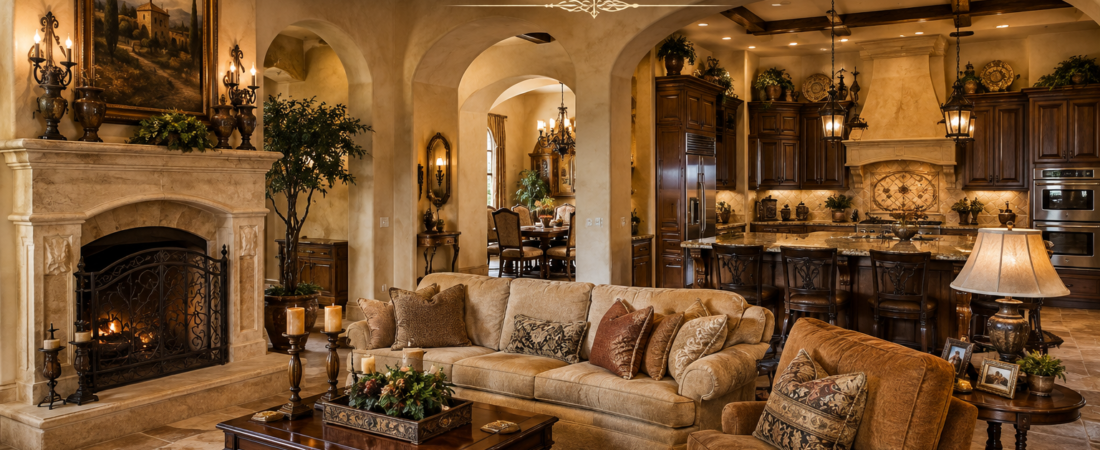
Why Did Tuscan Style Become So Popular in the 2000s?
The popularity of Tuscan design was closely connected to the broader fascination with Mediterranean living during the early 2000s. Homeowners wanted interiors that felt warm and sophisticated rather than cold and minimalist. Design magazines, television programs, luxury developments, and home-improvement culture helped spread the look. At the same time, larger homes were becoming increasingly common, giving homeowners enough space for dramatic arches, oversized kitchens, stone fireplaces, formal dining rooms, and elaborate entryways.
The Exterior of a Tuscan House 2000s
The exterior was often the first thing that made this style recognizable. Many homes used stucco walls in shades of cream, tan, beige, or muted yellow, combined with clay-colored roof tiles and natural stone. Arched entrances and windows added a Mediterranean character, while dark wooden doors created contrast. Landscaping was equally important, with stone pathways, ornamental plants, fountains, and carefully shaped shrubs helping the house feel like a private European retreat.
Stucco Walls and Earthy Colors
Stucco became one of the defining materials of the period because it immediately gave a home a Mediterranean appearance. Instead of bright whites or cool grays, designers generally favored warmer shades such as sand, cream, terracotta, ochre, and soft brown. These colors worked especially well with stone, wood, and clay roof tiles, creating an exterior that appeared aged and established even when the house itself was brand new.
Terracotta Roof Tiles
Roofing played an important visual role in the Tuscan-inspired home. Terracotta and reddish-brown tiles were commonly used to create the appearance of an Italian villa. The curved or weathered appearance of the tiles added texture and helped break up large roof surfaces. In some homes, the roof was deliberately designed to look slightly aged, giving a newly constructed property more character.
Arches and Stone Details
Arches were another signature feature of the 2000s Tuscan look. They appeared around front doors, windows, hallways, porches, and interior transitions. Natural stone or stone-look materials were often added around entrances, fireplaces, columns, and lower sections of exterior walls. These details gave even relatively conventional suburban houses a stronger architectural identity.
Tuscan House 2000s Interior Design
Inside, the same philosophy continued. The typical interior relied on warm colors, substantial furniture, textured surfaces, dark wood, and decorative architectural elements. Instead of the clean white rooms associated with later minimalist trends, Tuscan interiors often felt layered and visually rich. Walls might have faux finishes, ceilings could include exposed beams, and floors were frequently made from tile or wood in warm brown tones.
The Kitchen Was a Major Feature
The kitchen was often one of the most impressive spaces in a Tuscan-style home. Large islands, dark wood cabinets, stone countertops, decorative range hoods, and substantial appliances were common. The goal was not simply to create a place for cooking but to make the kitchen feel like the social center of the house. Family members could gather around a large island, while decorative lighting and architectural details made the room feel connected to the rest of the home.
Dark Wood Cabinetry
Dark-stained cabinetry was particularly common during this period. Rich walnut, espresso, cherry, and other deep wood tones created the heavy, traditional appearance associated with Tuscan interiors. These cabinets were frequently paired with granite countertops and decorative hardware, producing a combination that was considered upscale and fashionable throughout the 2000s.
Granite Countertops and Stone Surfaces
Granite was another defining material of the era. Kitchens and bathrooms often featured patterned granite countertops in brown, beige, gold, or cream tones. Stone was also used for backsplashes, fireplaces, floors, and accent walls. The abundance of natural-looking materials helped create the substantial, handcrafted feeling that homeowners associated with European-inspired design.
Tuscan Colors in the 2000s
Color was central to the entire style. The palette usually included warm neutrals and earthy shades rather than bright or cool colors. Beige, cream, tan, terracotta, olive green, golden brown, rust, and muted red could appear throughout the home. These colors were often layered together, creating rooms that felt cozy and visually warm.
Tuscan Furniture and Decorative Details
Furniture followed the same substantial approach. Large sofas, carved wooden tables, oversized dining sets, wrought-iron pieces, and decorative cabinets were popular choices. Accessories could include ceramic pottery, framed artwork, candles, textured fabrics, old-world clocks, and decorative mirrors. The intention was to make the home feel collected and comfortable rather than sparse.
The Role of Wrought Iron
Wrought iron appeared frequently in both the interior and exterior of Tuscan-inspired houses. It could be found in stair railings, balcony details, light fixtures, cabinet hardware, gates, and furniture. Its dark finish contrasted nicely with warm plaster, stone, and wood, while its decorative shapes added another layer of traditional European character.
Tuscan Bathrooms in the 2000s
Bathrooms often continued the same warm design language. Large tiled floors, stone countertops, framed mirrors, dark cabinetry, bronze or oil-rubbed fixtures, and decorative lighting were common. Some larger homes included oversized soaking tubs, separate showers, and elaborate tile patterns. The bathroom was treated as a relaxing private space rather than simply a functional room.
What Made the Tuscan House 2000s Style Different?
What made the style distinctive was the combination of several strong visual elements. Traditional European references were mixed with the size and convenience of a modern American house. A home could have an Italian-inspired exterior, a huge open kitchen, a three-car garage, multiple bedrooms, and a large family room under the same roof. This mixture made the style especially recognizable in suburban developments of the period.
Was Every 2000s Tuscan House Truly Italian?
No. This is an important distinction. Most homes described as Tuscan in the 2000s were Tuscan-inspired, not authentic examples of traditional Tuscan architecture. Builders borrowed recognizable elements such as stucco, arches, terracotta, stone, and warm colors and adapted them to modern construction. Traditional Tuscan architecture has a much deeper regional history and often reflects local materials, climate, craftsmanship, and centuries of architectural development.
Why Did the Style Eventually Decline?
By the late 2000s and especially during the 2010s, design preferences began shifting. Homeowners increasingly wanted brighter interiors, cleaner lines, lighter wood, simpler finishes, and less decoration. Gray tones, white kitchens, streamlined cabinetry, and minimalist details gradually replaced the heavier brown-and-beige palette. As a result, many features associated with the Tuscan boom began to look dated.
Are Tuscan Houses From the 2000s Still Attractive?
Absolutely. A house does not become unattractive simply because its original design belongs to another decade. In fact, some of the strongest elements of Tuscan architecture remain appealing today. Natural stone, arched openings, wood, clay tiles, and warm textures can create a timeless foundation. The challenge is usually not the architecture itself but the combination of too many dated finishes in one space.
How to Modernize a Tuscan House 2000s
Modernizing a Tuscan-inspired home does not necessarily require removing every traditional feature. A more thoughtful approach is to keep the strongest architectural elements and simplify the surrounding finishes. Lighter wall colors, updated lighting, contemporary furniture, cleaner window treatments, and less decorative clutter can make a major difference. Replacing heavily patterned countertops or overly dark cabinetry can also brighten the interior without erasing its original character.
Keep the Architecture, Simplify the Decor
One of the easiest ways to update a 2000s Tuscan home is to distinguish between architecture and decoration. An arched doorway or stone fireplace may still look beautiful, while an entire room filled with heavy furniture and matching accessories can feel dated. Keeping the architectural bones and reducing visual clutter allows the home’s original character to remain visible.
Modern Tuscan Style vs. 2000s Tuscan Style
Modern Tuscan design tends to be quieter and more restrained than the version popular during the 2000s. Contemporary interpretations often use natural stone, plaster, wood, and warm neutrals but avoid excessive ornamentation. The 2000s version was more likely to feature elaborate columns, heavy cabinetry, faux finishes, patterned granite, decorative ironwork, and multiple layers of accessories. Both styles share the same Mediterranean foundation, but the newer interpretation generally feels lighter and more relaxed.
Is Tuscan Style Coming Back?
Elements of Tuscan design continue to appear in contemporary interiors, although usually in a more subtle form. Designers increasingly appreciate natural materials, handcrafted surfaces, warm neutrals, textured walls, aged metals, and architectural arches. These features can provide warmth at a time when many interiors have become extremely streamlined. The difference is that modern homeowners often use one or two Tuscan-inspired details rather than turning every room into an Italian villa.
The Lasting Appeal of Tuscan-Inspired Homes
There is a reason this style remains recognizable decades after its peak. It was designed around warmth. Stone feels substantial, wood adds character, arches create visual movement, and earthy colors make large rooms feel more inviting. Even when individual finishes become dated, the underlying idea of creating a comfortable and welcoming home remains relevant.
What to Look for When Buying a 2000s Tuscan House
If you are considering buying one of these homes, look beyond the decorative finishes. Pay attention to the floor plan, natural light, construction quality, roof condition, windows, plumbing, electrical systems, and maintenance history. Cosmetic elements such as paint, lighting, cabinet hardware, and flooring can usually be changed. Structural problems and major systems are much more important when evaluating the property.
Conclusion
The Tuscan house 2000s trend was much more than a collection of arches, stone walls, and terracotta tiles. It reflected a particular moment in residential design when homeowners wanted large, comfortable spaces with a sense of European warmth and old-world character. While some of its finishes now feel unmistakably tied to the decade, many of its best qualities remain relevant.
Natural materials, inviting colors, handcrafted details, and strong architectural features rarely go completely out of style. That is why a 2000s Tuscan home can still have plenty of potential today. With a few thoughtful updates, its heavier original look can become something warmer, simpler, and more contemporary without losing the character that made the style memorable in the first place.
Frequently Asked Questions
What is a Tuscan house from the 2000s?
A Tuscan house from the 2000s is generally a modern American home influenced by Italian and Mediterranean architecture. Common features include stucco exteriors, terracotta roof tiles, arches, stone accents, dark wood, warm colors, and decorative ironwork.
Why were Tuscan houses popular in the 2000s?
They became popular because homeowners wanted homes that felt warm, luxurious, traditional, and inspired by European living. Design media and large suburban developments also helped spread the aesthetic.
What colors were common in 2000s Tuscan homes?
Warm earthy colors were especially popular, including beige, cream, tan, terracotta, olive green, golden brown, rust, and muted reds.
Are Tuscan-style houses outdated?
Some decorative elements can look dated, particularly heavy brown finishes, faux painting, ornate cabinetry, and busy granite. However, architectural features such as arches, stone, wood, and clay tiles can still look attractive.
Can you modernize a Tuscan house?
Yes. You can update the style by using lighter colors, simpler furniture, contemporary lighting, cleaner finishes, and less decorative clutter while keeping attractive architectural details.
Read also: SQRWomensRestroom Comfort, Privacy, and Cleanliness