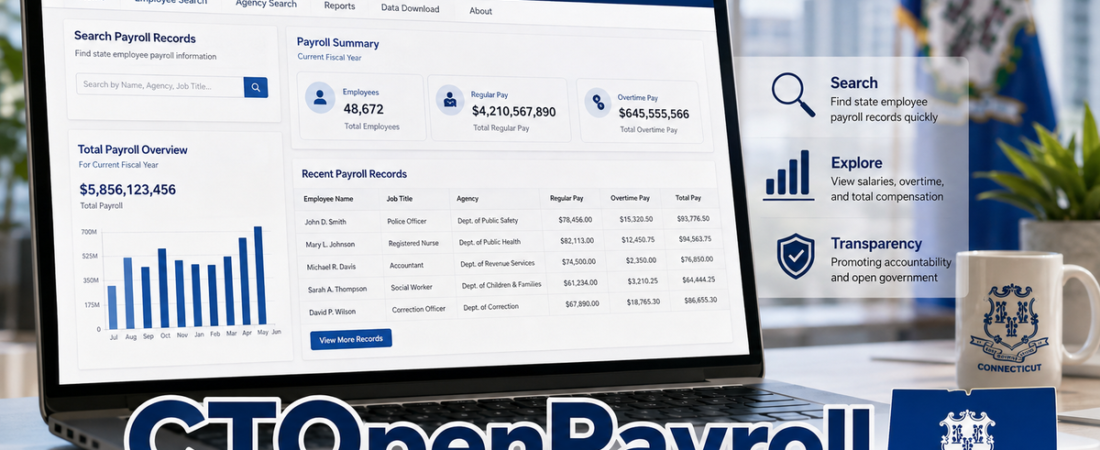
CTOpenPayroll is Connecticut’s official online payroll transparency platform that allows the public to view payroll information for state employees. Created to promote government accountability and improve public access to financial records, the portal helps residents understand how taxpayer money is spent on salaries, wages, overtime, and compensation across state agencies. Whether you are a journalist, researcher, taxpayer, job seeker, or simply someone interested in public payroll data, CTOpenPayroll provides a convenient way to search and review publicly available employee compensation information. Understanding how the platform works can help you interpret the data accurately while recognizing the purpose of public payroll transparency in modern government.
What Is CTOpenPayroll?
CTOpenPayroll is an official payroll transparency website maintained by the State of Connecticut that publishes compensation information for state employees. The platform collects payroll records from state agencies and presents them in an easy-to-search format, allowing users to review employee names, job titles, departments, regular pay, overtime earnings, and other compensation details that are considered public records under Connecticut law. Rather than requiring formal information requests, the portal makes these records accessible online, helping citizens quickly locate payroll information whenever needed.
Why CTOpenPayroll Exists
The primary goal of CTOpenPayroll is to strengthen government transparency by giving taxpayers direct access to payroll spending. Since employee salaries are funded through public resources, many states provide payroll databases that allow residents to understand how government budgets are distributed among agencies and employees. Connecticut’s payroll portal reflects this commitment by making financial information easier to access while encouraging accountability, public trust, and informed discussions about government spending and workforce management.
Who Can Use CTOpenPayroll?
CTOpenPayroll is designed for anyone interested in publicly available payroll information. Residents may use it to better understand state spending, journalists often rely on it while reporting on government budgets, researchers analyze payroll trends for academic studies, and job seekers sometimes compare salary ranges across state agencies before applying for public sector positions. Because the database is publicly available, no special permission is typically required to search employee payroll records.
What Information Can You Find on CTOpenPayroll?
The portal includes several useful payroll details that help users understand employee compensation beyond basic salary information. Depending on the available records, users may find employee names, agency assignments, job titles, payroll periods, regular wages, overtime earnings, additional compensation, and total pay. This information provides a more complete picture of government payroll spending while helping users distinguish between base salary and earnings that fluctuate due to overtime or special assignments.
How to Search CTOpenPayroll
Searching CTOpenPayroll is intentionally simple so that both experienced researchers and everyday users can quickly locate information. Most searches begin by entering an employee’s name, agency, or department into the search bar, after which the system displays matching payroll records. Users can then review individual entries, compare compensation between employees within the same agency, or explore payroll information across different departments without needing advanced technical knowledge.
Understanding Payroll Data Correctly
Although payroll records appear straightforward, interpreting them requires careful attention to context. An employee’s total compensation may include overtime, shift differentials, temporary assignments, or other earnings that significantly increase annual income beyond the listed base salary. Without understanding these factors, readers may incorrectly assume that every dollar shown represents regular salary rather than compensation earned through additional work responsibilities.
Regular Salary Versus Total Compensation
One of the most common misunderstandings involves confusing base salary with total compensation. Regular salary reflects the employee’s standard wages based on their position, while total compensation may include overtime, holiday pay, bonuses where applicable, or other approved earnings. Reviewing both figures provides a more accurate understanding of employee income instead of relying on a single number that may not tell the complete story.
Why Overtime Can Be High
Many public employees work essential jobs that require around-the-clock staffing, including healthcare professionals, correctional officers, transportation workers, emergency responders, and maintenance personnel. During periods of staff shortages, emergencies, or increased demand, overtime hours can rise substantially, resulting in noticeably higher annual earnings. This explains why some payroll records show compensation that appears significantly above the employee’s standard salary.
Benefits of Payroll Transparency
Payroll transparency strengthens public confidence by allowing citizens to see how government funds are allocated. Instead of relying on assumptions or unofficial reports, residents can examine verified payroll information directly from official sources. Open payroll databases also support responsible journalism, encourage financial accountability, reduce misinformation, and provide valuable data for policy discussions regarding government employment and public spending.
How Journalists Use CTOpenPayroll
Journalists frequently use CTOpenPayroll when reporting on state budgets, employee compensation, staffing shortages, overtime costs, or workforce trends. Because the information comes directly from official payroll records, reporters can verify salary figures before publishing stories and provide readers with factual, evidence-based reporting that supports transparency rather than speculation.
How Researchers Benefit from the Database
Academic researchers and policy analysts often use public payroll databases to study workforce trends, labor costs, government hiring practices, and compensation patterns over time. The availability of consistent payroll information allows researchers to compare agencies, evaluate spending decisions, and identify long-term employment trends that may influence future public policy or budget planning.
How Job Seekers Can Use CTOpenPayroll
People interested in working for Connecticut state agencies may use CTOpenPayroll to gain a better understanding of salary ranges across different positions. While payroll records should not replace official job postings, they provide valuable context about potential earnings, overtime opportunities, and compensation patterns that can help applicants make more informed career decisions before submitting applications.
Privacy and Public Records
Although some people are surprised to find employee payroll information online, these records generally fall under public records laws because state employees are paid with taxpayer funds. The information published through CTOpenPayroll focuses on compensation and employment details rather than sensitive personal information, helping balance government transparency with employee privacy protections established by law.
Common Misconceptions About CTOpenPayroll
One misconception is that every high payroll figure represents an unusually large salary, when in reality overtime and additional earnings often explain significant differences. Another misunderstanding is that payroll databases include every government worker, although some records may vary depending on reporting schedules or agency-specific requirements. Understanding these limitations helps users interpret payroll information more accurately and avoid drawing incorrect conclusions from individual records.
How Often Payroll Information Is Updated
Payroll databases typically receive periodic updates that reflect the state’s payroll processing schedule rather than real-time changes. This means newly hired employees, recent promotions, or payroll adjustments may not appear immediately after they occur. Users should keep this timing in mind when reviewing records, particularly if they are searching for the most recent compensation information.
Comparing CTOpenPayroll with Other State Payroll Portals
Many U.S. states operate similar payroll transparency websites because open government initiatives have become increasingly common over the past decade. While each state presents information differently, most public payroll portals include employee names, agencies, salaries, overtime, and compensation summaries. CTOpenPayroll follows this broader trend by making Connecticut payroll information accessible in a searchable online format that aligns with modern transparency practices.
Tips for Using CTOpenPayroll Efficiently
Searching becomes easier when users enter accurate employee names, explore agency-specific results, compare multiple payroll periods, and review compensation details instead of focusing only on total earnings. Taking a few extra moments to understand the available information helps create a clearer picture of employee compensation and reduces the likelihood of misunderstanding payroll figures that include overtime or other additional earnings.
The Importance of Government Transparency
Open access to payroll information plays an important role in democratic accountability because it allows taxpayers to see how public money supports government operations. Transparency encourages informed public conversations, strengthens confidence in public institutions, and helps ensure that financial decisions remain open to public review rather than hidden behind unnecessary administrative barriers.
Conclusion
CTOpenPayroll represents an important step toward greater government transparency by providing public access to Connecticut state employee payroll information in a searchable online database. Whether someone is conducting research, writing a news story, comparing public sector salaries, or simply learning how taxpayer funds are used, the platform offers valuable insights supported by official payroll records. While payroll figures should always be interpreted within their proper context, the availability of this information promotes accountability, encourages informed public discussion, and reinforces the principle that transparent government serves the public interest.
Frequently Asked Questions
1. What is CTOpenPayroll?
CTOpenPayroll is Connecticut’s official online payroll transparency portal that allows the public to search payroll information for state employees.
2. Is CTOpenPayroll free to use?
Yes. The portal is publicly accessible and does not require payment to search available payroll records.
3. Why are state employee salaries public?
State employee compensation is generally considered public information because it is funded through taxpayer dollars and falls under public records laws.
4. Does CTOpenPayroll show personal information?
No. The portal focuses on employment and compensation details rather than sensitive personal information.
5. Why do some employees earn much more than their base salary?
Higher earnings often result from overtime, holiday pay, shift differentials, or other authorized compensation in addition to regular salary.
Read also: Home Decor Ideas Ththomedec Modern Decorating Tips for Every Room